
Key ideas
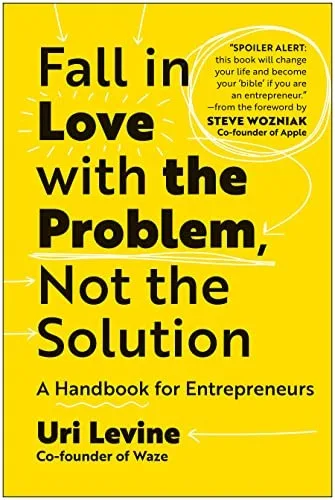
- Fall in love with the problem, not the solution: commit to a big, painful problem, and be willing to change your solution as many times as it takes.
- A startup is a journey of failures; you will be wrong most of the time, so the goal is to fail fast and cheap and keep eliminating what does not work.
- Operate in phases, and in each phase focus on the single challenge that matters, starting with product-market fit, before moving to growth or making money.
- Product-market fit is life or death; before you have it nothing else matters, and retention, whether users come back, is how you know you have it.
- You are only a sample of one, so you are not your user; talk to real users and watch their behavior instead of trusting your own intuition.
- Build the right team and fire fast: keeping the wrong person is more costly than the discomfort of letting them go.
If you fall in love with your solution, you will die defending it; fall in love with the problem, and you will keep changing the solution until one of them finally works.
Mental models
- Fall in love with the problem — The founding mindset. An entrepreneur's real commitment should be to solving a specific, significant problem, not to any particular product idea. Solutions will be wrong repeatedly and must change, but the problem stays constant, so loyalty to the problem lets you pivot freely while loyalty to a solution traps you defending something that does not work. The bigger and more painful the problem, the bigger the opportunity to create value.
- The startup as a journey of failures — Success is not a straight line; it is the last stop on a long road of failures. Most experiments, features, and bets will fail, so the winning strategy is to fail fast and cheap, learn, and try again, treating each failure as elimination that brings you closer to what works. A culture that punishes failure kills the very experimentation that finds the answer.
- Operate in phases — A startup passes through distinct phases, each dominated by one challenge: first product-market fit, then building a business model and making money, then scaling and growth. Each phase needs different focus, and trying to solve a later phase before the current one is a common fatal mistake. You do not work on growth or monetization seriously until you have genuinely nailed product-market fit.
- Retention as the measure of product-market fit — Product-market fit is not a feeling or a vanity number; it is measured by whether users come back. High retention means people find real, repeated value, which is the signal that you have fit. If users try the product once and leave, you do not have fit no matter how many sign-ups you have, and scaling that product just pours money into a leaky bucket.
Product applications
- Frame every initiative as a problem statement first, and hold yourself loyal to the problem, so you can kill or rework a beloved feature the moment it fails to solve it.
- Judge product-market fit by retention curves, not sign-ups or downloads, and refuse to invest in growth or monetization until the retention data says people actually keep coming back.
- Talk to real users constantly and treat your own intuition as a single unreliable data point, because you are only a sample of one and rarely representative of your users.
- Sequence your roadmap by phase: solve the current phase's one core challenge before letting the team chase the exciting problems of a later phase.
- Act quickly on a bad hire; recognize that the drag of keeping someone in the wrong seat costs the team far more than the short-term pain of a fast, humane exit.
Questions to think about
Are you in love with the problem you are solving, or with the specific solution you have built, and if the data told you tomorrow that your current solution does not work, would you be willing to throw it away and keep chasing the problem, or would you defend the solution instead?
Chapter by chapter
Fall in Love with the Problem, Not the Solution
The book's title is its core commandment. An entrepreneur should be devoted to a problem worth solving, not to any particular solution, because the solution will be wrong many times and must change, while the problem endures.
Loving your solution is dangerous: when it stops working, you defend it instead of fixing the underlying problem, and you go down with the ship. Loving the problem keeps you flexible, free to discard idea after idea until one actually works, which is what real iteration requires.
The size of the opportunity tracks the size of the problem. Waze existed to solve a genuinely painful, universal problem, sitting in traffic, and that pain is what made the solution valuable. A big, real problem that many people share is the raw material of a big company.
For a PM, the discipline is to anchor every project to the problem, not the feature. Writing and defending a clear problem statement, and staying willing to scrap your favorite solution when it fails to move that problem, is what separates progress from stubbornness dressed as conviction.
A Start-up Is a Journey of Failures
Success stories hide how much failure precedes them. A startup is, in reality, a long sequence of failures with a success at the end, and accepting that is what lets a founder keep going through the many things that do not work.
Because failure is the norm, the strategy is to fail fast and cheap. The faster you discover an idea is wrong, the faster you can move to the next candidate, so speed of learning, not avoidance of mistakes, is what shortens the path to something that works.
This demands a culture that tolerates failure. If people are punished for experiments that do not pan out, they stop experimenting, and a startup that stops experimenting stops finding the answer. Psychological safety to fail is not softness; it is the engine of discovery.
The PM learning is to design work as cheap, fast experiments and to normalize their failure. Celebrating a quick, decisive "no" from a small test as progress, rather than a setback, keeps a team learning instead of protecting itself from ever being wrong.
Embrace Disruption
The biggest value comes from changing an industry, not tweaking within it. Disruption means solving a problem in a way that upends the status quo, and by definition it provokes resistance from those invested in the old way.
That resistance is a signal, not a warning to retreat. Incumbents, regulators, and skeptics pushing back often means you are genuinely threatening an established order, which is exactly where large opportunities live. The absence of resistance can mean you are not changing anything that matters.
Disruption requires boldness and stamina, because the fight is real: entrenched players do not yield easily, and a disruptor has to persist through opposition that a merely incremental product never faces. The reward is creating value on a scale incremental improvement cannot reach.
For a PM, the takeaway is to weigh a bold, order-changing bet against safe incremental ones, and to read pushback carefully. Strong resistance to an idea can indicate it matters, so the question is whether you are avoiding a fight that is actually the opportunity.
Operate in Phases
A startup is not one continuous effort but a series of distinct phases, each with its own dominant challenge, and mixing them up is a common way to fail. Trying to solve every problem at once dilutes the focus each phase demands.
The three phases and their one job
- Phase one, product-market fit: the only thing that matters is building something people genuinely want and come back to.
- Phase two, business model: once you have fit, figure out how to make money and build a sustainable model.
- Phase three, growth and scale: with fit and a model, focus on growing fast and reaching many more users.
The phases are sequential for a reason. Chasing growth before product-market fit scales a product people do not want; chasing monetization first prices something that has not proven its value. Each phase should be genuinely solved before the next becomes the focus.
The PM learning is to know which phase you are in and to protect its focus. Resisting the pull to work on the exciting problems of a later phase, and finishing the current phase's one job first, is what keeps a team from scaling or monetizing a product that is not ready.
Ride the Fundraising Roller Coaster
Raising money is an emotional roller coaster of highs and lows, and founders need to understand it as a process rather than a verdict on their worth. The default answer from investors is no, and hearing many of them is normal, not a sign of failure.
Fundraising is largely a numbers game paired with storytelling. You meet many investors to find the few who say yes, and what persuades them is a compelling story and belief in the founder as much as the current metrics. Early on, investors bet on the person and the problem.
Persistence and emotional resilience are the real requirements. Because rejection is constant, a founder has to keep energy and conviction high across a long series of nos to reach the yeses, without letting each rejection erode the story they are telling.
For a PM or aspiring founder, the lesson is to treat pitching, internally for resources or externally for capital, as a resilient, story-driven numbers game. Expecting rejection, refining the narrative, and persisting are the skills, rather than reading any single no as a final judgment.
Manage Your Investors
Getting the money is only the start; the relationship with investors has to be actively managed. The founder leads the board, not the other way around, and that requires deliberate communication and expectation-setting.
The cardinal rule is transparency, especially with bad news. Surfacing problems early, before they explode, builds trust and gives investors the chance to help, while hiding trouble destroys the relationship when it inevitably surfaces. Investors handle bad news far better than surprises.
Managing investors also means aligning them behind the company's direction and using their networks and experience well. A well-managed board becomes a source of support and useful pressure; a neglected one becomes a source of distraction and conflict at the worst moments.
The PM learning transfers to managing any set of powerful stakeholders: communicate proactively, deliver bad news early and honestly, and keep them aligned to the plan. Owning the relationship, rather than reacting to it, turns stakeholders into allies instead of obstacles.
Firing and Hiring
A startup is only as good as its people, so building the right team is among a founder's most important jobs. The order of the chapter title is deliberate: firing gets as much attention as hiring, because getting people out of the wrong seats matters as much as getting them in.
The central, counterintuitive advice is to fire fast. Keeping someone who is not the right fit, out of kindness or conflict-avoidance, costs the team far more than a quick, humane exit does. The wrong person drags down morale and output every day they stay, and the delay rarely helps anyone.
On hiring, the emphasis is on getting excellent people and cultural fit, because early hires shape everything that follows. Strong people attract more strong people, while a bad early hire can set a pattern that is hard to reverse, so the standard has to stay high.
For a PM, the lesson applies to any team you influence: address a poor fit quickly rather than tolerating it, because the cost of inaction compounds. Protecting the team's standard, even through an uncomfortable conversation, is a kindness to everyone else on it.
Understand the User: You Are Only a Sample of One
The most dangerous assumption a builder makes is that they are their user. You are only a sample of one, and your instincts about what people want are frequently wrong, so understanding real users is a discipline you cannot skip.
That means talking to users directly and, more importantly, watching what they actually do. Stated preferences and real behavior often diverge, so behavioral data, how people really use the product, is more trustworthy than opinions, including your own strongly held ones.
The humility here is practical, not just moral. Founders who fall in love with their own view of the user build features nobody wants, while those who keep testing against real usage discover the surprising truths that intuition would never have produced.
The PM learning is to institutionalize distrust of your own gut. Building a steady habit of user conversations and behavioral measurement, and letting that evidence overrule your personal intuition, is what keeps a product aimed at real users rather than at an imagined version of yourself.
Figure Out Product-Market Fit or Die
This is the chapter the whole book orbits: product-market fit is existential. Before you have it, nothing else, not growth, not fundraising, not monetization, matters, because you are refining or scaling something people do not yet truly want.
The honest measure of fit is retention: do users come back on their own. Sign-ups and downloads flatter you, but if people try the product and leave, you do not have fit. A returning, engaged core of users is the only reliable proof that you have solved a real problem well enough.
Reaching fit is a grind of iteration guided by that signal. You keep changing the product, informed by user behavior, until retention appears, and only then have you earned the right to move to the next phase. Most startups die because they either never find fit or scale before they have it.
For a PM, the takeaway is to treat retention as the gate. Making product-market fit, measured by whether users return, the explicit precondition for growth and monetization work prevents the classic, fatal mistake of pouring resources into a product that has not yet proven anyone wants it.
Making Money
Only after product-market fit does making money become the focus. Monetizing too early is a mistake, because putting a price on something before people love it suppresses the very adoption you need to find fit in the first place.
With fit in hand, the task is to find a business model that works, often by experimenting with several revenue approaches rather than assuming the first idea is right. The same problem-loving flexibility applies: be willing to try and discard monetization models until one fits the product and its users.
Levine draws on real experience where the value was built first and monetization followed, showing that a large, engaged user base creates monetization options that would not exist for a product still struggling for fit. Value creation precedes value capture.
The PM learning is to sequence monetization after love, not before it. Resisting pressure to monetize a product that has not yet earned strong retention, and then experimenting deliberately with revenue models once it has, is how you build a business without strangling adoption early.
How to Get to a Billion Users
Massive scale comes from a product people love enough to tell others about. Growth to enormous numbers is powered less by advertising spend than by word of mouth and virality, which only happen when the underlying experience is genuinely valuable.
Retention again underpins everything: a product with weak retention cannot grow to huge numbers, because it loses users as fast as it gains them. You earn the right to grow by first building something sticky, then amplifying it through the network of happy users.
Growth is therefore a consequence of value plus mechanisms that let value spread. Making the product easy and rewarding to share, and relentlessly improving the core experience, does more for reaching a billion users than any single growth tactic bolted onto a mediocre product.
For a PM, the lesson is that sustainable growth is downstream of love and retention. Before optimizing acquisition channels, ensure the product is good enough that existing users stay and recommend it, because word of mouth from a loved product outscales paid growth on an unloved one.
Go Global
For many problems, especially universal ones, thinking globally from early on is essential. A problem like traffic exists everywhere, so a solution to it has a worldwide market, and building with that scale in mind shapes the product and strategy from the start.
Going global brings real challenges: different markets, languages, behaviors, and competitive dynamics mean a product cannot simply be copied from one country to another. Localization and adaptation to each market are the work, not an afterthought.
Levine's own products expanded across many countries, showing both the enormous upside of a globally applicable solution and the operational difficulty of serving many markets well. The universality of the problem is what makes the global ambition realistic rather than reckless.
The PM learning is to consider global scale early when the problem is universal, and to plan for genuine adaptation rather than naive replication. Understanding how the same problem manifests differently across markets is what turns a big domestic product into a global one.
The Exit
The final chapter treats the exit, selling the company, as a process to be understood and prepared for, not a lucky event that simply happens. A guiding maxim is that startups are sold, not bought, meaning founders must actively cultivate the path to an acquisition.
That means building relationships with potential acquirers well before any deal, so that when the time comes, there is trust and familiarity rather than a cold approach. The exit is the culmination of relationships and positioning developed over years, not a transaction arranged overnight.
Levine draws on real acquisitions to show that timing, relationships, and clarity about what you want all shape the outcome. Knowing why and when to exit, and having laid the groundwork, is what turns a possible sale into a good one.
For a PM or founder, the lesson is that major outcomes are prepared for, not stumbled into. Whether an acquisition or any big strategic milestone, cultivating the relationships and positioning in advance is what makes the eventual opportunity real when it arrives.
The Entire Book in One Framework
The whole handbook flows from one commitment: fall in love with the problem, not the solution. That loyalty lets you treat the startup as a journey of fast failures, changing the solution again and again until it works, while staying anchored to a big, real problem worth solving.
From there the journey runs in phases, and the first phase, product-market fit measured by retention, gates everything else. Only after fit do you seriously pursue making money, growth to huge scale, and going global, and throughout you must understand real users, build the right team, manage investors, and prepare deliberately for an exit.
Fall in Love with the Problem is not "never give up on your idea." It is the opposite: stay so loyal to the problem that you will cheerfully abandon any solution, any feature, any plan, the moment the users show you it does not work.
10 Most Important Takeaways
- Fall in love with the problem, not the solution, so you can change the solution freely.
- Treat the startup as a journey of failures; fail fast and cheap to learn faster.
- Read resistance to a disruptive idea as a signal you may be onto something big.
- Operate in phases and solve the current one, product-market fit first, before the next.
- Product-market fit is life or death, and retention is how you measure it.
- You are only a sample of one, so study real users instead of trusting your gut.
- Build a strong team and fire fast; the wrong person costs more than the exit does.
- Do not monetize before you have fit; value creation precedes value capture.
- Scale comes from a loved, sticky product that users recommend, not from ad spend on a weak one.
- Prepare for the exit early, because startups are sold, not bought.
The deepest idea is that certainty about your solution is a liability, not a strength. The entrepreneurs who win are the ones humble enough to be wrong many times about how to solve the problem, and stubborn only about the problem itself, letting real users, not their own conviction, decide which solution finally deserves to survive.