
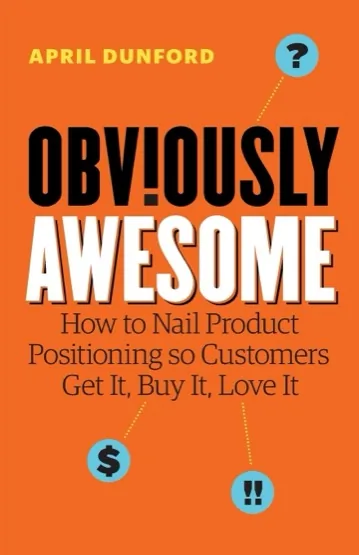
Key ideas
- Positioning isn't marketing copy, it's the deliberate act of setting the context in which customers judge whether your product is the best available option for something they already care about.
- If you don't actively supply positioning, customers invent their own, usually wrong, context for your product, and no amount of ad spend fixes that.
- Effective positioning rests on six components: true competitive alternatives, unique attributes, provable value, the customers who care most, the market category you invoke, and, optionally, a relevant trend.
- Best-fit customers, not average customers, define good positioning: interview the buyers who chose you fast, paid full price, and became advocates, not a broad theoretical persona.
- Choosing a market category is a strategic decision with three real options: fight head to head in an established category, dominate a narrower niche within it, or create an entirely new category.
- Positioning decays. It has to be revisited on a schedule and after any real market shift, not written once and filed away.
Positioning is not what you say about your product, it's the context you choose so customers can see for themselves that it's obviously the best option for something they already want.
Mental models
- The Five (Plus One) Components of Positioning — Positioning is built from competitive alternatives, unique attributes, the value those attributes create, the target customers who value it most, and the market category that frames it, with a relevant trend as an optional sixth ingredient layered on top, never a substitute for the other five.
- The Three Market-Frame Strategies — Every product's market category is a choice among three plays: go head to head in a category customers already understand, become the big fish in a narrower slice of that category, or create an entirely new category with its own name and rules. Each trades familiarity for control differently.
- The Value Ladder — Individual features only matter once they're traced upward: attributes enable benefits, benefits cluster into a handful of value themes, and value themes only count if a specific, identifiable group of customers cares about them intensely enough to buy fast and stay.
Product applications
- Before the next positioning or messaging revamp, interview five customers who bought quickly and became advocates, asking what alternative they were using before you and what almost stopped them from switching, instead of guessing at a persona.
- Run positioning as a scoped exercise with a named cross-functional team (sales, marketing, product, customer success) and a deadline, rather than letting it default to whoever wrote the last homepage headline.
- When a competitor comparison keeps stalling deals, check the true alternative your reps are actually losing to, a manual process, a spreadsheet, an internal tool, rather than assuming it's the vendor named in the deal-review doc.
- Before naming a new feature or product, explicitly test it against all three market-frame options and write down why the other two lose, instead of defaulting to the familiar category.
- Put a recurring calendar reminder to re-run the positioning exercise every two quarters or after any competitor launch, category shift, or major product change.
Questions to think about
If you asked five people on your own team to independently write down what market you compete in and why you win, would they give you five different answers, and what would that actually cost you the next time a deal stalls?
Chapter by chapter
Positioning as Context
Positioning is the act of deliberately defining the context in which a product gets judged, not a slogan or a tagline. Without it, customers don't evaluate your product neutrally, they borrow whatever context is nearest at hand, usually the wrong one, and judge you against a comparison set you never chose.
The subway violinist
In a well-documented 2007 experiment, world-class violinist Joshua Bell played a busy Washington, D.C. subway station during rush hour on a multi-million-dollar instrument. Almost no one stopped. Stripped of the concert-hall context that normally frames his playing as extraordinary, commuters filed past a virtuoso as if he were an ordinary busker.
The lesson isn't that quality doesn't matter, it's that quality alone doesn't announce itself. People don't evaluate things in a vacuum, they evaluate them inside whatever frame is presented, and if you don't supply the frame, the audience supplies a worse one for free.
Why bigger budgets can't fix this
Confusing positioning creates what functions as a "positioning vacuum": a gap where customers, prospects, and even your own sales team fill in their own guess about what you are and who you're for. Spending more on advertising into that vacuum doesn't clarify it, it just repeats the confusion louder and to more people.
More than a messaging problem
Positioning also isn't confined to marketing copy. A sales team that pitches a database company's product as a general-purpose database while marketing pitches it as an analytics platform is really running two different products' worth of messaging from one identical set of features, and both versions can't be right at once.
Getting positioning right early changes what the rest of the organization builds on: pricing, sales scripts, even roadmap priorities all inherit whatever context positioning sets, wrong or right, so a wrong early choice compounds instead of staying a marketing-only mistake.
For a PM, this reframes what a launch actually needs before more marketing spend: not a bigger campaign, but a clearer, deliberately chosen context. A feature that tests well in isolation can still flop at launch if buyers default to comparing it against the wrong category of alternative.
The Five (plus One) Components of Effective Positioning
Effective positioning is built from a small, specific set of components, not a single value-proposition sentence. Skipping any one of them tends to be exactly where a positioning effort quietly breaks down.
- Competitive alternatives: what customers would actually do or use if your product didn't exist, which is often not the vendor listed as your "competitor" in a sales deck.
- Unique attributes: the features and capabilities your product has that those alternatives genuinely lack.
- Value (and proof): the concrete benefit each unique attribute actually creates for a customer, ideally backed by evidence rather than a claim alone.
- Target market characteristics: the traits of the specific customers who care the most about that value, not everyone who could theoretically use the product.
- Market category: the frame of reference you invoke to tell customers, in shorthand, what kind of thing you are and what to expect from you.
The optional sixth ingredient
A relevant trend sits alongside the five as a bonus component: a real shift in the market that makes your positioning feel timely. It's optional and dangerous used alone, since a trend without the other five is marketing noise, not positioning.
The five core components aren't independent choices, they build on each other in sequence: you can't credibly claim unique attributes until you know the real alternatives, and you can't pick a target market until you know which attributes create real value for whom.
Where positioning efforts actually fail
Most broken positioning isn't missing all five components, it's weak on one specific one: a competitive-alternatives list that's really a wish list of who the CEO wants to be compared to, or a target market so broad it describes half the addressable market and therefore describes no one in particular.
For a PM, this is a diagnostic checklist before blaming a launch on messaging or timing: name the actual alternative customers compare you to, name what's genuinely unique versus it, and name who specifically cares, in that order, before writing a single line of copy.
Understand the Customers Who Love Your Product
The right starting point for positioning work isn't a hypothetical buyer persona, it's a small set of real customers who already love the product: people who bought relatively quickly, didn't need a steep discount to say yes, and have since become genuine advocates.
Who actually counts as a good customer to interview
Best-fit customers, not average customers, reveal the real positioning, because average customers often bought for the wrong reasons, under pressure, or half-heartedly, and their account of the product is muddled by ambivalence rather than clarity about what it's actually good for.
- Ask what alternative they were using or seriously considering right before they found you, since that's the real competitive alternative, not the one named internally.
- Ask what almost stopped them from buying, since that surfaces objections positioning needs to preempt.
- Ask what they'd tell a colleague who was skeptical, since that's often the clearest unscripted statement of the actual value.
- Ask what they'd lose if the product disappeared tomorrow, since that reveals which value theme is truly load-bearing versus merely nice to have.
Reverse-engineering positioning instead of inventing it
The method treats existing enthusiastic customers as evidence rather than starting from a blank whiteboard. Positioning built this way tends to survive contact with the market better than positioning invented in a conference room, because it's already been validated by people who paid money and stayed.
For a PM, this argues against writing a target-persona doc from assumptions and running it past leadership for sign-off. Five structured conversations with your fastest, happiest buyers will surface a truer picture of who the product is actually for than a persona slide ever will.
Form a Positioning Team
Positioning shouldn't be produced by one person working alone, whether that's a marketing lead writing new website copy or a founder redrafting the pitch deck the night before a board meeting. It needs a small, deliberately chosen cross-functional team.
Who belongs on the team
- Someone from sales, who hears real-time objections and knows which comparisons actually come up in live deals.
- Someone from marketing, who will have to translate the output into external messaging.
- Someone from product, who knows what's genuinely differentiated versus merely different.
- Someone from customer success or support, who knows what value customers actually realize after the sale, not just what they hoped for at signing.
- An executive sponsor, since positioning decisions often require authority to resolve disagreements and make them stick.
Why buy-in matters as much as the output
A team assembled this way isn't just faster at gathering input, it's also the mechanism by which the eventual positioning gets adopted. People defend and use conclusions they helped produce far more readily than conclusions handed to them after the fact.
Skipping this step is a common reason a technically correct positioning document still doesn't change how the company actually talks about the product: sales never internalized it, so reps keep pitching from habit instead of from the new framing.
For a PM leading a repositioning effort, treat assembling this team as the first deliverable, not overhead before the "real" work starts. A positioning process without a rep from sales in the room routinely produces language that sales quietly ignores.
Align Your Positioning Vocabulary and Let Go of Your Positioning Baggage
Positioning teams often argue past each other because they're using identical words to mean different things: "competitor" might mean the company named in the last lost deal to one person and the entire adjacent category to another. Aligning vocabulary has to happen before the substantive debate does.
Naming the baggage
"Positioning baggage" is the set of prior decisions, an old category name, a slide the CEO is attached to, a tagline that shipped years ago, that quietly bias the exercise even when nobody defends them out loud. Left unnamed, baggage wins by default because changing it feels riskier than leaving it alone.
- List every term the team uses loosely (competitor, market, differentiator, ideal customer) and agree on one definition for each before debating positioning itself.
- Write down existing positioning assumptions explicitly, so the team can evaluate them on merit instead of treating them as settled facts nobody chose to revisit.
- Give the team explicit permission to discard a prior category name or tagline if the process points elsewhere, rather than treating the current answer as the default outcome.
This step is intentionally unglamorous. It produces no customer-facing output on its own, but skipping it is why positioning workshops so often spiral into circular arguments that never resolve, since the participants were never actually disagreeing about substance, only about word choice.
For a PM, this is worth doing in miniature before any roadmap or positioning debate: ask each stakeholder to define "our biggest competitor" in one sentence first. The gap between answers usually explains more of the disagreement than the actual topic does.
List Your True Competitive Alternatives
The real question isn't "who are our competitors," it's "what would this customer actually do if our product didn't exist." For many buyers that answer isn't a rival vendor at all, it's a spreadsheet, an internal tool someone built, a manual process, a different department's budget, or doing nothing.
Alternatives customers name versus alternatives on the org chart
Sales teams and executives tend to name alternatives based on who shows up in competitive battlecards, which reflects who the company watches, not necessarily who the customer was actually choosing between. A true alternative is defined by the customer's decision, not by internal competitive intelligence.
This distinction matters because it sets the entire comparison set the rest of positioning gets built against. Isolating unique attributes against the wrong alternative produces a list of advantages nobody was actually weighing, since the customer was never comparing you to that option in the first place.
- Ask best-fit customers directly what they were using, or seriously evaluating, immediately before choosing you.
- Include "nothing, we did it manually" and "we built something internally" as legitimate alternatives, not edge cases to dismiss.
- Expect the answer to vary by segment, since different customer types often default to different fallback options.
For a PM, this reframes a stalled deal review: instead of asking "why did we lose to Competitor X," first confirm the prospect was actually comparing you to Competitor X at all, rather than to a spreadsheet or the status quo, since the losing argument is different in each case.
Isolate Your Unique Attributes or Features
Once the true competitive alternatives are named, the next step is a plain, unglamorous inventory: everything the product can do that those specific alternatives can't, or can't do as well. This isn't a marketing pitch yet, it's raw material, so it should include attributes that seem minor.
What counts as an attribute
An attribute is a capability, not a value claim: "processes data in real time" is an attribute, "saves you time" is the value it might create later. Conflating the two too early makes it hard to tell whether a claimed advantage is actually real or just a hoped-for benefit.
An attribute only counts as genuinely unique relative to the alternatives named in the previous step. A feature every product in the category has isn't a differentiator no matter how proud the team is of building it, and a feature the true alternative can't match is a differentiator even if it sounds unglamorous.
- List attributes honestly, including ones that feel small or unimpressive; usefulness gets decided in the next step, not this one.
- Cross-check each attribute against the actual competitive alternatives from step 4, not against a generic industry list.
- Be ready to find that some long-assumed differentiators aren't unique anymore, since alternatives evolve and catch up.
For a PM, this is a useful gut check on a roadmap built around "parity" features. A feature that merely matches what the true alternative already does might be necessary to compete, but it will never be able to carry positioning, since positioning needs the things only you can say.
Map the Attributes to Value "Themes"
A list of ten disconnected features doesn't stick in a buyer's memory, and it doesn't survive being repeated by a customer to a colleague. Each unique attribute has to be traced upward to the actual benefit it creates, and then those benefits get grouped into a small number of value themes.
From feature list to value themes
The translation runs in one direction: an attribute enables a benefit, and a benefit only becomes a value theme once it's been grouped with other, related benefits into a handful of headline ideas a customer could repeat from memory, typically two or three, not ten.
- Take each unique attribute from step 5 and write the concrete benefit it produces for the customer, in plain language, not feature language.
- Group similar benefits together into a small number of value themes rather than leaving them as a long, flat list.
- Discard or subordinate benefits that don't cluster into a theme a best-fit customer would actually care about, even if the attribute behind them is real.
This is where a technically accurate feature list turns into something a prospect can actually hold onto. A buyer forgets a spec sheet by the next meeting, but a value theme they can restate to a colleague is what actually moves a deal forward.
For a PM, this is the discipline missing from most release notes and launch decks: don't ship a bullet list of features, ship two or three value themes that the features roll up into, and write the feature list as supporting evidence underneath them.
Determine Who Cares a Lot
Not every customer values a given value theme equally, and positioning aimed at everyone who could plausibly use the product ends up meaningfully resonating with none of them. The goal of this step is finding the specific segment that cares intensely, not the segment that's merely large.
Best-fit versus broad appeal
A best-fit segment is defined by intensity of caring, not size of market. A smaller group that finds a value theme essential will buy faster, negotiate less, and refer more than a larger group that finds it merely nice to have, even though the larger group looks better on a market-sizing slide.
- Look back at the best-fit customers interviewed in step 1: what do they have in common (industry, company size, role, workflow, prior tool) beyond liking the product?
- Test whether that shared trait predicts caring about the value themes from step 6, not just general satisfaction.
- Be willing to narrow the defined target market meaningfully; a target market vague enough to include almost anyone functions, in practice, as no target market at all.
This step directly produces the target market characteristics component of positioning: the traits that identify customers who'll evangelize the product rather than merely tolerate it, and who therefore make every later positioning choice sharper instead of vaguer.
For a PM prioritizing a roadmap across several customer types, this argues for weighting the segment that cares most intensely over the segment that's simply largest, since the intense segment is the one whose advocacy compounds through referrals and renewals.
Find a Market Frame of Reference That Puts Your Strengths at the Center and Determine How to Position in It
The market category a product claims isn't neutral description, it's a strategic choice, because every category comes pre-loaded with assumptions customers already carry: who the players are, what "good" looks like, and what price range is normal. Choosing a category means inheriting that baggage on purpose.
Three ways to frame the market
- 1. Head to head: compete directly inside an existing, well-understood category against its recognized leaders, betting that your specific attributes let you win the comparison customers already know how to make.
- 2. Big fish, small pond: redefine the relevant category as a narrower niche within a larger market, one where your differentiators are exactly what that niche cares most about, so you look like the obvious leader of a smaller, well-chosen pond.
- 3. Create a new game: propose an entirely new category with its own name and its own definition of what matters, so customers can't compare you feature by feature to an existing leader at all.
Each option trades familiarity for control differently. Head to head asks for the least market education but forces a direct comparison against entrenched leaders. Creating a new category avoids that comparison entirely but requires teaching the market a concept that doesn't yet exist in anyone's head, which is slow and expensive.
The Janna Systems pivot
Early in her career, April Dunford helped grow a startup CRM company, Janna Systems, that originally competed head to head against the category leader, Siebel. Prospects kept asking one deflating question: how are you better than Siebel? The startup had neither the feature set nor the budget to win that direct comparison.
The fix wasn't a better feature list, it was reframing the category. Instead of "general CRM," the product became CRM built specifically for wealth management and investment banking, a narrower pond where its actual strengths, workflows suited to financial advisors, were exactly what mattered most. Janna went on to be acquired by Siebel itself.
A parallel pattern shows up with category creation: a company that packages an existing marketing approach under a new name, as HubSpot did with "inbound marketing," can turn a previously undifferentiated set of tactics into a category it gets to define and lead, at the cost of having to teach the market that category from scratch.
Choosing the frame
The right frame is whichever one makes your genuine strengths from step 5 the obvious deciding factor in the comparison customers will make, rather than a checkbox feature in someone else's story. It's picked deliberately, tested against the alternatives, not defaulted to out of familiarity or habit.
For a PM naming a new feature or sub-product, this argues for explicitly testing all three frames before shipping a category label: would this look strongest fighting inside the existing category, owning a narrower niche of it, or standing alone under a new name nobody has to unlearn anything to accept?
Layer On a Trend (but Be Careful)
A real market trend, a shift in technology, regulation, or buyer behavior, can add urgency to positioning that's otherwise sound. Trend language borrowed from an actual, verifiable shift makes a product feel timely rather than optional, which can shorten a buying cycle.
Why trend-heavy positioning ages badly
Trends fade, and positioning built primarily on a trend fades with it. A product whose entire pitch depends on riding a wave becomes, once that wave subsides, a product with nothing distinctive left to say, since the trend was never a substitute for the actual competitive alternatives, attributes, and value underneath it.
Leaning on trend language too heavily is also a credibility risk in the moment, not just later: buyers who've heard the same trend cited by every vendor in a category learn to discount it as filler, and heavy trend-dropping without substance behind it reads as evidence of weak differentiation, not strength.
- Use a real, verifiable trend, not a vague or invented one; positioning that can't survive scrutiny of the trend is worse than no trend at all.
- Connect the trend explicitly to the specific value themes already established in step 6, rather than mentioning it as an unconnected footnote.
- Treat the trend as seasoning layered onto positioning that already stands on its own, never as the entire argument for why the product matters.
For a PM writing launch messaging that leans on "AI" or another hot trend, this is a direct check: does the value theme still hold if the trend word were deleted from the sentence? If not, the positioning was borrowing the trend's momentum instead of earning its own.
Capture Your Positioning so It Can Be Shared
Positioning that lives only in the head of whoever ran the workshop doesn't survive contact with a real organization. The final step is documenting it in a single, reusable artifact, often called a "positioning canvas," that captures every component from Chapter 2 in one place.
One document, many translations
A single positioning document then gets translated into different audience-facing forms: a sales narrative reps can actually use in a live conversation, website and marketing messaging, pitch-deck language for investors, onboarding language for new hires. Every translation stays bound to the same underlying document so departments don't quietly drift apart.
- Record the true competitive alternatives, unique attributes, value themes, target market characteristics, market category, and, if used, the trend, in one canonical place.
- Write a short internal explanation of why each choice was made, not just the conclusion, so a future team can update it intelligently instead of guessing at the original reasoning.
- Circulate the document to the full cross-functional team from step 2 for explicit sign-off, not passive distribution, so it actually gets used rather than filed away.
Capturing positioning this way is what makes it an organizational asset instead of a one-time workshop output. A sales rep six months from now, or a new marketing hire who never sat in the room, should be able to read the document and understand not just what the positioning is, but why.
For a PM, treat this the way you'd treat a decision doc for a major roadmap call: the reasoning, not just the conclusion, is what lets someone else extend the decision correctly later instead of relitigating it or drifting from it by accident.
After Positioning: What Happens Next?
Positioning isn't a project with a fixed end date, it's a standing asset that decays. A document that was accurate the day it was written can quietly go stale as competitors launch, categories shift, and the product itself changes, without anyone deciding to make it wrong.
Positioning has an expiration date
Revisiting positioning on a regular cadence, not only when something breaks, catches drift before it costs a deal. A useful discipline is checking it on a fixed schedule, roughly every six months to a year, and additionally whenever a specific trigger happens: a new competitor enters, a named category shifts meaning, or the product itself changes enough that the original unique attributes no longer hold.
- Schedule a recurring positioning review rather than waiting for symptoms like stalling deals or confused new hires to force the question.
- Re-run a lightweight version of step 1 periodically: are the customers who love the product today the same profile it was built around originally?
- Treat a major product change, a new funding round, or a significant competitor launch as an automatic trigger for a positioning check, not just the calendar.
Positioning also has to be actively operationalized after it's captured, not merely filed: sales training, updated messaging across every customer-facing surface, and support and success teams briefed on the new framing all have to happen, or the canvas becomes a document nobody actually uses.
For a PM, this argues against treating a positioning refresh as a one-off deliverable tied to a single launch. Build the review cadence into the same recurring planning rhythm as roadmap reviews, so positioning ages at the same pace the product and market actually do, not slower.
The Entire Book in One Framework
Every piece of the book collapses into one sequence: find the customers who already love the product, work backward from them to the real competitive alternatives and genuinely unique attributes, translate those into value themes a specific segment cares about intensely, then choose the market category that puts that value at the center of the comparison.
The ten steps aren't independent techniques to pick and choose from, they're stages of one argument, each one supplying the raw material the next step needs. Skipping ahead, picking a category before knowing the true alternatives, for instance, tends to produce positioning that sounds confident and turns out to be wrong.
Positioning is not a claim you make about your product. It's the context you deliberately choose so the value that's already there becomes obvious to the people who were always going to want it most.
The three market-frame strategies, head to head, big fish small pond, and create a new game, are really one decision restated three ways: how much of the buyer's existing mental model do you want to inherit, and how much are you willing to build from scratch instead.
10 Most Important Takeaways
- Positioning is deliberately setting context, not writing a tagline; an unpositioned product doesn't stay neutral, it gets misjudged by whatever context the customer supplies instead.
- Build positioning from real components: true competitive alternatives, genuinely unique attributes, provable value, the customers who care most, the market category, and, optionally, a trend.
- Start from your best-fit existing customers, the ones who bought fast and became advocates, not from a hypothetical persona invented in a meeting.
- Assemble a small cross-functional positioning team; a document built and owned by one department rarely gets adopted by the rest of the company.
- Align vocabulary and name "positioning baggage" before debating substance, since most positioning arguments are really definition arguments in disguise.
- The true competitive alternative is whatever the customer would actually do without you, which is often a spreadsheet, an internal workaround, or doing nothing at all.
- Trace unique attributes upward into a small number of value themes; a long feature list doesn't stick, two or three clear themes do.
- Choosing a market category is a strategic bet among three options: fight head to head, dominate a narrower niche, or create an entirely new category.
- Layer a real trend on top of solid positioning if it genuinely applies, but never let the trend substitute for the underlying value.
- Capture positioning in one shared document and revisit it on a fixed schedule and after major market shifts; positioning decays if left alone.
The deepest idea in the book is that positioning isn't discovered by a genius insight in a single meeting, it's assembled, deliberately and in sequence, from evidence that already exists among the customers who love the product most.