
Key ideas
- Advertising no longer reliably works; the era of interrupting mass audiences into buying average products is over, so remarkability has to be built into the product itself.
- Be a Purple Cow: create something genuinely worth remarking on, because in a crowded world the only thing that spreads is the remarkable.
- Very good is invisible; safe, average products aimed at the mass middle get ignored, which makes playing it safe the riskiest strategy of all.
- Market to the edges, not the middle, because remarkable ideas take hold first among a small group of early adopters and enthusiasts, never the mainstream.
- Growth comes from sneezers, the people who spread ideas, and from customers with otaku, an obsessive passion for a category, who carry your idea to everyone else.
- A purple cow is temporary; once it succeeds it gets copied and becomes ordinary, so you must milk each success and keep creating new remarkable things.
The opposite of remarkable is not bad; it is very good, and very good is just another way of being invisible.
Mental models
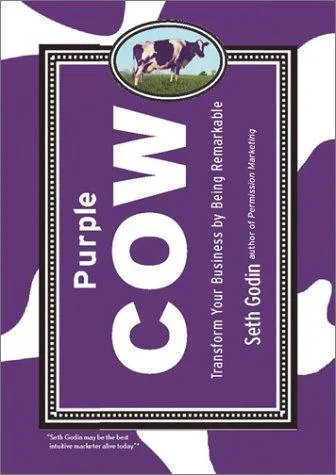
- The Purple Cow — Driving past a field of brown cows is boring; a purple cow would be worth stopping for and telling others about. In marketing, the purple cow is anything genuinely remarkable, literally worth making a remark about, built into the product or service itself. Since attention is scarce and advertising is ignored, being remarkable is not a nice-to-have; it is the only marketing that reliably reaches people anymore.
- The death of the TV-industrial complex — Twentieth-century marketing ran on a virtuous cycle: buy TV ads, sell more average products to a captive mass audience, use the profit to buy more ads. That machine is broken because consumers are overwhelmed, distrustful, and able to ignore advertising. With interruption no longer working, the leverage moves from the ad to the product, and only remarkable products can still spread.
- Marketing to the edges and the idea-diffusion curve — New ideas spread along a curve from innovators and early adopters to the early and late majority. You cannot reach the mainstream directly; you win the enthusiastic early adopters first, and they carry the idea to everyone else. Because early adopters crave the new and remarkable, being safe and average, aiming at the fat middle, guarantees no one ever picks the idea up to spread it.
- Sneezers, otaku, and milking the cow — Ideas spread through "sneezers," people who love telling others about new things, especially those with "otaku," an obsessive passion for a category (hot sauce, gadgets, a hobby). Design the remarkable product for them and they infect the wider market for free. And because every purple cow eventually gets copied into a brown one, you "milk" a success for profit while it lasts, then reinvest in inventing the next remarkable thing.
Product applications
- Stop asking how to advertise a finished product and start asking what would make the product itself worth talking about, building remarkability in during design rather than bolting on promotion after.
- Design deliberately for a passionate niche of early adopters and enthusiasts rather than the bland mass middle, because only they will adopt and spread something new.
- Identify the sneezers in your market, the people who love sharing discoveries, and craft features and moments specifically worth them telling others about.
- Treat "very good" as a warning sign in reviews: if a product is merely competent and inoffensive, it is probably invisible, and the safer move is to make it remarkable in some dimension.
- Plan for the copy: once a remarkable feature works and competitors imitate it, harvest its advantage while it lasts and invest in the next remarkable thing rather than resting on it.
Questions to think about
Is your product genuinely worth talking about, remarkable enough that a happy user would spontaneously tell a friend, or is it merely "very good," which in a crowded market is indistinguishable from invisible?
Chapter by chapter
The Death of Traditional Marketing
The book opens by declaring the old model of marketing dead. For most of the twentieth century, companies grew by making average products for average people and interrupting huge audiences with advertising until they bought. That machine no longer works.
Godin calls it the TV-industrial complex: a self-reinforcing loop where ads drove sales, and sales funded more ads. It collapsed because consumers are now overwhelmed with choice, saturated with messages, and perfectly able to ignore advertising. Attention has become the scarcest resource, and interruption no longer buys it.
The traditional marketing "P"s, product, price, promotion, and the rest, are still necessary but no longer sufficient. When advertising cannot reliably reach anyone, spending more on it is not a strategy; the leverage has moved away from the message and into the thing being sold.
For a PM, the opening lesson reframes marketing as a product problem. If ads cannot save an unremarkable product, then the work of making something spread starts in the product design itself, which puts the burden squarely on the people building it, not just the marketers.
What Is a Purple Cow?
The central image is simple. Cows, after you have seen a few, are boring; you drive past a whole field of them without a glance. But a purple cow would stop you cold and make you tell everyone. That is what remarkable means, literally worth making a remark about.
Because interruption marketing is dead, remarkability becomes the only reliable way to get noticed. A remarkable product carries its own marketing, because people spread it for you, while an ordinary product is invisible no matter how much you spend promoting it.
Crucially, the purple cow has to be built into the product or service, not manufactured in an ad campaign afterward. You cannot advertise your way to remarkable; you have to design something that is genuinely different and worth noticing, then let it speak for itself.
The PM learning is to make "is this worth talking about" a design requirement, not a marketing afterthought. Baking a genuinely remarkable quality into the product is what turns customers into a distribution channel, which no advertising budget can replicate.
Very Good Is Invisible
The book's sharpest inversion is that the opposite of remarkable is not "bad," it is "very good." A very good product is safe, competent, and inoffensive, and in a crowded market that makes it completely invisible, because there is nothing about it to notice or share.
This flips the usual view of risk. Playing it safe, aiming for broad, inoffensive appeal, feels prudent but is actually the most dangerous strategy, because it guarantees no one talks about you. Being boring is riskier than being bold, since boring reliably fails to spread.
The fear of criticism drives companies toward the safe middle: they sand off anything sharp enough to offend, and in doing so remove anything sharp enough to be remarkable. But something that pleases everyone mildly excites no one enough to mention it.
For a PM, the takeaway is to distrust the comfort of "very good." When a product is polished but unremarkable, the safe path is the losing one, and the braver, riskier-feeling choice to be genuinely distinctive is usually the only one that actually works.
Market to the Edges, Not the Middle
Since remarkable products spread by word of mouth, you have to understand how ideas travel, and they do not start in the mainstream. New things take hold first at the edges, among innovators and early adopters, and only later reach the majority.
The diffusion curve
Ideas move along a curve from a small group of innovators and early adopters, through the early and late majority, to laggards. You cannot sell a new idea directly to the mass market; you must win the early adopters first, because they are the ones willing to try something new and, crucially, to tell others about it.
This is why aiming at the fat middle backfires. The majority does not adopt new things on its own; it waits to be told by the early adopters. A product designed to be inoffensive to everyone appeals to the enthusiasts who spread ideas least of all, so it never gets the push it needs to cross over.
The PM learning is to design for a passionate edge, not a lukewarm center. Building something an enthusiastic niche loves gives you the early adopters who carry it to the mainstream, whereas a product built for the average user has no one excited enough to move it along the curve.
Sneezers, Otaku, and Spreading the Virus
If early adopters spread ideas, the strategy is to design specifically for the people most likely to spread them. Godin calls these people "sneezers": those who love discovering new things and telling everyone about them, infecting the wider market with your idea.
The most powerful sneezers have "otaku," a borrowed term for an obsessive passion for a particular category, the person who will drive across town for a rare hot sauce or obsess over the newest gadget. Where otaku exists, remarkable products spread furiously, because enthusiasts are desperate for something worth caring about.
This turns marketing into a search for passion. Instead of pushing a message onto an indifferent mass, you find the pockets of obsessive interest and build something remarkable enough to ignite them, then let their word of mouth do the work advertising used to do.
For a PM, the lesson is to identify and delight your sneezers deliberately. Understanding who in your market is passionate enough to evangelize, and designing moments and features worth their sharing, converts a small, obsessed group into your primary engine of growth.
Creating Purple Cows
Remarkability is not luck; it is a deliberate, repeatable choice. The way to create purple cows is to go to the edges and push each dimension of the offering to an extreme, asking where you could be so different that people would notice.
Godin runs through the full range of marketing levers, not just product and price but positioning, packaging, publicity, pass-along, and permission, and treats each as a place to be remarkable. The move is to take one dimension to an extreme most competitors are too cautious to try.
It also requires accepting the discomfort of being criticized. Because remarkable things are polarizing, creating a purple cow means being willing to make something some people dislike, since a product safe enough to offend no one is too bland to notice. Courage, not just creativity, is the constraint.
The PM learning is to treat remarkability as a design process: systematically examine every dimension of the product for a place to be boldly different, and pick the one where being extreme creates something worth talking about, rather than optimizing everything toward safe averages.
The Life Cycle of the Cow
A purple cow does not stay purple. Once a remarkable product succeeds, competitors copy it, customers grow used to it, and the once-astonishing thing becomes ordinary, another brown cow in the field. Remarkability has a shelf life.
This creates a two-part discipline. While a purple cow is working, you "milk" it, extracting as much profit and growth as you can before it becomes commonplace. But you cannot rest there, because the advantage is temporary and erodes as imitation catches up.
The profit from one cow should fund the invention of the next. Sustained success comes from a cycle of creating a remarkable thing, milking it, and using the proceeds to create the next remarkable thing, rather than defending a single innovation that is steadily fading into the ordinary.
For a PM, the takeaway is to build remarkability into a continuous pipeline, not a one-time launch. Planning for the day your standout feature becomes table stakes, and reinvesting today's success into tomorrow's next purple cow, is what keeps a product from sliding quietly back into invisibility.
The Entire Book in One Framework
The whole book is one argument: advertising is dead, so remarkability is the new marketing. Because people ignore ads but spread the remarkable, you must build a purple cow, something genuinely worth talking about, into the product itself, since very good is just another word for invisible.
You spread it by aiming at the edges, designing for the early adopters and sneezers with otaku who carry ideas to the mainstream. And because every purple cow eventually gets copied into an ordinary one, you milk each success and keep inventing new remarkable things in a continuous cycle.
Purple Cow is not "advertise better." It is a demand made of the product itself: be remarkable, be worth a remark, or accept that in a world drowning in choices, being merely very good means no one will ever notice you at all.
10 Most Important Takeaways
- Traditional advertising is dying; you cannot interrupt your way to attention anymore.
- Build remarkability into the product itself; you cannot advertise a boring product into spreading.
- Be a purple cow: make something literally worth making a remark about.
- The opposite of remarkable is "very good," and very good is invisible.
- Playing it safe is the riskiest strategy, because safe products never get talked about.
- Market to the edges, because new ideas start with early adopters, never the mass middle.
- Design for sneezers and people with otaku; their word of mouth is your real marketing.
- Be willing to be criticized; remarkable things are polarizing, and bland things are ignored.
- Go through every dimension of the offering and push one to a remarkable extreme.
- Milk each purple cow while it lasts, then use the profit to create the next one.
The deepest idea is that safety has become the greatest risk. In a world with infinite choices and near-zero attention, the instinct to sand off every edge and please everyone produces something no one notices at all. The only reliable path left is the counterintuitive one: choose to be remarkable, accept that it will not please everyone, and let the people it thrills carry it to the rest.