
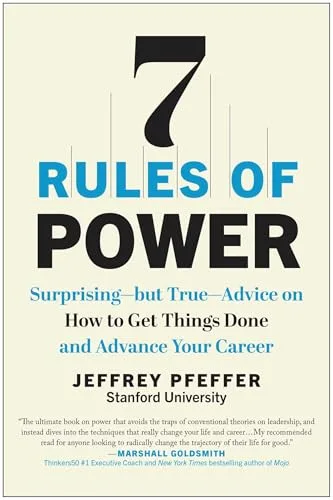
Key ideas
- Power is not automatically given to the deserving; you have to be willing to seek it and to overcome your own self-limiting beliefs first.
- Breaking rules and norms, within limits, signals and creates power, because it demonstrates that ordinary constraints do not apply to you.
- How you show up, your presence, body language, and confidence, shapes how much power others grant you, often more than your actual competence.
- You must build a powerful personal brand and promote yourself, since others will not accurately perceive your value unless you shape the narrative.
- Relentless networking builds the relationships and reputation that translate into influence and opportunity.
- Once you acquire power, using it compounds it, and how you obtained it tends to be forgiven, because success rewrites the story.
Power is not given to those who deserve it; it is taken by those willing to seek it, break norms, manage their image, and build networks, and the world largely forgives the how once you have succeeded.
Mental models
- Willingness to seek power — Pfeffer's first and foundational point is psychological: many people, especially capable ones, sabotage themselves by believing power is distasteful, that good work speaks for itself, or that seeking influence is beneath them. These beliefs keep them powerless. Acquiring power begins with getting out of your own way, shedding the self-limiting idea that you should not want or pursue it. Power is a tool that can be used for good or ill, and refusing to seek it simply cedes it to others.
- Break the rules and show up powerfully — Two behavioral rules. Breaking rules and violating norms, within reason, signals power, because willingness to defy constraints demonstrates that they do not bind you, and it can catch others off guard and reset expectations in your favor. And showing up powerfully, through confident presence, body language, use of space, and demeanor, shapes others' perceptions strongly; people infer competence and status from how you carry yourself, often more than from what you actually do.
- Build a brand and network relentlessly — Two rules about reputation and relationships. Others will not accurately perceive your worth on their own, so you must build a powerful personal brand: craft and promote a compelling narrative about who you are and what you have accomplished, because self-promotion, uncomfortable as it feels, shapes how you are seen. And network relentlessly: deliberately build wide, diverse relationships (including weak ties), and give generously, because networks are the channels through which influence, information, and opportunity actually flow.
- Use power, and success forgives the means — The final two rules are about power once obtained. Use it: power tends to compound, so exercising influence attracts more resources, allies, and further power, whereas holding back lets it atrophy. And accept that once you have acquired power, the ways you got there are largely forgiven and forgotten. History and organizations judge winners kindly; people rewrite the story of ruthless or norm-breaking ascents as visionary once the person is successful, which is why the pursuit of power is more forgiving than it feels in the moment.
Product applications
- Examine whether you are self-sabotaging by believing good work will be recognized on its own or that seeking influence is distasteful, and give yourself permission to pursue it.
- Shape how you show up: project confidence and presence in high-stakes meetings, because others infer your competence and status from your demeanor, not just your output.
- Build a deliberate personal brand: articulate and communicate your accomplishments and value, since no one else will do it accurately for you.
- Invest in networking beyond your immediate team, cultivating diverse relationships and giving generously, because opportunity and influence flow through networks.
- When you gain influence, use it to advance your priorities and your people, rather than holding back, since power that goes unused tends to fade.
Questions to think about
Are you quietly assuming that doing excellent work will earn you the influence and advancement you deserve, and if that assumption is wrong, as Pfeffer's evidence suggests, which of these uncomfortable rules, seeking power, managing your image, networking, are you refusing to follow, and at what cost to your impact?
Chapter by chapter
Get Out of Your Own Way
Pfeffer opens with the biggest obstacle to power: ourselves. Many capable people hold beliefs that keep them powerless, that seeking power is distasteful, that good work will be recognized on its own, that they are not the type to play politics. These beliefs are comforting and self-defeating.
The reality, backed by his research, is that power does not flow automatically to the deserving; it goes to those willing to pursue it. Refusing to seek power out of distaste does not make the world more just; it simply hands influence to people who are willing, often less scrupulous ones.
Getting out of your own way means shedding these self-limiting beliefs and accepting that power is a neutral tool, one you can wield for good ends, but only if you are willing to acquire it. The first step is deciding you are entitled to pursue influence.
For a PM, the opening lesson is to confront your own resistance to power. If you believe your work should speak for itself, you are likely underinvesting in the influence that actually determines your impact and advancement, and the fix begins with giving yourself permission to seek it.
Break the Rules
The second rule is provocative: breaking rules and violating norms, within reason, both signals and builds power. Conformity is the behavior of the powerless; willingness to defy convention demonstrates that ordinary constraints do not bind you.
Rule-breaking works partly through perception, others infer confidence and status from someone who ignores conventions, and partly through disruption, breaking expected patterns can catch people off guard, seize initiative, and reset situations in your favor. Asking forgiveness rather than permission is a form of this.
Pfeffer is not advocating recklessness or unethical behavior, but pointing out that excessive rule-following and waiting for permission keep people stuck, while calculated norm-breaking, taking initiative others would not, is characteristic of those who accumulate power. The powerful write rules; they do not merely follow them.
For a PM, the takeaway is that always coloring inside the lines can limit you. Taking bold initiative, challenging conventions, and acting rather than waiting for permission, judiciously, signals and builds the kind of influence that strict conformity never will.
Show Up in Powerful Fashion
The third rule concerns presence: how you show up strongly shapes how much power others attribute to you. People infer competence, status, and authority from demeanor, body language, tone, and use of space, often more than from actual performance.
This means projecting confidence, occupying space, speaking with authority, and managing the physical and emotional signals you send. Research consistently shows that confident presentation influences perception powerfully, and that appearing powerful helps you actually become and stay powerful, a self-reinforcing loop.
Pfeffer acknowledges this can feel superficial, but argues it is simply how human perception works: we cannot directly observe someone's competence, so we rely on cues, and those who master the cues are judged more capable and granted more influence, deservedly or not.
For a PM, the lesson is to manage your presence deliberately in high-stakes settings. Because others read your competence and status largely from how you carry yourself, projecting genuine confidence and command, not just doing good work quietly, shapes the influence you are granted.
Create a Powerful Brand
The fourth rule addresses reputation: you must build and promote a powerful personal brand, because others will not accurately perceive your value on their own. In a busy world, people rely on the narrative you provide about who you are and what you have achieved.
This requires self-promotion, articulating your accomplishments, associating yourself with success, and crafting a memorable, consistent story, which many find uncomfortable. But the discomfort is a trap: if you do not shape your own narrative, others will fill the vacuum with a less flattering or simply absent impression.
A strong brand also creates a self-fulfilling reputation: once people believe you are capable and important, they treat you accordingly and grant you more opportunity, which lets you accomplish more. The narrative, once established, works on your behalf even when you are not in the room.
For a PM, the takeaway is to build your brand intentionally: communicate your value and accomplishments clearly, and shape how you are known rather than assuming your work will be noticed. Managing your reputation is not vanity; it is the mechanism by which your value becomes visible and rewarded.
Network Relentlessly
The fifth rule is to network relentlessly. Relationships are the channels through which influence, information, resources, and opportunity flow, so the breadth and quality of your network directly determine your access to power.
Pfeffer stresses building a wide and diverse network, including "weak ties," acquaintances outside your immediate circle, who often provide the most valuable new information and opportunities precisely because they connect you to different worlds. Deliberate, ongoing relationship-building, not just when you need something, is key.
Effective networking is also about giving: providing help, introductions, and value to others builds goodwill and reciprocity that pays off over time. Those who invest generously in their networks find that the relationships return influence and opportunity far beyond the effort put in.
For a PM, whose impact depends on cross-functional relationships, the lesson is to invest continuously in a broad, diverse network and to give generously within it. Building relationships before you need them, and beyond your immediate team, is how you gain the access and influence that get things done.
Use Your Power, and Success Forgives the Means
The final two rules concern power once you have it. Rule six: use it. Power tends to compound, exercising influence attracts more resources, allies, and further power, while holding back lets it atrophy. Those who use their power decisively tend to accumulate more.
Rule seven is the book's most provocative and consoling claim: once you have acquired power, the ways you got there are largely forgiven and forgotten. Organizations and history judge winners kindly, and behavior that seemed ruthless or norm-breaking on the way up gets reframed as visionary once the person has succeeded.
This has a practical implication: the fear that pursuing power aggressively will permanently tarnish your reputation is usually overblown. Success tends to rewrite the narrative, which is why the pursuit of power is more forgiving than it feels in the anxious moment of doing something bold or unconventional.
For a PM, the takeaway is to actually use influence once you gain it, to advance your priorities and your people, rather than hoarding it timidly, and to worry less that seeking power boldly will haunt you. Within ethical limits, success tends to justify the path in others' eyes.
The Entire Book in One Framework
The whole book is an unsentimental account of how power is actually acquired. It begins internally, getting out of your own way and being willing to seek power, then moves to behavior, breaking rules and showing up powerfully, and to reputation and relationships, building a brand and networking relentlessly.
Finally, once you have power, you use it to compound it, and you accept that success largely forgives how you got there. Uncomfortable as these rules are, Pfeffer grounds each in research, arguing that ignoring them out of idealism simply leaves you without the influence to do good.
7 Rules of Power is not "be a good person and you will rise." It is a hard-nosed account of how power really works: it goes to those willing to seek it, manage their image, and build networks, and the world forgives the how once you have won.
10 Most Important Takeaways
- Power goes to those willing to seek it, not automatically to the deserving.
- Get out of your own way: shed the belief that seeking power is distasteful.
- Breaking rules and norms, within reason, signals and builds power.
- How you show up, presence and confidence, shapes the power others grant you.
- Build a powerful personal brand, because others will not perceive your value on their own.
- Self-promotion feels uncomfortable but is necessary to shape your narrative.
- Network relentlessly, including weak ties, and give generously.
- Use your power, because it compounds when exercised and fades when hoarded.
- Once you have power, how you got it is largely forgiven and forgotten.
- Ignoring these rules out of idealism just cedes influence to others.
The deepest idea is that the world rewards merit less reliably than we wish. We would like to believe that doing excellent work quietly will be recognized, but the evidence says power flows to those who deliberately pursue it, manage how they are seen, and build networks. Pfeffer's challenge is to stop letting a comforting ideal keep you powerless, because influence, acquired and used well, is what lets you actually accomplish the good you care about.