
Key ideas
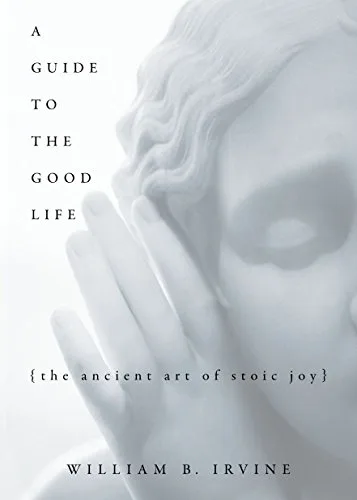
- Stoicism is not gloomy resignation but a practical philosophy for achieving tranquility, a life largely free of negative emotions, and joy.
- Practice "negative visualization": periodically imagine losing what you value, which deepens your gratitude for it and prepares you for its loss.
- Focus only on what is up to you; internalize your goals so success means doing your best, not controlling outcomes you cannot.
- Treat the past and present as fixed; accepting what cannot be changed frees enormous energy wasted on wishing reality were otherwise.
- Occasionally practice voluntary discomfort to build resilience, reduce fear of misfortune, and heighten appreciation of ordinary comforts.
- Master desire by wanting what you already have, since insatiable craving, not lack, is the true source of most unhappiness.
The Stoics did not seek to eliminate emotion but to eliminate negative emotion, and their techniques let us enjoy what we have while ceasing to be tormented by what we cannot control.
Mental models
- Negative visualization — The Stoics' signature technique, premeditation of adversity: periodically imagine losing the things and people you value, your job, your health, your loved ones, even your own life. Far from being morbid, this practice does two things. It counters "hedonic adaptation," the way we take our blessings for granted, restoring genuine gratitude for what we have. And it prepares us for loss, so misfortune, when it comes, is softened by anticipation. Regularly contemplating loss is how the Stoic learns to actually enjoy the present.
- The trichotomy of control — Irvine refines the classic Stoic dichotomy of control into three categories: things we fully control (our own judgments, values, and goals), things we have no control over (the weather, the past), and things we partially control (the outcome of a game or a project). We should ignore what we cannot control, and for what we partially control, "internalize" our goals, aiming to do our best rather than to achieve an outcome that depends on factors outside us. This keeps effort high and anxiety low.
- Fatalism about the past and present — The Stoics counseled a limited fatalism: treat the past and the present moment as fixed and beyond change, because they are. Wishing the past were different, or that this moment were other than it is, wastes energy and breeds misery over something you cannot alter. Accepting what has already happened, and meeting the present as it is, frees your attention for the one thing you can influence, your response, and for future actions still within your power.
- Voluntary discomfort and mastering desire — Two practices for tranquility. Voluntary discomfort: periodically choose mild hardship, cold, hunger, simplicity, to build resilience, shrink your fear of misfortune (you learn that discomfort is survivable), and heighten your appreciation of everyday comforts. And mastering desire: the Stoics taught that unhappiness comes not from lacking things but from insatiable wanting, so the path to contentment is to want what you already have, curbing the endless craving that keeps satisfaction perpetually one purchase away.
Product applications
- Practice negative visualization to counter taking things for granted: periodically imagine losing your role, your team, or your comforts, which restores genuine appreciation.
- Apply the trichotomy of control at work: ignore what you cannot control, and internalize goals so you measure yourself by effort and process, not outcomes dependent on luck.
- Stop expending energy on what cannot be changed, the past, a decision already made, and redirect it to your response and future actions.
- Build resilience with occasional voluntary discomfort, so setbacks and lost comforts lose their power to distress you.
- Curb insatiable wanting by cultivating gratitude for what you already have, since chasing ever more is a treadmill that never produces lasting satisfaction.
Questions to think about
How much of your anxiety and frustration comes from wishing you could control outcomes that are not up to you, or from taking for granted what you would desperately miss if it were gone, and how would it feel to focus only on your own responses and to genuinely want the life you already have?
Chapter by chapter
What Stoicism Really Is
Irvine sets out to rescue Stoicism from its modern caricature. To be "stoic" in everyday speech means to suppress emotion and grimly endure, but the ancient philosophy was something richer: a practical program for living well, aimed at achieving tranquility and joy.
By tranquility, the Stoics meant a psychological state largely free of negative emotions like anxiety, grief, anger, and fear, while still full of positive ones like joy and delight. Their goal was not to feel nothing but to eliminate the destructive emotions that ruin lives, leaving room for genuine contentment.
Crucially, Stoicism is a philosophy of life with concrete techniques, not just abstract ideas. It asks the fundamental question of what is worth pursuing, answers that virtue and tranquility are, and then provides psychological tools for actually achieving them, which is what makes it practical rather than merely theoretical.
For a PM or anyone, the opening lesson is that Stoicism offers a practical toolkit for reducing anxiety and increasing contentment, not a recipe for emotional numbness. Understanding its real aim, tranquility and joy through deliberate practices, reframes it as a usable philosophy for a demanding modern life.
Negative Visualization
The first and most powerful Stoic technique is negative visualization: periodically imagining that you have lost the things and people you value. This sounds gloomy, but Irvine shows it is precisely the opposite in effect, a reliable route to gratitude and joy.
The technique counters "hedonic adaptation," our tendency to quickly take our blessings for granted. By vividly imagining life without your health, your loved ones, or your comforts, you jolt yourself back into appreciating what you actually have, transforming the familiar and ignored into something newly precious.
It also prepares you for inevitable loss. Because change and misfortune are certain, having already contemplated them softens their blow when they arrive; you are not blindsided. The Stoic who regularly imagines loss both enjoys the present more and suffers less when things are taken away.
For a PM, the takeaway is to practice imagining the loss of what you value, your role, your team, your health, as a deliberate exercise. This counters the taking-for-granted that dulls appreciation and builds resilience, so you enjoy your circumstances more fully and are less devastated when they change.
The Trichotomy of Control
The heart of Stoic practice is directing your concern only toward what you can control. Irvine refines the classic dichotomy into a trichotomy: things fully within our control (our judgments, values, and goals), things entirely outside it (the weather, the past), and things partially in our control (the outcome of a project or a competition).
For what lies entirely outside your control, the Stoic response is acceptance; worrying about it is pure waste. But the clever move concerns the partial category, where Irvine advises "internalizing" your goals: instead of aiming at an outcome you cannot fully determine, aim at your own effort, which you can.
So a tennis player's goal becomes "to play to the best of my ability," not "to win," because winning depends on the opponent. This keeps effort and ambition high while removing the anxiety and disappointment that come from staking your peace on results beyond your power.
For a PM, the lesson is to internalize your goals: measure yourself by the quality of your effort and process, which you control, rather than by outcomes dependent on markets, luck, and others. This preserves both high performance and tranquility, because your peace no longer hinges on the uncontrollable.
Fatalism and Voluntary Discomfort
The Stoics counseled a limited fatalism: treat the past and the present as fixed, because they are beyond your power to change. Wishing the past were different, or resenting that this moment is as it is, wastes energy on the impossible and manufactures needless misery.
Accepting what cannot be altered frees attention for what can, your response now and your actions going forward. This is not passivity about the future, which remains open, but a refusal to torment yourself over the unchangeable, which is a major and avoidable source of suffering.
A complementary practice is voluntary discomfort: periodically choosing mild hardship, cold, hunger, simplicity, foregoing a pleasure. This builds resilience and shrinks the fear of misfortune (you learn discomfort is survivable), while sharpening your appreciation of the comforts you usually take for granted.
For a PM, the takeaway is to stop burning energy on what cannot be changed, past decisions, fixed circumstances, and to redirect it to your response and future moves. Occasionally embracing discomfort, meanwhile, builds the resilience that makes setbacks and lost comforts far less distressing.
Stoic Advice on Desire, Insults, and Anger
Irvine translates Stoic principles into advice for specific challenges. On desire, the Stoics taught that unhappiness stems not from lacking things but from insatiable wanting; the cure is to want what you already have, curbing the endless craving that keeps satisfaction perpetually out of reach.
On insults, they counseled removing the sting by not granting them power: an insult only wounds if you let it, so responding with humor or indifference, and remembering that the insulter's opinion may not merit your concern, preserves your tranquility. Anger, which the Stoics considered especially destructive, is best prevented by reframing situations and lowering expectations of others.
On fame and wealth, the Stoics warned against staking your happiness on the admiration of others or on possessions, both of which are largely outside your control and never satisfying for long. They valued reputation and money only lightly, as things to use well if present but not to depend on for contentment.
For a PM, the lessons are practical: cultivate gratitude to escape the treadmill of wanting more, deny insults and criticism their power over your peace, prevent anger by adjusting expectations, and avoid anchoring your happiness to status or possessions you cannot fully control.
Stoicism for Modern Life
Irvine closes by arguing that Stoicism is remarkably well-suited to modern life, perhaps more than the philosophies that have replaced it. In a culture of relentless consumption, comparison, and anxiety, the Stoic focus on internal tranquility and control offers a genuine antidote.
He is candid that practicing Stoicism takes ongoing effort, self-reflection at the end of each day (reviewing where you gave in to negative emotion), continued negative visualization, and deliberate practice of the techniques, but that the payoff is a measurably calmer, more grateful, and more joyful life.
Importantly, Stoicism does not require withdrawing from the world; the Stoics were engaged in public life and relationships. It asks only that you engage without letting outcomes beyond your control dictate your inner state, so you can pursue your goals fully while remaining tranquil regardless of results.
For a PM, the closing takeaway is that Stoicism is a practical, modern discipline for staying calm, grateful, and effective amid pressure. Adopting its techniques as an ongoing practice, not a one-time read, is what delivers the tranquility that lets you engage fully with demanding work without being ruled by it.
The Entire Book in One Framework
The whole book presents Stoicism as a practical program for tranquility and joy. Its aim is to eliminate negative emotions while keeping positive ones, and it delivers concrete techniques: negative visualization to build gratitude, the trichotomy of control to focus only on what is up to you, and fatalism about the past to stop wasting energy on the unchangeable.
Add voluntary discomfort for resilience, mastery of desire to escape endless wanting, and reframing to defuse insults and anger, and you have a toolkit for staying calm and grateful amid life's challenges. Practiced consistently, and paired with daily self-reflection, it produces a genuinely better life.
A Guide to the Good Life is not "grit your teeth and endure." It is a practical psychology of tranquility: want what you have, control only what is yours to control, prepare for loss, and let go of the rest, so you can engage fully with life while being ruled by none of it.
10 Most Important Takeaways
- Stoicism aims at tranquility and joy, not grim, emotionless endurance.
- Practice negative visualization: imagine losing what you value to appreciate it.
- This counters taking blessings for granted and prepares you for loss.
- Focus only on what is up to you; ignore what you cannot control.
- Internalize goals: aim to do your best, not to control outcomes.
- Treat the past and present as fixed, and stop wishing them otherwise.
- Practice voluntary discomfort to build resilience and appreciation.
- Master desire by wanting what you already have.
- Defuse insults and prevent anger by reframing and lowering expectations.
- Practice Stoicism as an ongoing discipline, with daily reflection.
The deepest idea is that most of our suffering is self-inflicted and avoidable. We torment ourselves over things we cannot control, take for granted what we would desperately miss, and chase desires that only breed more desire. Stoicism is a set of deliberate mental practices for reversing these tendencies, so that we want what we have, accept what we cannot change, and reserve our energy for the one thing truly in our power: how we choose to respond.