
Key ideas
- Essentialism is not about doing more in less time; it is about doing only the right things, less but better.
- You can do anything but not everything, so success requires making trade-offs deliberately rather than trying to have it all.
- Almost everything is nonessential; the disciplined pursuit of less means finding the vital few and ignoring the trivial many.
- To discern what matters, create space to explore, think, and sleep, and evaluate options by an extreme standard: if it is not a clear yes, it is a clear no.
- Eliminate the nonessential with the courage to say no, the willingness to uncommit from sunk costs, and clear boundaries.
- Make execution of the essential effortless by building buffers, removing obstacles, celebrating small wins, and creating routines.
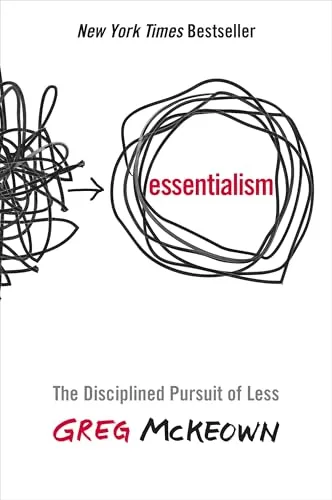
The way of the Essentialist is the relentless pursuit of less but better; it is not about how to get more things done, but how to get the right things done.
Mental models
- Less but better — The core philosophy: rather than trying to do it all, the Essentialist pursues "less but better," concentrating energy on the vital few things that truly matter and deliberately ignoring the rest. This is not laziness or minimalism for its own sake; it is a disciplined system for making the highest possible contribution by refusing to spread yourself thin. The Nonessentialist thinks "I have to do it all"; the Essentialist thinks "what is the one thing where I can make the greatest contribution?"
- The three deep truths and trade-offs — Essentialism rests on three realizations. "I choose to": you always have a choice about where to spend your energy, and forgetting this makes you a victim of others' agendas. "Only a few things really matter": the vast majority of efforts are trivial, and a small minority are vital (the 90/10 pattern). "I can do anything but not everything": trade-offs are real and inescapable, so instead of asking "how can I do both?" the Essentialist asks "which problem do I want to solve?" and chooses deliberately.
- Explore and the extreme selection criterion — Paradoxically, Essentialists explore more options than others before committing to fewer, because you cannot pick the vital few without surveying the field. This requires creating space, time to escape, think, look, play, and sleep (protecting yourself as the asset), which most people never make. Then they apply an extreme selection standard: only pursue the top opportunities. The rule of thumb is that if something is not a clear "hell yes," it is a clear no, which prevents saying yes to good-but-not-great options.
- Eliminate and execute — Two disciplines complete the system. Eliminate the nonessential: clarify your one essential intent, dare to say no gracefully, uncommit from things you are only continuing due to sunk cost or the endowment effect, and set firm boundaries. Then execute the essential effortlessly: build buffers for the unexpected, remove obstacles that slow the vital work, celebrate small wins and progress, and create routines so doing the right thing becomes automatic rather than a constant act of willpower.
Product applications
- Ask of your roadmap and your role, "what is the vital few where I can make the greatest contribution?" and deliberately cut the trivial many, even good projects.
- Apply the extreme criterion to new commitments: if a request or opportunity is not a clear "hell yes," treat it as a no, to avoid a calendar full of good-but-not-great work.
- Create protected space to think and explore before deciding priorities, and guard sleep and focus as the assets your best work depends on.
- Practice saying no gracefully and uncommitting from projects you continue only out of sunk cost, freeing resources for what truly matters.
- Make execution of priorities effortless by building buffers, removing obstacles, and creating routines, so the essential work does not depend on daily willpower.
Questions to think about
If you could do only one thing with your time and it had to make the greatest possible contribution, what would it be, and how much of your current schedule is filled instead with the trivial many that you agreed to because you never asked whether it was a clear yes?
Chapter by chapter
The Way of the Essentialist
McKeown opens by contrasting two mindsets. The Nonessentialist believes "I have to do it all" and spreads energy across countless demands, making a millimeter of progress in a million directions. The Essentialist pursues "less but better," concentrating on the vital few things that truly matter.
Essentialism is defined by three deep truths. First, "I choose to": you always have a choice about where to spend your time and energy, and forgetting that makes you a passive victim of others' agendas. Second, "only a few things really matter": most efforts are trivial, a few are vital, following a stark 90/10 pattern.
Third, and hardest, "I can do anything but not everything": trade-offs are real and unavoidable. The Nonessentialist asks "how can I do both?" while the Essentialist asks "which problem do I want to solve?" and chooses deliberately, embracing the trade-off rather than pretending it does not exist.
For a PM, the opening lesson is to reclaim choice and accept trade-offs. Recognizing that you cannot do everything, and that only a few things truly matter, is the foundation for making the deliberate, focused choices that produce real contribution instead of thin, scattered effort.
Discern the Vital Few
Counterintuitively, Essentialists explore more options than others before committing to fewer. You cannot identify the vital few without first surveying the field, so the Essentialist deliberately investigates broadly, then selects ruthlessly, rather than reacting to whatever demand is loudest.
This exploration requires space, time to escape, think, look, and play, which most people never create amid constant busyness. McKeown emphasizes protecting sleep in particular, treating yourself as the asset whose capacity must be maintained. Without room to reflect, you cannot discern what actually matters.
The extreme criterion
The Essentialist then applies an extreme standard to opportunities: pursue only the top ones. The rule of thumb is that if something is not a clear "hell yes," it is a clear no. This deliberately high bar prevents the trap of saying yes to many good-but-not-great options that crowd out the truly great.
For a PM, the takeaway is to explore widely but select by an extreme standard. Creating space to think, and refusing to commit to anything that is not a decisive yes, is how you find and protect the vital few among endless plausible demands.
Cut the Trivial Many
Identifying the essential is not enough; you must actively eliminate the nonessential, which is where courage is required. The first step is clarifying your one "essential intent," a concrete, inspiring goal specific enough that it makes other decisions easier by comparison.
The hardest discipline is daring to say no, gracefully but firmly. McKeown offers ways to decline without damaging relationships, but insists that saying no to the nonessential, even to good opportunities and to people you respect, is the price of protecting the vital few. A yes to one thing is a no to many others.
Elimination also means uncommitting from things you continue only out of sunk cost or the endowment effect, we overvalue what we have already invested in or "own." The Essentialist regularly asks, "if I were not already doing this, would I choose to start?" and stops what fails that test.
For a PM, the lesson is to practice active elimination: define a clear essential intent, say no often and gracefully, and kill projects you are continuing only because of past investment. Cutting the trivial many is what actually frees the time and focus the vital few require.
Make Execution Effortless
The final discipline is executing the essential effortlessly. Nonessentialists force execution through willpower and heroics; Essentialists design their systems so doing the right thing becomes almost automatic, removing friction rather than pushing through it.
How to make the essential effortless
- Build buffers: add margin and preparation for the unexpected, rather than assuming best-case timing.
- Subtract: identify and remove the biggest obstacle slowing your essential work, instead of just adding effort.
- Celebrate small wins: progress on what matters, however small, builds motivation and momentum.
- Create routines: turn essential activities into habits so they no longer depend on daily willpower.
By designing routines, buffers, and obstacle-removal into your work, you make the essential the path of least resistance. This is more sustainable than relying on discipline in the moment, because the system, not your fluctuating willpower, carries the load.
For a PM, the takeaway is to engineer effortless execution of priorities: build in buffers, remove the biggest obstacles, mark small wins, and create routines. Making the vital work automatic and low-friction is how you actually sustain focus on the essential over time.
The Entire Book in One Framework
The whole book is a disciplined system for less but better. It begins with the essence, that you choose, that only a few things matter, and that trade-offs are real, then moves through three disciplines: explore to discern the vital few, eliminate to cut the trivial many, and execute to make the essential effortless.
The thread is relentless focus on contribution: rather than asking how to fit more in, the Essentialist asks what is the one thing where they can make the greatest difference, and then protects it fiercely by saying no to everything else and removing the friction around it.
Essentialism is not "do more with less." It is the disciplined pursuit of less but better: choosing the vital few, eliminating the trivial many, and making the essential effortless, so your energy goes where it makes the highest contribution.
10 Most Important Takeaways
- Essentialism means less but better: do the right things, not more things.
- You always choose where to spend your energy; do not be a victim of others' agendas.
- Only a few things really matter; most efforts are trivial.
- You can do anything but not everything, so make trade-offs deliberately.
- Explore widely before committing, and create space to think and sleep.
- Apply the extreme criterion: if it is not a clear "hell yes," it is a no.
- Clarify one essential intent to make other decisions easier.
- Dare to say no gracefully, and uncommit from sunk costs.
- Set firm boundaries to protect the vital few.
- Make execution effortless with buffers, obstacle-removal, small wins, and routines.
The deepest idea is that the disciplined pursuit of less is what enables your highest contribution. We are conditioned to say yes, to add, and to try to do it all, which scatters our energy into triviality. The Essentialist reverses this: by choosing deliberately, eliminating relentlessly, and protecting the vital few, you trade the frantic feeling of doing everything for the profound satisfaction of doing what truly matters, exceptionally well.