
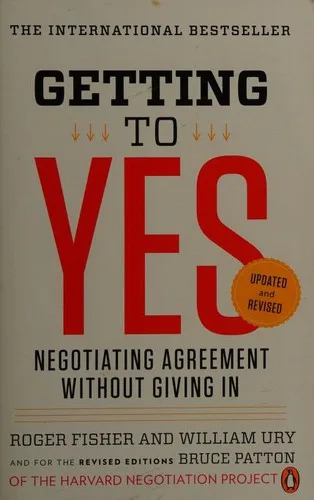
Key ideas
- Positional bargaining, staking out and defending positions, is inefficient, damages relationships, and produces poor agreements, yet it is how most people negotiate.
- Principled negotiation solves problems on the merits through four rules: separate the people from the problem, focus on interests, invent options for mutual gain, and use objective criteria.
- Behind every position lie interests, the underlying needs, fears, and desires; focusing on interests rather than positions opens room for solutions that satisfy both sides.
- Before deciding, invent many possible options together without judgment, expanding the pie rather than fighting over a fixed one.
- Insist that the outcome rest on objective, fair standards rather than on willpower, so agreement is based on principle instead of pressure.
- Your real power in any negotiation is your BATNA, your best alternative to a negotiated agreement; the better it is, the less you need the deal.
Do not bargain over positions; separate the people from the problem, focus on interests rather than positions, invent options for mutual gain, and insist on objective criteria.
Mental models
- Principled negotiation versus positional bargaining — Most people negotiate by taking positions ("I want $10,000") and grudgingly conceding toward a compromise. This positional bargaining is inefficient, strains relationships, and often yields bad deals, because each side digs in to defend its ego. The alternative, principled negotiation, or negotiation on the merits, treats the negotiation as a shared problem to solve fairly, using four rules that separate people from problem, dig beneath positions to interests, generate options, and rely on objective standards.
- Interests behind positions — A position is what someone says they want; an interest is why they want it, the underlying need, fear, or desire. Positions often conflict even when interests are compatible, so fighting over positions misses solutions that could satisfy both. The famous illustration: two people fight over an orange and split it, when one wanted the fruit and the other the peel. Asking why, uncovering interests, is what turns a zero-sum clash into a solvable problem.
- Options for mutual gain and objective criteria — Two of the four rules work together. First, before committing to any answer, brainstorm many options together without judgment, looking for ways to expand the pie and satisfy both sides rather than dividing a fixed sum. Then, to choose among options and resolve conflicts, insist on objective criteria, fair standards like market value, precedent, or expert opinion, so the outcome rests on legitimacy and principle rather than on who has more willpower or pressure.
- BATNA: the source of real power — Your BATNA is your Best Alternative To a Negotiated Agreement, what you will do if this deal falls through. It is the true measure of your negotiating power: the better your alternative, the less you need any particular deal, and the more freely you can walk away. Knowing your BATNA protects you from accepting terms worse than your alternative and from rejecting terms better than it, and improving your BATNA is often the best way to strengthen your hand.
Product applications
- In any negotiation, from vendor contracts to cross-team resourcing, stop trading positions and ask what each side actually needs underneath, so you can find solutions that satisfy both.
- Separate the people from the problem: treat a tough counterpart as a partner solving a shared problem, attacking the issue and not the person, to protect the relationship you will need later.
- Before settling a disagreement, brainstorm multiple options together without immediately judging them, looking for ways to expand value rather than split a fixed pie.
- Ground decisions in objective criteria, market rates, benchmarks, precedent, agreed metrics, so outcomes rest on fairness rather than on who pushed hardest.
- Always know your BATNA before entering a negotiation, and work to improve it, because your willingness to walk away is your real leverage.
Questions to think about
In your next difficult negotiation, do you actually know the interests beneath the other side's position, and do you know your own BATNA, what you will do if there is no deal, or are you about to dig into a position and haggle, risking both a worse outcome and the relationship?
Chapter by chapter
Don't Bargain Over Positions
The book opens by diagnosing how most people negotiate: positional bargaining. Each side takes a position, argues for it, and makes grudging concessions toward a compromise, like a buyer and seller haggling over price by staking out numbers and inching together.
This method has three serious flaws. It is inefficient, because taking and defending positions is slow and each concession is a battle. It endangers the relationship, because it becomes a contest of wills that breeds anger and resentment. And it produces unwise agreements, because people dig into positions to save face rather than seeking the best solution.
Being "nice" is not the fix. Soft positional bargaining, conceding to keep the peace, just means you get exploited by a hard bargainer. The real problem is bargaining over positions at all, whether hard or soft, so the answer is to change the game entirely.
For a PM, the opening lesson is to recognize positional bargaining in your own negotiations, over scope, resources, deadlines, and its costs. Trading positions damages the long-term relationships you depend on and rarely finds the best answer, which sets up the need for a different method.
Separate the People from the Problem
The first rule of principled negotiation is to separate the people from the problem. Negotiators are people first, with emotions, egos, and relationships, and these get tangled up with the substantive issues, so an attack on the problem feels like an attack on the person.
The fix is to deal with the people problem and the substance separately. Address emotions and perceptions directly and respectfully, put yourself in the other side's shoes, and preserve the relationship, while treating the actual issue as a shared problem to be solved side by side rather than a battle across the table.
A powerful reframing follows: see the two of you as partners attacking the problem together, not as adversaries attacking each other. Being hard on the problem and soft on the people lets you push firmly for a good outcome without generating the personal hostility that positional bargaining creates.
For a PM, the lesson is to protect relationships while negotiating hard on substance. Treating a difficult stakeholder as a partner in solving a shared problem, and addressing personal friction separately from the issue, keeps the working relationship intact for the many future negotiations you will have with them.
Focus on Interests, Not Positions
The second and most important rule is to focus on interests, not positions. A position is what someone says they want; an interest is why they want it, the underlying need, concern, or desire that the position is meant to satisfy.
This distinction unlocks agreement because positions often conflict even when interests do not. The classic story: two sisters fight over one orange and split it in half, when in fact one wanted to eat the fruit and the other needed the peel for baking. Had they asked why, both could have gotten everything they wanted.
To find interests, ask why the other side holds their position, and why not the alternatives, and share your own interests clearly. Behind opposed positions usually lie many shared and compatible interests, and it is at the level of interests, not positions, that creative, mutually satisfying solutions become possible.
For a PM, the takeaway is to always dig beneath stated demands to real needs. When another team insists on a position, asking what they are actually trying to achieve often reveals a way to satisfy their underlying interest without conceding on yours, turning a standoff into a solvable problem.
Invent Options for Mutual Gain
The third rule is to invent options for mutual gain before deciding anything. Under pressure, people narrow to a single answer and fight over it, but the skilled negotiator first expands the range of possibilities, searching for solutions that benefit both sides.
Four obstacles usually block this: premature judgment, searching for a single answer, assuming the pie is fixed, and thinking the other side's problem is theirs alone. The antidote is to separate inventing from deciding, brainstorm many options together without criticism first, then evaluate afterward.
The key mindset shift is away from a fixed-pie, win-lose frame toward expanding the pie. By looking for differences in interests, priorities, and resources, negotiators can often craft deals where each side gives what is cheap for them and gets what is valuable to them, creating joint gains that positional bargaining would never find.
For a PM, the lesson is to run negotiations and cross-team conflicts as collaborative option-generation before locking a decision. Brainstorming multiple ways to meet both sides' interests, without immediately judging, routinely surfaces creative solutions that a straight fight over one number or one scope would miss.
Insist on Using Objective Criteria
The fourth rule is to insist that the agreement rest on objective criteria rather than on a contest of wills. When interests conflict directly, you resolve it not by seeing who is more stubborn but by appealing to a fair, independent standard.
Objective criteria include market value, precedent, professional standards, expert opinion, legal principles, or any measure both sides can recognize as legitimate and independent of either's will. Grounding the outcome in such standards makes it a matter of principle, which is both fairer and easier for each side to accept and defend.
In practice this means framing each issue as a joint search for the fair standard, reasoning together about which criteria apply, and never yielding to pressure, only to principle. If the other side insists on a position, you ask on what objective basis it rests, keeping the negotiation anchored to legitimacy rather than to power.
For a PM, the takeaway is to anchor decisions in objective standards, benchmarks, data, precedent, agreed metrics, rather than in who argues hardest. Insisting that outcomes rest on fair, shared criteria depersonalizes conflict and produces decisions everyone can accept as legitimate.
BATNA: Your Real Power
A common worry is what to do when the other side is more powerful. The answer is one of the book's most influential ideas: your BATNA, your Best Alternative To a Negotiated Agreement, what you will do if no deal is reached, is the true source of your negotiating power.
Your BATNA is the standard against which any proposed deal should be measured: accept nothing worse than it, and reject nothing better. Knowing it protects you from being pressured into a bad agreement and from walking away from a good one, and it frees you from over-committing to reaching a deal at any cost.
Crucially, you can strengthen your position by improving your BATNA. The more attractive your alternative to this particular deal, the more freely you can walk away, and the more leverage you have. Developing a strong alternative before negotiating is often more powerful than any tactic at the table.
For a PM, the lesson is to always know your BATNA before negotiating, and to invest in improving it. Whether negotiating a vendor deal or internal resources, understanding what you will do without agreement is your real leverage, and it lets you negotiate from calm strength rather than desperation.
When They Won't Play or Use Dirty Tricks
What if the other side refuses to negotiate on the merits and keeps attacking positions or you personally? The book's answer is "negotiation jujitsu": rather than pushing back and escalating, deflect their attacks onto the problem and redirect the energy toward interests, options, and criteria.
Concretely, do not attack their position or defend yours; instead, ask questions and invite their advice, treat an attack on you as an attack on the problem, and reframe positional statements as one option among many. By refusing to bargain positionally even when they do, you can often pull them into a more productive mode.
Against outright dirty tricks, deliberate deception, psychological pressure, or extreme positional tactics, the remedy is to name the tactic explicitly, discuss it, and insist on fair, principled rules for the negotiation itself. Making the tactic visible and negotiable strips it of its power without descending to the same level.
For a PM, the takeaway is that you can hold to principled negotiation even against a hard bargainer: redirect attacks toward the shared problem, keep asking about interests and criteria, and calmly name manipulative tactics. This keeps the negotiation on the merits without matching the other side's hostility.
The Entire Book in One Framework
The whole book replaces positional bargaining with principled negotiation, resting on four rules: separate the people from the problem, focus on interests rather than positions, invent options for mutual gain, and insist on objective criteria. Together they turn a contest of wills into a joint search for a wise, fair agreement.
Two ideas make the method robust in the real world: your BATNA, which is your true source of power and your protection against a bad deal, and negotiation jujitsu plus naming dirty tricks, which let you stay principled even when the other side will not. The result is agreements that are efficient, fair, and relationship-preserving.
Getting to Yes is not "how to win the haggle." It is a shift from fighting over positions to solving the problem on its merits, so that both sides can reach a wise agreement, protect the relationship, and never have to choose between being a pushover and being a bully.
10 Most Important Takeaways
- Positional bargaining is inefficient, harms relationships, and yields poor agreements; being nice does not fix it.
- Negotiate on the merits: separate the people from the problem.
- Be hard on the problem and soft on the people; attack the issue, not each other.
- Focus on interests, the why beneath a position, not the positions themselves.
- Behind opposed positions usually lie shared and compatible interests.
- Invent many options for mutual gain before deciding, and expand the pie.
- Separate inventing from judging so brainstorming is not killed prematurely.
- Resolve conflicts with objective criteria, not a contest of willpower.
- Know your BATNA; it is your real power and your protection against a bad deal.
- Use negotiation jujitsu and name dirty tricks to stay principled against hard bargainers.
The deepest idea is that negotiation need not be a battle you either win by domination or lose by conceding. By treating it as a shared problem to be solved fairly, digging beneath positions to interests, generating options, and grounding outcomes in objective standards, you can consistently reach agreements that are better for both sides and leave the relationship stronger, which is exactly what makes the method so durable across everything from business deals to daily disagreements.