
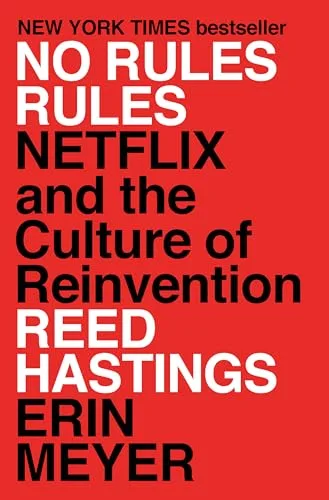
Key ideas
- A great workplace is not perks but stunning colleagues, so the first job is raising talent density by hiring and keeping only exceptional people.
- High talent density makes radical candor possible and necessary; frequent, honest feedback given with positive intent is how great people get better.
- Once talent density and candor are high, you can remove controls, vacation policies, expense approvals, decision sign-offs, replacing rules with the principle "act in the company's best interest."
- Pay top of market and be radically transparent, treating people like responsible adults with full information rather than children to be managed and monitored.
- Keep talent density high with the keeper test: if you would not fight to keep someone, give them a generous severance now, because a team is a pro sports team, not a family.
- As freedom grows, leaders must lead with context, not control, setting clear strategy and information so aligned people can make excellent decisions on their own.
Most companies add rules to prevent the errors of the few, which handcuffs the many; Netflix instead raised talent density and candor high enough that it could remove the rules entirely.
Mental models
- The freedom and responsibility flywheel — Netflix's culture is built in a repeating sequence, each step enabling the next. First raise talent density (surround people with stunning colleagues). Then increase candor (build honest, frequent feedback). Then remove controls (rules, approvals, policies). Higher talent density makes candor safe and controls unnecessary, which attracts and frees great people, which raises talent density further. The book applies this cycle at increasing levels of intensity across its three parts.
- Talent density and the keeper test — Performance is contagious, so a few merely adequate performers drag down an entire team of stars. Talent density means concentrating only exceptional people. The keeper test maintains it: a manager asks of each person, "if they told me they were leaving for a similar job elsewhere, would I fight to keep them?" If the answer is no, the humane move is a generous severance now. Netflix frames itself as a pro sports team, not a family, where every position holds a star.
- The 4A candor model — To make radical candor productive rather than cruel, Netflix uses guidelines. When giving feedback: Aim to assist (frame it to help the person, not to vent) and make it Actionable. When receiving feedback: Appreciate it (resist the defensive instinct and thank the giver) and then Accept or discard (you must genuinely consider it, but you get to decide whether to act on it). These rules let a culture run on constant honesty without becoming brutal.
- Lead with context, not control — In a controlled company, managers make decisions and approve their reports' work. In a freedom-and-responsibility culture, managers instead set rich context, the strategy, the goals, the information, the assumptions, and then let informed employees decide. The metaphor is loosely coupled but highly aligned: like an "informed captain" of each decision, the person closest to it decides, guided by context rather than commanded by approval. This scales judgment across the organization.
Product applications
- Prioritize talent density on your team over headcount: a small group of exceptional people outperforms a larger team diluted by adequate performers, so raise the bar and keep it high.
- Build candor into how the team works, using guidelines like aim to assist and appreciate before deciding, so honest feedback flows constantly instead of being saved for reviews.
- Replace approval bottlenecks with clear principles and context, letting the person closest to a decision make it as an informed captain rather than routing everything through you.
- Give teammates the full picture, strategy, metrics, even mistakes, treating them as responsible adults, because informed people make far better independent decisions.
- Use the spirit of the keeper test in team building: honestly assess whether you would fight to keep each person, and address adequate performance directly rather than letting it erode the team.
Questions to think about
How many of the rules, approvals, and controls on your team exist to prevent mistakes by a few people, and what would it take, in talent density and candor, to trust your team enough that you could remove them and let people act on their own judgment instead?
Chapter by chapter
A Great Workplace Is Stunning Colleagues
The foundation of Netflix's culture is a simple reframing: a great workplace is not free food, fancy offices, or generous perks. It is being surrounded by stunning colleagues, exceptional people who are also collaborative. Everything else is secondary.
The concept is talent density, the concentration of high performers on a team. Hastings learned in a painful early layoff that after cutting the weakest people, the remaining smaller team was dramatically more energized and productive, because performance is contagious and a few adequate performers drag everyone down.
The implication is to relentlessly raise the bar: hire only exceptional people, and do not tolerate merely adequate ones on a team meant to be great. Dense talent creates its own upward spiral of ambition, learning, and standards that attracts still more talent.
For a PM, the opening lesson is that team composition is the highest-leverage decision. Concentrating truly exceptional people, rather than adding bodies or offering perks, is the foundation on which every other freedom in the book depends, and it is worth protecting fiercely.
Say What You Really Think (with Positive Intent)
With stunning colleagues in place, the next step is radical candor: a culture where people say what they really think, frequently and honestly, because great people want and deserve real feedback. Withholding it wastes their potential.
The 4A guidelines
- Giving feedback: Aim to assist, framing it to genuinely help, and make it Actionable.
- Receiving feedback: Appreciate it rather than getting defensive, then Accept or discard, considering it seriously but deciding for yourself.
Candor works because talent density makes it safe: exceptional professionals can hear hard truths without collapsing, and positive intent keeps it constructive. A rule of thumb is to only say things about a person that you would say to their face, which kills the poison of behind-the-back criticism.
For a PM, the takeaway is to make honest feedback a constant, structured habit rather than a rare event. Using guidelines so candor stays helpful, and modeling openness to feedback yourself, is what turns a team of talented individuals into one that keeps rapidly improving.
Remove Vacation Policy
Having built talent density and candor, Netflix begins removing controls, starting with the vacation policy. Netflix simply has none: people take the time off they need, with no set number of days and no tracking.
The surprising insight is that freedom requires modeling and context to work. When the policy disappeared, people initially took less time off, unsure what was acceptable, so leaders had to visibly take vacations and set context about expectations, which then freed others to do the same.
The deeper principle is that removing a rule signals trust and treats employees as responsible adults, which tends to elicit responsible behavior. The freedom is not chaos; it is bounded by talent density, candor, and the expectation that people act in the company's interest.
For a PM, the lesson is that granting freedom requires actively setting context and modeling the desired behavior, not just announcing the absence of a rule. Trust extended thoughtfully, with clear norms demonstrated from the top, produces more responsibility than a policy ever could.
Remove Travel and Expense Approvals
Netflix extends the same logic to spending, eliminating travel and expense approval processes. In place of a thick policy, there is essentially a five-word guideline: act in Netflix's best interest.
Employees book their own travel and make their own spending decisions using that simple principle, without pre-approval. Occasional abuse is tolerated as the cheaper price of the speed, autonomy, and trust the freedom provides, and it is caught after the fact through auditing rather than prevented by bureaucracy.
The cost-benefit is deliberate: a few people misusing the freedom costs far less than handcuffing the many with approvals that slow everyone down and signal distrust. Freedom with light back-end auditing beats front-end control for a company of responsible high performers.
For a PM, the takeaway is to replace approval bottlenecks with clear guiding principles wherever talent and candor allow. Trusting capable people to act in the organization's interest, and auditing rather than pre-approving, removes friction and treats them as the professionals they are.
Pay Top of Personal Market
Sustaining talent density requires paying to keep stars, so Netflix pays top of personal market, the highest salary a person could command elsewhere, rather than relying on bonuses tied to annual targets. Great people are worth far more than average ones, so it pays them accordingly.
Netflix rejects performance bonuses, arguing they undermine flexibility and freedom by locking people into last year's goals; a top salary paid to a highly motivated professional yields better results than a base plus a bonus that rewards hitting predefined targets in a changing world.
Strikingly, Netflix encourages employees to take recruiter calls and interview elsewhere to learn their true market value, and then pays them at that level, so their best people never have a financial reason to leave. Retention of stars keeps talent density high.
For a PM, the lesson is that compensation is a talent-density tool: paying your best people at the top of their market, and understanding what they could earn elsewhere, protects the exceptional team on which every other freedom depends.
Open the Books
Netflix practices radical transparency, sharing information most companies guard tightly, including detailed financials, strategic plans, and even sensitive decisions. The premise is that treating people like responsible adults means giving them the full picture.
Transparency extends to mistakes: leaders are expected to "sunshine" their own errors, openly sharing what went wrong so others can learn, which normalizes candor about failure and builds trust. Hiding information, by contrast, signals that people cannot be trusted with the truth.
The payoff is better decisions and deeper ownership. Employees armed with the same context as leadership can make smart, aligned choices independently, and openness about finances and strategy makes the freedom-and-responsibility model actually workable rather than reckless.
For a PM, the takeaway is to share far more than feels comfortable, strategy, metrics, and your own mistakes, because informed teammates make better independent decisions and transparency builds the trust that autonomy requires. Openness is a precondition for real freedom.
No Decision-Making Approvals Needed
The boldest control Netflix removes is decision approval. Employees, even relatively junior ones, can make large bets, including spending millions, without a manager's sign-off. The mantra is that you should not seek to please your boss but to do what is best for the company.
Each significant decision has an "informed captain", the person responsible for it, who is expected to gather input and dissent but ultimately decides alone. The process is to farm for dissent and socialize the idea, then place the bet, and afterward celebrate if it works or sunshine it openly if it fails.
This distributes judgment across the organization and dramatically speeds decisions, because they are made by the person closest to the problem rather than escalated up a chain. It only works because talent density ensures the decision-makers are capable and candor ensures they seek real input.
For a PM, the lesson is to push decision-making authority down to the informed person nearest the problem, replacing approval chains with an expectation to gather dissent and decide. This scales good judgment and speed, provided the people and the candor are strong enough to support it.
The Keeper Test
To keep talent density high over time, Netflix uses the keeper test. Managers regularly ask of each team member: if this person told me they were leaving for a similar role elsewhere, would I fight hard to keep them? If the honest answer is no, that person should be let go now, with a generous severance.
This flows from a deliberate metaphor: Netflix is a professional sports team, not a family. Every position must hold a star performer, and a manager's job is to field the best possible team, which sometimes means parting ways with good people who are merely adequate for the role.
The generous severance is what makes this humane and sustainable. Adequate performance earns a respectful, well-compensated exit rather than a hidden campaign to push someone out, and the openness of the standard means people know where they stand and the whole team stays exceptional.
For a PM, the takeaway is to keep the bar high honestly: use the spirit of the keeper test to assess whether each person is someone you would fight to keep, and address adequate performance directly and generously, because tolerating it quietly erodes the density everything depends on.
A Circle of Feedback
To keep candor flowing as the company grows, Netflix institutionalizes feedback through explicit mechanisms rather than leaving it to chance. Candor is treated as a system to be reinforced, not just a value to be hoped for.
The tools include live and written 360-degree reviews, where colleagues give each other direct feedback, often organized around what to start, stop, and continue. Some are done in group settings, making the exchange of honest feedback a normal, expected, repeated event rather than a rare and dreaded one.
Building these regular circles of feedback ensures that even at scale, people keep receiving the honest input that helps them improve, and that candor does not quietly decay into politeness as the organization matures and grows more complex.
For a PM, the lesson is to make candor a repeatable system, not an occasional act of courage. Establishing regular structured feedback, such as start-stop-continue 360s, keeps honest input flowing across the team and prevents the natural drift toward silence as a group grows.
Lead with Context, Not Control
The capstone principle ties the model together: in a freedom-and-responsibility culture, leaders lead with context, not control. Instead of making or approving decisions, a manager's job is to provide the rich context that lets informed employees decide well on their own.
Context means the strategy, the goals, the metrics, the assumptions, and the stakes, everything a person needs to make the same decision the leader would, but faster and closer to the problem. The organization aims to be loosely coupled but highly aligned: independent in execution, unified in direction.
This is how judgment scales. When a leader controls decisions, they become a bottleneck; when they set context and trust people, good decisions multiply across the whole organization. Control is appropriate only in narrow, high-stakes cases where error prevention truly outweighs speed and autonomy.
For a PM, the takeaway is to lead by aligning people through context rather than commanding through approval. Investing in giving your team the full strategic picture, and then trusting them to decide, removes you as a bottleneck and produces faster, better decisions at scale.
Bring It All to the World
The final chapter, drawing on Erin Meyer's cross-cultural expertise, addresses taking this culture global. A model built on radical candor and freedom collides with the reality that norms around directness, hierarchy, and trust vary enormously across cultures.
Using the idea of a culture map, the authors show that feedback styles differ sharply: some cultures give direct negative feedback comfortably, others find it deeply rude. Applying Netflix's candor in, say, Japan or the Netherlands requires calibration, adjusting how directly feedback is given while preserving the underlying commitment to honesty.
The lesson is that the core principles, talent density, candor, and freedom, can travel globally, but their expression must be adapted to local cultural expectations rather than imposed uniformly. Understanding the culture map lets a global company keep its values while respecting how different teams actually operate.
For a PM leading across cultures, the takeaway is to hold the principle constant while adapting the practice. Keeping the commitment to candor and freedom, but tuning how directly and hierarchically it is expressed to fit each culture, is what lets a strong culture scale internationally without either diluting or offending.
The Entire Book in One Framework
The whole book is one repeating cycle applied at rising intensity: raise talent density, then increase candor, then remove controls. Stunning colleagues make honest feedback safe, and honest feedback plus great people make rules and approvals unnecessary, which frees and attracts still better people.
The supporting practices keep the cycle turning: pay top of market and open the books to treat people as trusted adults, use the keeper test to hold density high, build feedback circles to sustain candor, and lead with context rather than control so judgment scales, adapting it all thoughtfully as the culture goes global.
No Rules Rules is not "have no discipline." It is the opposite: only by demanding extreme talent density and relentless candor do you earn the right to remove the rules, so that a company of trusted, informed adults can move faster than any rulebook would ever allow.
10 Most Important Takeaways
- A great workplace is stunning colleagues, not perks; raise talent density above all.
- A few adequate performers drag down a whole team, because performance is contagious.
- Build radical candor with positive intent, using the 4A guidelines to keep it constructive.
- Remove controls once talent and candor are high: vacation policy, expense approvals, and more.
- Replace thick rules with a simple principle: act in the company's best interest.
- Pay top of personal market and skip performance bonuses to retain stars and preserve flexibility.
- Be radically transparent, sharing strategy, finances, and your own mistakes.
- Push big decisions to the informed captain closest to the problem, with no approval needed.
- Use the keeper test and generous severance to keep every seat filled by a star.
- Lead with context, not control, so aligned, informed people decide well on their own.
The deepest idea is that most corporate rules exist to prevent the mistakes of a few, and in doing so they handcuff the capable many and signal distrust to everyone. Netflix's bet is that if you invest enough in talent density and candor, you can remove those rules and unleash a company of trusted, informed adults who move faster and adapt better precisely because nothing is holding them back.