
Key ideas
- Nobody is obligated to read, watch, or listen to what you make, so you have to earn attention on every page rather than assume it.
- Accepting that reality breeds empathy, the indispensable skill of switching from your own point of view to the reader's and writing for them, not yourself.
- The antidote to indifference is to distill your work to its essence and make it so interesting and valuable that ignoring it would be foolish.
- Every effective piece, from an ad to a novel to a business proposal, has a structure: a three-act shape of setup, conflict, and resolution.
- Every work must have a theme, a single controlling idea, and everything in it should serve that one thing.
- Craft holds attention through hook, build, and payoff: grab the reader, escalate, and deliver a satisfying resolution, while doing the professional work despite resistance.
Nobody wants to read your stuff; they are busy, distracted, and indifferent, so your only job is to make what you write so compelling that they cannot help themselves.
Mental models
- Nobody wants to read your sh*t — The governing reality Pressfield learned on his first day in advertising: the reader, viewer, or customer is busy, distracted, and owes you nothing. They are not waiting for your work and feel no obligation to finish it. This is not cynicism but liberation, because once you truly accept it, you stop writing to please yourself and start doing the hard work of making something worth someone else's scarce attention.
- Empathy: switch to the reader's point of view — The most important skill this reality forces you to develop is empathy: the ability to leave your own head and imagine the piece from the reader's side. What do they care about, what will bore them, where will they quit? Great writers and entrepreneurs constantly toggle between their own vision and the audience's experience, shaping the work around what will actually hold and reward the reader's attention.
- Universal three-act structure and theme — Across every form Pressfield worked in, effective work shares a structure: three acts, a setup that establishes the situation, a middle of rising conflict or development, and a resolution that pays off. Underneath structure sits theme, the single controlling idea the whole piece is about. Knowing your theme, and making every part serve it, is what gives a work coherence and force, whether it is a movie, a memoir, or a pitch.
- Hook, build, payoff, and doing the work — Attention is held through a simple engine: hook the audience at the start, build by escalating tension or value in the middle, and deliver a satisfying payoff at the end. But none of it happens without the professional habit at the center of all Pressfield's work: overcoming Resistance, the inner force that stops you from doing the work, by sitting down and shipping despite fear, distraction, and self-doubt.
Product applications
- Assume no one wants to read your doc, deck, or email, then make it so clear and compelling that a busy reader cannot help but keep going, rather than counting on their obligation to finish it.
- Practice reader empathy: before sending anything, imagine it from the audience's point of view and cut whatever would bore them or make them quit.
- Distill every communication to its essence, the one thing that matters, instead of dumping everything you know onto the reader.
- Give important documents a structure with a clear setup, the meat of the argument, and a resolution, and open with a hook that earns the next paragraph.
- Name the single theme of any piece you write, the one idea it is about, and make sure every section serves it rather than wandering.
Questions to think about
When you write a document or build a deck, do you write it for yourself, dumping in everything you know, or do you write it from the busy, indifferent reader's point of view, making every line earn the next, and if you are honest, would a distracted reader actually finish it?
Chapter by chapter
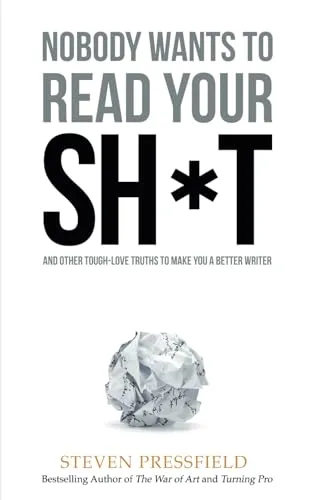
Nobody Wants to Read Your Sh*t
Pressfield opens with the blunt lesson he learned on his first day in advertising, the title itself: nobody wants to read your stuff. The reader is busy, distracted, and indifferent, waiting for no one's work and under no obligation to finish yours. This is the foundational truth of all communication.
Far from discouraging, accepting this is liberating. Once you stop assuming an audience owes you their attention, you stop writing to express yourself and start doing the real work: making something so compelling that a busy person would be crazy not to engage with it.
The reality applies universally, to ads, novels, screenplays, nonfiction, and any pitch or proposal. In every case the burden is on the creator to earn attention line by line, because the default response to anything you make is to ignore it and move on.
For a PM, the opening lesson is to assume your documents, decks, and messages start with zero right to attention. Writing as if the reader is busy and indifferent, and must be won over every line, forces the clarity and compression that stiff, self-indulgent corporate writing never achieves.
Empathy and the Reader's Point of View
The single most important skill that flows from accepting no one wants to read your work is empathy: the ability to step out of your own head and experience the piece from the reader's side. Pressfield calls this indispensable for all artists and entrepreneurs.
Empathy means constantly toggling between two viewpoints, your own vision of what you want to say, and the audience's actual experience of receiving it. You ask what they care about, where they will get bored, and what would make them stop, then shape the work around holding and rewarding their attention.
This is the difference between writing to express yourself and writing to reach someone. Self-focused work dumps everything the creator finds interesting; reader-focused work is ruthlessly shaped by what the audience needs and will tolerate, which is why empathy is a craft skill, not just a virtue.
For a PM, the takeaway is to develop the discipline of viewing your communications from the audience's perspective, engineers, executives, customers, and building them around what that specific reader cares about. The ability to switch into their point of view is what makes your writing and pitches actually land.
Distill It to the Essence
From advertising, Pressfield learned that the antidote to indifference is radical distillation. When you have seconds to grab a busy person, you cannot ramble; you must reduce your message to its sharpest, most compelling essence and lead with it.
This means identifying the one thing that matters most and cutting everything that dilutes it. An ad has no room for throat-clearing, and neither, really, does anything else; the more you strip away, the more forcefully the core lands. Concision is not just tidiness but persuasion.
Distillation also requires knowing what your work is truly about, so you can foreground it. You cannot compress effectively until you have found the essential point, which is itself hard intellectual work, the same clarifying discipline that separates a memorable message from a forgettable info-dump.
For a PM, the lesson is to lead with the essence and cut the rest. Whether it is a launch email, a strategy memo, or a pitch, distilling to the single most compelling point, and putting it first, is how you reach a reader who will not wade through everything you could have said.
Every Piece Has a Three-Act Structure
When Pressfield reached Hollywood, he finally understood what a story is, and it transformed all his later writing. The key discovery was structure: effective work, in any medium, follows a three-act shape that has survived from ancient times because it works.
Setup, conflict, resolution
The three acts are a setup that establishes the situation and stakes, a middle of rising conflict or development that builds tension and interest, and a resolution that pays off what came before. This shape is not just for movies; it underlies novels, ads, speeches, and even business proposals.
Understanding structure is what let Pressfield tell stories that held together, and its absence is why so much writing meanders and loses the reader. A piece with a clear beginning, middle, and end gives the audience a sense of progression and a reason to keep going toward a payoff.
For a PM, the takeaway is to give important communications a real structure: set up the problem and stakes, develop the argument or evidence, and resolve with a clear conclusion or ask. A proposal shaped like a story, with a beginning, middle, and end, is far more persuasive than a flat list of facts.
Know Your Theme
Beneath structure sits something even more fundamental: theme. Every work, Pressfield insists, must be about one thing, a single controlling idea, and the creator must know what that is before the work can cohere.
The theme is the answer to the question, what is this really about? Once you know it, it becomes the test for every element: does this scene, section, or point serve the theme, or dilute it? Anything that does not serve the controlling idea should be cut, no matter how good it is on its own.
This is why clarity of theme produces force. A piece organized around one clear idea hits hard and stays memorable, while a piece that tries to be about several things at once feels muddy and forgettable. Knowing your theme is the discipline that gives a work unity and punch.
For a PM, the lesson is to name the single theme of anything you create, the one idea a document, deck, or product story is about, and make every part serve it. A memo or pitch built around one clear controlling idea persuades far better than one that scatters across many points.
Hook, Build, and Payoff
The mechanics of holding a busy audience come down to a simple engine: hook, build, payoff. You must grab attention at the very start, escalate interest or tension through the middle, and deliver a satisfying resolution at the end.
The hook is non-negotiable, because if the opening does not seize the reader, nothing that follows matters; they are already gone. The build sustains momentum by raising stakes, deepening the argument, or increasing tension, so the audience stays engaged rather than drifting. The payoff rewards their investment.
This rhythm applies everywhere. An ad hooks, builds desire, and pays off with the product; a proposal hooks with the problem, builds with evidence, and pays off with the solution and the ask. Skipping any part, especially the hook, loses the audience Pressfield has already warned will not stick around.
For a PM, the takeaway is to structure communications as hook, build, payoff: open with something that earns the reader's next minute, escalate the case, and land a clear, satisfying conclusion. A strong opening in particular is what buys you the attention to make the rest of your case.
Turning Pro and Overcoming Resistance
Running beneath all of Pressfield's work, including this book, is his signature theme: the fight against Resistance, the internal force of fear, procrastination, and self-doubt that stops us from doing our creative work. None of the craft matters if you never actually produce.
The antidote is to turn pro: to show up and do the work consistently, despite fear and the constant pull of Resistance, treating creation as a professional obligation rather than waiting for inspiration. Amateurs wait to feel ready; professionals sit down and ship.
This professional mindset is what lets a writer or maker actually apply the lessons of empathy, distillation, structure, and theme, because those lessons are worthless if Resistance keeps the work from ever being finished. Doing the work is the precondition for all the craft.
For a PM, the lesson is that finishing and shipping beats waiting for the perfect version. The internal Resistance that keeps a document unwritten or a decision unmade is the real enemy, and adopting the professional habit of doing the work despite discomfort is what turns craft knowledge into delivered results.
The Entire Book in One Framework
The whole book flows from one humbling truth: nobody wants to read your stuff. Accept that, and it forces the master skill of empathy, seeing your work from the busy reader's point of view, which in turn demands that you distill to the essence and make every line earn attention.
The craft that answers this reality is universal across forms: give the work a three-act structure, anchor it to a single clear theme, and hold attention through hook, build, and payoff. And none of it matters unless you overcome Resistance and actually do the work.
Nobody Wants to Read Your Sh*t is not an insult; it is the most useful thing a writer can internalize. Once you truly believe no one owes you their attention, you finally start making things worth someone else's time, which is the beginning of all real craft.
10 Most Important Takeaways
- Nobody is obligated to read your work; you must earn attention on every line.
- Accepting that reality breeds empathy, the skill of seeing your work from the reader's point of view.
- Distill everything to its essence and lead with the one thing that matters.
- Give every piece a three-act structure: setup, conflict, resolution.
- Anchor the work to a single theme, and cut anything that does not serve it.
- Hold attention with hook, build, and payoff, and never skimp on the hook.
- Write for the audience, not to express yourself.
- The same principles apply everywhere, from ads to novels to business proposals.
- Overcome Resistance and do the work; craft is useless if you never ship.
- Turning pro means showing up consistently, not waiting for inspiration.
The deepest idea is that great communication begins with humility about your audience. The natural instinct is to assume people will care about what we make because we care about it, but they will not; they are busy and indifferent by default. Internalizing that, rather than resenting it, is what pushes you to do the empathetic, disciplined work of making something genuinely worth another person's scarce attention.