
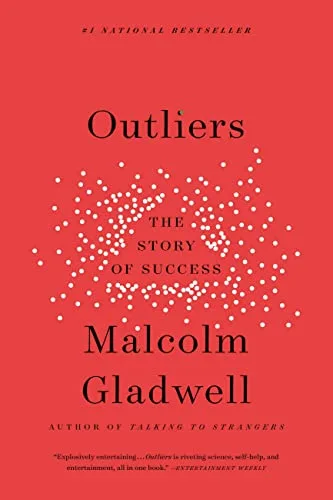
Key ideas
- Success is not purely individual merit; it is powerfully shaped by hidden advantages, timing, opportunity, and cultural background.
- Extraordinary achievement takes roughly 10,000 hours of practice, so the outliers are those who got the chance to accumulate that time.
- Small early advantages compound into huge later ones, the Matthew Effect, as in how a child's birth month can shape an athletic career.
- When you are born and where you come from can matter enormously, giving some people demographic luck that others never receive.
- Beyond a threshold, more raw intelligence stops mattering; practical intelligence and opportunity determine who capitalizes on their gifts.
- Cultural legacies, inherited attitudes about hierarchy, work, and honor, quietly shape performance, from plane crashes to math achievement.
The self-made outlier is a myth; behind every extraordinary success lies a web of hidden advantages, lucky timing, and inherited legacy that made the achievement possible.
Mental models
- Success as accumulated advantage — Gladwell's thesis is that we badly overstate individual talent and effort in explaining success, and ignore the context that makes it possible. Outliers are not simply the smartest or hardest-working; they are people who received hidden advantages, opportunities, and lucky timing that let their abilities flourish. Success is cumulative: small early edges snowball into large ones (the "Matthew Effect," those who have are given more). Understanding this replaces the myth of the self-made genius with a fuller, more honest picture.
- The 10,000-hour rule — Mastery of a complex skill requires enormous practice, roughly ten thousand hours, so the question behind any outlier is how they got the opportunity to accumulate that time. The Beatles played marathon sets in Hamburg; Bill Gates had rare, early access to computers. Their genius was real, but so was the extraordinary chance to practice that most people never get. The rule shifts attention from innate gift to the opportunities that let someone put in the hours others could not.
- Timing and demographic luck — When you are born can be decisive. A cluster of tech titans (Gates, Jobs, and others) were born around 1955, old enough to seize the personal-computer revolution but young enough not to be locked into old careers. A generation of industrial giants was born in the 1830s. In hockey, being born early in the year gives a child a size edge that compounds through years of extra coaching. Being in the right place at the right moment, demographic luck, hands some people opportunities pure merit never could.
- The IQ threshold and cultural legacy — Two further correctives. Intelligence matters only up to a threshold; beyond a certain point, more IQ does not predict more success, and "practical intelligence" (knowing how to navigate the world and people) plus opportunity determine who capitalizes on their gifts. And cultural legacy, the inherited attitudes toward authority, work, and honor passed down through generations, quietly shapes behavior and outcomes, influencing everything from airline safety (deference to authority) to persistence at hard problems (the meaningful work of rice farming).
Product applications
- Recognize that top performers often had hidden advantages and opportunities, so build systems that create those opportunities for more people rather than assuming talent alone rises.
- Give people the time and access to accumulate real skill (the 10,000 hours), since expertise depends on opportunity to practice, not just innate ability.
- Watch for accumulated-advantage effects in your own processes, like arbitrary cutoffs that give early leaders compounding resources, and design to counter them.
- Value practical intelligence and how people navigate real situations, not just raw analytical brilliance or credentials, when assessing potential.
- Be aware of cultural legacies, especially attitudes toward authority and speaking up, that shape team communication and safety, and design norms that surface concerns.
Questions to think about
When you attribute someone's success (or your own) purely to talent and hard work, what hidden advantages, timing, access, opportunity, cultural background, are you leaving out, and how might recognizing those factors change how you build systems that let more people succeed?
Chapter by chapter
The Matthew Effect
Gladwell opens by dismantling the idea that success is purely a matter of individual merit. His first case is startling: elite Canadian hockey players are disproportionately born in the first months of the year, which has nothing to do with talent and everything to do with an arbitrary cutoff date.
The mechanism is accumulated advantage, what he calls the Matthew Effect after the biblical line that to those who have, more will be given. Children born just after the eligibility cutoff are older and bigger than their peers, get selected for better teams, receive more coaching and practice, and that small initial edge compounds into a large one over years.
The lesson generalizes: many "outliers" got a small early advantage, of age, timing, or access, that snowballed. What looks like innate superiority is often the compounding result of an initial head start that had little to do with the person's underlying ability.
For a PM, the opening lesson is to watch for accumulated-advantage dynamics: arbitrary early edges that compound into large gaps, in performance rankings, resource allocation, or opportunity. Recognizing them lets you question whether apparent merit is really a snowballed head start, and design fairer systems.
The 10,000-Hour Rule
Gladwell's most famous idea is the 10,000-hour rule: achieving mastery of a complex skill requires roughly ten thousand hours of practice. Behind every outlier, then, is not just talent but an extraordinary opportunity to accumulate that enormous amount of practice.
The Beatles became great partly by playing grueling, hours-long sets night after night in Hamburg, logging practice time few bands ever did. Bill Gates had rare access to a computer terminal as a teenager in the late 1960s, letting him program obsessively when almost no one else could. Their gifts were real, but so was the rare chance to practice.
The point is not that anyone can become world-class with enough hours, but that world-class performers invariably had the opportunity to put in those hours, an opportunity distributed unequally by circumstance. The hidden question behind any prodigy is: how did they get the chance to practice so much?
For a PM, the takeaway is that expertise depends on opportunity to practice, not talent alone. Building environments that give people the time, access, and deliberate practice to accumulate real skill is what develops mastery, and recognizing that top performers had such opportunities tempers the myth of pure natural genius.
The Trouble with Geniuses
Gladwell challenges our worship of raw intelligence. Studying extremely high-IQ individuals, he finds that beyond a certain threshold, more intelligence does not translate into more success. Once you are smart enough, being smarter adds little, and other factors take over.
He contrasts Chris Langan, a man of staggering IQ who never achieved prominence, with figures like Robert Oppenheimer, who did. The difference was not intelligence but "practical intelligence": the social savvy to navigate institutions and people, knowing what to say to whom to get what you need, which Langan, raised in poverty and difficulty, never learned.
Practical intelligence, Gladwell argues, is largely a product of upbringing and environment; families that cultivate a sense of entitlement and teach children to engage with authority pass on advantages that raw brilliance cannot supply. Genius alone, without the opportunity and know-how to deploy it, often goes unrealized.
For a PM, the lesson is to value practical intelligence and real-world navigation, not just analytical brilliance or credentials. How someone works with people and institutions often determines whether their talent produces results, so assessing and developing that practical savvy matters as much as measuring raw ability.
Demographic Luck and Timing
Gladwell argues that when you are born can be as decisive as who you are. A remarkable number of technology titans, including Bill Gates and Steve Jobs, were born around 1955, old enough to be ready when the personal computer arrived, yet young enough not to be locked into an established career.
Similarly, a cluster of nineteenth-century industrial giants were born in the 1830s, perfectly positioned to capitalize on the economic transformation of their era. And the story of the lawyer Joe Flom shows how demographic luck, being the right ethnicity, in the right city, with the right skills, when the legal world changed, created outsized opportunity.
The theme is that being in the right place at the right moment hands some people opportunities that merit alone never could. Historical timing opens windows that only those born at the right moment, with the right background, can walk through, and much success is walking through such a window.
For a PM, the takeaway is to appreciate the role of timing and context in success, including your own. Recognizing that opportunity windows depend on circumstances beyond individual control fosters both humility and an eye for the moments when timing, not just effort, makes an outsized bet worth taking.
Cultural Legacies
The second half of the book turns to cultural legacy: the inherited attitudes and values, passed down through generations, that quietly shape how people behave and perform, often long after their origins are forgotten.
His most gripping example is airline safety. Some airlines had far higher crash rates, and Gladwell traces this partly to "power distance," a cultural deference to authority. In cockpits where subordinates would not directly challenge a captain's error, crucial warnings went unspoken, contributing to disasters, until training taught crews to communicate more assertively.
He also links cultural legacy to achievement. The persistence required by centuries of labor-intensive rice farming, he argues, fostered a cultural relationship with hard, meticulous work that helps explain patterns in mathematics performance, where success rewards exactly the kind of dogged persistence rice cultivation demanded.
For a PM, the lesson is that cultural legacy, especially attitudes toward authority and speaking up, powerfully shapes team behavior and safety. Being aware of these inherited patterns, and deliberately building norms that flatten power distance and surface concerns, can prevent the silent failures that deference produces.
Opportunity Can Be Created
Gladwell ends on a hopeful note: if success comes from opportunity as much as talent, then opportunity can be deliberately created. He points to schools like KIPP that give disadvantaged students dramatically more time on task, longer days and years, effectively engineering the practice and structure that privileged children get by default.
The results challenge the notion that achievement gaps reflect ability. When students who were assumed to lack potential are given the same time, structure, and expectations that advantaged students receive, many thrive, suggesting that talent was never the missing ingredient, opportunity was.
This reframes the entire book as an argument for building opportunity, not just admiring outliers. If we understand the hidden advantages behind success, we can extend those advantages to more people, rather than leaving success to the lottery of birth, timing, and circumstance.
For a PM or leader, the takeaway is that you can manufacture opportunity for others: give people the time, access, structure, and high expectations that top performers received by luck. Designing systems that spread those advantages, rather than assuming talent will simply rise, is how you develop more outliers.
The Entire Book in One Framework
The whole book replaces the myth of the self-made genius with a fuller account of success. Outliers are shaped by accumulated advantage, the opportunity to log 10,000 hours, lucky timing and demographic circumstance, an IQ threshold beyond which practical intelligence and opportunity matter more, and inherited cultural legacies.
None of this denies that talent and effort matter; it insists they are necessary but not sufficient, and that context, opportunity, timing, culture, is the missing half of the story. The hopeful corollary is that opportunity can be deliberately created, so more people can become outliers.
Outliers is not "great people are just gifted." It is the argument that extraordinary success is built on hidden advantages, timing, and legacy as much as talent, which means the way to produce more outliers is to create more of the opportunities that made them possible.
10 Most Important Takeaways
- Success is shaped by hidden advantages, timing, and culture, not just individual merit.
- Mastery takes roughly 10,000 hours, so the key is the opportunity to practice.
- The Matthew Effect: small early advantages compound into large ones.
- When and where you are born can hand you demographic luck others never get.
- Beyond a threshold, more IQ stops predicting more success.
- Practical intelligence, navigating people and institutions, often matters more than raw brilliance.
- Cultural legacy shapes behavior, from cockpit safety to math persistence.
- Power distance can silence crucial warnings, with deadly consequences.
- Talent and effort are necessary but not sufficient; opportunity is the missing half.
- Opportunity can be created, so more people can become outliers.
The deepest idea is that the story we tell about success is dangerously incomplete. We celebrate the lone genius and ignore the ladder of advantages, timing, access, culture, that let them climb, which both misleads us about how success works and blinds us to how to produce more of it. Seeing the hidden scaffolding behind outliers replaces envy and mythology with a practical question: how do we build those opportunities for everyone else?