
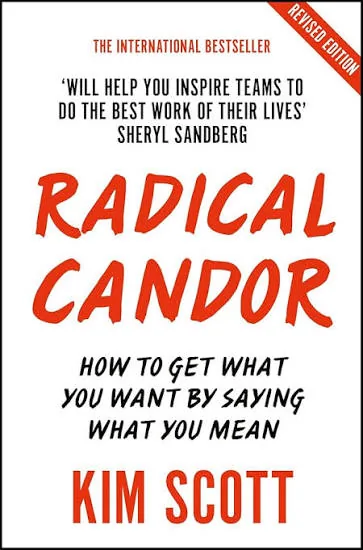
Key ideas
- A boss has exactly three jobs: giving guidance, building a cohesive team, and driving results collaboratively, and none of the three work without a real relationship underneath them.
- Feedback runs along two axes at once, caring personally and challenging directly, not as a tradeoff where more of one means less of the other.
- Withholding criticism to spare someone's feelings almost always costs that person more than the criticism itself would have.
- Growth is not one ladder. Some people want a steep trajectory into new scope, others want to master a role and hold it steady, and both are legitimate as long as a manager knows which is which.
- Asking for criticism first, and visibly rewarding it when someone gives it honestly, is what earns a manager the right to criticize back.
- A performance review should never contain information a person is hearing for the first time; the real work happens in the frequent, small conversations between reviews.
Good management is not telling people what to do or being nice to them so they will like you; it is caring enough about someone to tell them the truth, and being humble enough to hear it back.
Mental models
- The Care Personally / Challenge Directly matrix — Crossing how much you show you care personally against how directly you challenge someone produces four behaviors. Both high is Radical Candor. High care with no challenge is Ruinous Empathy. High challenge with no care is Obnoxious Aggression. Neither is Manipulative Insincerity.
- Rock Star and Superstar modes — Rock Stars are on a gradual growth trajectory, doing steady, excellent work in a role they've mastered. Superstars are on a steep trajectory and need constantly expanding scope. Treating everyone as if they should want the same trajectory bores one group and burns out the other.
- The Get Stuff Done wheel — A seven-step sequence, listen, clarify, debate, decide, persuade, execute, learn, that a team cycles through together. Skipping straight from an idea to an instruction breaks the wheel and produces worse results than running the full cycle.
- Career Conversations — A three-part conversation, life story, dreams, and an eighteen-month action plan, that surfaces what someone actually wants from their career rather than just their next job title, so current work can be connected to a real long-term direction.
Product applications
- Before your next roadmap review, run the GSD wheel on purpose: state the goal, let the team debate options out loud, and name a decider before the meeting starts instead of letting the loudest voice in the room win by default.
- Adopt one go-to question in every 1:1 with a cross-functional lead, such as "what's one thing I could do less of that would make your job easier," and sit through the silence instead of filling it.
- Before you finalize a promotion packet or a performance review for someone on your pod, check whether every point in it has already been said to that person out loud. If not, that's Ruinous Empathy wearing the costume of a review.
- Map your own PM, design, and engineering trio onto Rock Star and Superstar modes explicitly instead of assuming everyone on the team wants your own growth trajectory.
- When you have to give hard feedback on a spec or a launch decision, structure it as context, observation, result, and a concrete next step instead of a vague "this doesn't feel right."
Questions to think about
Think about the last time you softened a piece of critical feedback to a stakeholder or teammate because it felt kinder in the moment. What did staying quiet actually cost that person, and the project, compared to what saying it directly would have cost you?
Chapter by chapter
Build Radically Candid Relationships: Bringing Your Whole Self to Work
A manager's job is not to keep a clean professional distance from the people they lead. People bring their whole selves to work: their ambitions, their insecurities, their families. A manager who tries to stay purely "professional" is not protecting the relationship, they are avoiding the harder, real work of leading it.
The three jobs of a boss
- Give guidance: offer and invite praise and criticism honestly.
- Build a cohesive team: understand what motivates each person well enough to put them in the right role.
- Drive results collaboratively: get the team to achieve outcomes together, not by issuing orders.
All three responsibilities depend on trust rather than authority.
Two axes, not a spectrum
Every interaction with a direct report sits somewhere on two independent axes: how much you Care Personally and how directly you Challenge Directly. These aren't opposites traded off against each other, they're two separate dials, and both need to be turned up at once.
Care without challenge slides into "Ruinous Empathy," staying quiet to spare someone's feelings. Challenge without care slides into "Obnoxious Aggression," blunt criticism with no relationship behind it. Neither is "Manipulative Insincerity," the worst quadrant, where feedback is withheld or twisted for political reasons. Only both together is Radical Candor.
Why Bob had to be fired
Kim Scott's own defining failure opens the book's argument. A charming, well-credentialed employee named Bob was doing genuinely bad work. Scott, worried about hurting his feelings, quietly fixed his mistakes herself instead of telling him directly, for months.
By the time the problem became unfixable and she had to fire him, his first question was "why didn't anyone tell me?" The kindness she thought she was extending had actually deprived him of the one thing he needed to improve.
What this means for spec and roadmap feedback
A PM who quietly rewrites a weak first draft of a teammate's spec instead of naming the gaps directly is running the exact same failure as the Bob story, just with documents instead of a job. The fix a PM makes in silence never becomes a skill the other person gets to build. Naming the gap directly, even when it's uncomfortable, is the only version of "help" that actually compounds.
Get, Give, and Encourage Guidance: Creating a Culture of Open Communication
"Guidance" is Scott's word for the combined flow of praise and criticism moving in every direction on a team, not just downward from manager to report. A culture of guidance means people expect to hear the truth about their work regularly, in both directions, and aren't blindsided by it.
Radical Candor is not brutal honesty
"Radical Candor" is often misread as permission to say whatever you think. The actual definition requires both halves at once: caring enough about someone to tell them something difficult, and being just as willing to hear that you might be wrong yourself.
Brutal honesty only asks for the first half. Dropping the "care personally" half turns direct feedback into Obnoxious Aggression, which teaches people to tune out criticism instead of act on it.
The Sandberg lesson
After a presentation to Google executives, Sheryl Sandberg pulled Kim Scott aside to walk through what had gone well, then told her she said "um" so often it made her sound stupid, and asked if she knew she did it. Scott brushed the comment off.
Sandberg pushed further rather than letting it go, because she cared enough about Scott's career to insist the feedback actually land. Scott worked with a speech coach afterward and calls it the moment she understood what usable criticism feels like.
The HIP test
Feedback lands better when it passes a short checklist: Humble (open to being wrong, not delivered as verdict), Helpful (clearly meant to help, not to vent), Immediate (given close to the moment, not saved up), and In person (so tone and body language are visible), and it should never be about someone's fixed personality rather than their specific behavior.
Criticism given publicly and praise given only in private both tend to backfire; that pairing usually needs to be reversed.
What this means for stakeholder critiques
A PM sitting on written feedback about a design or an engineering proposal until the next scheduled review is running Ruinous Empathy on a delay. Giving the same note immediately, in a short conversation rather than a buried comment thread, is closer to what actually changes the next draft. The goal is not to be blunter; it's to make the feedback arrive while it's still usable.
Understand What Motivates Each Person on Your Team: Helping People Take a Step in the Direction of Their Dreams
Motivating a team doesn't mean pushing everyone toward the same definition of success. It means finding out, person by person, what each individual actually wants out of their career, and connecting their current work to that, rather than assuming ambition looks the same for everyone.
Two growth trajectories, not one ladder
- "Superstar mode": a steep growth trajectory, hungry for constantly expanding scope and new challenges.
- "Rock Star mode": a gradual trajectory, doing excellent, dependable work in a role they've already mastered.
A team of only Superstars burns out and competes internally; a team of only Rock Stars stagnates. The mistake is assuming everyone should be pushed toward Superstar mode, or that Rock Star mode is a consolation prize rather than a real, chosen state.
Three ways managers get this wrong
- Underestimating a steady Rock Star's contribution because they're not chasing a promotion.
- "Clipping the wings" of someone on a steep trajectory by holding them back out of convenience.
- Becoming either an absentee manager (checked out, no real guidance) or a micromanager (over-involved, no trust) instead of a genuine thought partner.
The problem with passion
Telling someone to "follow their passion" assumes they already know what that is; most people don't, and the advice can pressure them into performing enthusiasm they don't feel. The better move is a real conversation about what has actually motivated them across their whole life, not a single leading question about their dream job.
What this means for reading your own pod
A PM leading a cross-functional trio should watch for which teammate is quietly in Rock Star mode on a mature, low-drama part of the product and stop routing every stretch opportunity to the person already asking loudest for one. The quiet stability is not disengagement; treating it that way is how a team loses its steadiest performer.
Drive Results Collaboratively: Telling People What to Do Doesn't Work
Telling a team what to do produces compliance, not commitment, and compliance rarely survives the first unexpected obstacle. Results that hold up under pressure come from a team that arrived at the plan together, not one that was handed it.
The Get Stuff Done wheel
- 1. Listen: the team usually has the best ideas about what it should be working on; hear them out first.
- 2. Clarify: new ideas are fragile and easy to misread, so sharpen them together before judging them.
- 3. Debate: argue about the idea itself, in public, not about who gets credit for it.
- 4. Decide: someone specific needs to own the decision; consensus by exhaustion is not a decision.
- 5. Persuade: explain the reasoning behind the decision even to people who didn't get their way, or execution will be half-hearted.
- 6. Execute: do the work, with the debate already settled.
- 7. Learn: check what actually happened against what was expected, then feed that back into the next round of listening.
Debaters are not deciders
A common failure is letting the group that argued loudest during debate also make the final call, which rewards volume over judgment. The decider should be named before debate starts, and doesn't have to be the manager; the best deciders are often the people closest to the facts, not the most senior person in the room.
Quiet listening counts as listening
Some managers only credit ideas raised loudly in meetings and miss the quieter team member who has real signal but doesn't compete for airtime. Deliberately drawing out quiet listeners, rather than waiting for volunteers, is part of the "listen" step, not a separate courtesy.
What this means for running a roadmap review
A roadmap review that jumps straight from a PM's proposed priorities to "here's what we're building" has skipped listen, clarify, and debate entirely, then wonders why engineering executes half-heartedly. Running the full wheel, even compressed into one meeting, produces a plan the team actually owns instead of one it merely accepts.
Relationships: An Approach to Establishing Trust with Your Direct Reports
This chapter opens the book's second half, which turns the philosophy from the first four chapters into repeatable habits rather than a mindset alone. Chapter 1 explained why relationships matter; this chapter is about the specific practice of building one with each direct report.
Staying centered before you show up
Bringing a whole, calm self to work is a practice, not a personality trait. Scott recommends deliberately tracking what actually keeps you centered, whether that's exercise, sleep, or protected time, and treating it as part of the job rather than something squeezed in around it. A manager who can't regulate their own state can't reliably show up for anyone else's.
The three-part career conversation
Trust builds fastest through a structured conversation, credited in the book to Russ Laraway, run in three parts across separate sessions.
- 1. Life story: walk through someone's whole life, focusing on the changes they chose to make and why, which usually reveals their real values.
- 2. Dreams: ask what they'd want in five to ten years if nothing were holding them back, not a polished "career goal," and get several possible versions, not one.
- 3. Eighteen-month plan: connect their current role to the dream, identifying what skills or experience the next eighteen months should build toward it.
This sequence works precisely because it's done in order; jumping straight to "what's your five-year plan" gets a rehearsed, guarded answer instead of a real one.
What this means for stakeholder relationships, not just reports
A PM doesn't need direct-report authority to use this structure. Running a lighter version of "life story and dreams" with a key engineering or design partner, even informally over one conversation, tends to surface what actually motivates their pushback on a roadmap decision far faster than reading it off a Jira board.
Guidance: Ideas for Getting, Giving, and Encouraging Praise & Criticism
This chapter turns Chapter 2's philosophy of guidance into a repeatable system: how to actually solicit criticism, deliver it cleanly, and make sure people keep offering it honestly instead of learning to hold back.
A go-to question, asked first
Soliciting criticism has to come before giving it, or the relationship reads as one-directional. A specific, repeatable question works better than a generic "any feedback for me," because a generic offer is too easy to decline out of habit.
A useful version: "what's one thing I could do or stop doing that would make it easier to work with me?" Then wait through the silence instead of filling it or answering for the other person.
The CORE of a hard conversation
- Context: when and where the behavior happened.
- Observation: exactly what you noticed, described factually.
- Result: the actual impact it had.
- next step: what should happen differently going forward.
This keeps the conversation anchored to a real event instead of a vague character judgment, which is usually what turns feedback defensive.
Rewarding criticism, visibly
When someone does risk giving you honest criticism, the single most important response is visible gratitude, not defensiveness or a justification. Even a small, publicly acknowledged "thank you, that's useful, here's what I'll do differently" teaches the whole team that criticism is safe to offer, while a defensive reaction teaches everyone watching to stop offering it.
What this means for design and spec critique
A PM reviewing a mockup with the line "this doesn't feel right" has skipped straight past Context and Observation into an unusable verdict. Naming exactly what was observed, which screen, which flow, which moment, and the specific impact it would have, then proposing a next step, gives a designer something they can actually act on instead of something they have to guess at.
Team: Techniques for Avoiding Boredom and Burnout
Building a team is not just hiring well; it's actively managing the mix of Rock Star and Superstar modes over time, since both boredom and burnout are usually predictable well before they show up as attrition.
Toxic stew
A team stacked entirely with Superstars competing for the same scope, or entirely with Rock Stars with no one pushing for change, both curdle into what the book calls a kind of toxic stew: a group whose composition, not any individual's character, is producing dysfunction. The fix is deliberately balancing the mix, not blaming whichever individual is currently causing friction.
Trajectories change, so don't label people permanently
Someone in Superstar mode this year can genuinely want Rock Star mode in two years, often around a major life change, and the reverse happens too. Treating a growth trajectory as a fixed trait rather than a current state is one of the more common ways managers mismanage otherwise strong performers, either pushing a tired Superstar harder or overlooking a Rock Star who has quietly started wanting more.
A new mindset for firing
Firing someone is framed in the book as a failure that should have been prevented earlier through honest, ongoing feedback, not a sudden event. If someone genuinely can't do the role even after direct, repeated guidance, keeping them on out of misplaced kindness harms the rest of the team, who end up covering for the gap, exactly what happened around Bob before he was let go.
What this means for composing a product pod
A PM staffing a squad should treat the Rock Star/Superstar mix as a real design constraint, the same way they'd balance senior and junior engineers, instead of assuming any three capable people will function well together. A pod of three Superstars competing for the same high-visibility problem is a predictable burnout risk before a single sprint starts.
Results: Things You Can Do to Get Stuff Done Together, Faster
This chapter turns Chapter 4's Get Stuff Done wheel into an actual meeting cadence, the specific recurring structures that keep listening, debating, and deciding from collapsing back into one person telling everyone what to do.
A cadence for each step of the wheel
- Weekly 1:1s: primarily for listening, driven by the direct report's agenda, not the manager's status check.
- Staff meetings: for surfacing and clarifying ideas across the whole team.
- "Big Debate" meetings: dedicated time to argue major decisions out loud, with the debate itself as the explicit purpose.
- "Big Decision" meetings: a separate, later meeting where the named decider actually commits, after debate has already happened.
Separating debate and decision into two distinct meetings prevents the common failure where a group debates an idea and someone quietly decides mid-argument without anyone noticing a decision was even made.
Guarding against meeting creep
Adding a recurring meeting for each step of the wheel can itself crowd out the time needed to execute. The book's guidance is to treat meeting time as a budget to actively defend, cutting or shortening a recurring meeting the moment it stops doing the specific job it was created for.
What this means for redesigning your own weekly cadence
A PM who runs one undifferentiated weekly sync with engineering, expecting it to surface new ideas, resolve disagreements, and confirm decisions all in thirty minutes, is asking one meeting to do the job of three different steps in the wheel. Splitting listening, debating, and deciding into separate forums tends to produce faster execution than one crowded meeting ever does.
A Radically Candid Performance Review
A performance review and day-to-day developmental feedback run on two entirely different clocks, and confusing them is what makes most reviews feel useless or unfair.
Two different clocks
Developmental feedback, the guidance covered across Chapters 2 and 6, needs to happen close to the work, in small doses, so someone can act on it while it's still relevant.
Performance feedback runs on a much longer cycle, typically twice a year, because its job is to spot a pattern across months, not react to a single incident, and it usually feeds into compensation or promotion decisions the short-cycle feedback doesn't.
Why nothing in the review should be new
If a formal review contains a piece of criticism the person is hearing for the first time, the developmental system already failed months earlier; the review has become the place where withheld feedback gets dumped all at once, which is Ruinous Empathy on a delay dressed up as a formal process. A well-run review should read as a summary of things the person has already heard, calibrated against peers, not a reveal.
What this means for promotion packets
A PM writing a promotion case or a calibration write-up for someone on their team should be able to trace every claim in it back to a specific conversation that already happened. Keeping a running log of specific feedback moments through the cycle, rather than reconstructing an assessment from memory at review time, is what actually makes that possible.
The Entire Book in One Framework
Every tool in the book traces back to one pairing: care personally, challenge directly, applied at the same time rather than traded off against each other. The three jobs of a boss, guidance, team, and results, are just that pairing applied to three different situations: feedback, career growth, and collective work.
Chapters 5 through 8 aren't new ideas; they're Chapters 1 through 4 turned into habits: Career Conversations operationalize caring personally, CORE feedback and the go-to question operationalize challenging directly, and the GSD wheel's meeting cadence operationalizes doing both together at the pace of a real team.
Radical Candor is not brutal honesty dressed up as courage. It is caring enough about someone to tell them something difficult, and being just as willing to hear that you might be the one who's wrong.
10 Most Important Takeaways
- Care personally and challenge directly at the same time; neither one alone is Radical Candor.
- Withholding criticism to spare feelings usually costs the other person more than the criticism would have.
- Solicit criticism with a specific, repeatable question, then sit through the silence instead of filling it.
- Reward honest criticism visibly, or people quietly stop offering it.
- Structure hard feedback as context, observation, result, and a next step, not a general impression.
- Rock Star mode (steady mastery) and Superstar mode (steep growth) are both legitimate; growth trajectories aren't fixed traits.
- Run career conversations in order: life story, then dreams, then an eighteen-month plan, not the reverse.
- Results come from listening, clarifying, and debating before deciding, not from skipping straight to instructions.
- Separate meetings for debating and deciding prevent decisions from happening quietly, by accident, mid-argument.
- A performance review should never contain feedback the person is hearing for the first time; the real work happens between reviews, not in them.
A boss's whole job compresses into one uncomfortable habit: saying the true thing while staying close enough to the person that they can actually hear it, over and over, until it stops feeling uncomfortable at all.