
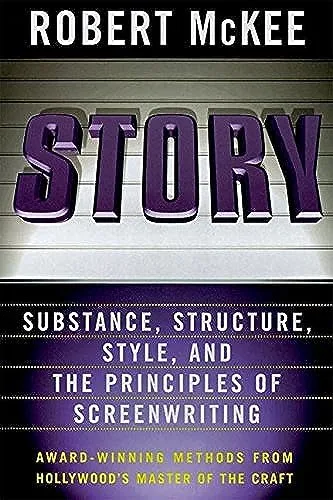
Key ideas
- Story is not decoration on events; its substance is meaningful change in a character's life values, moving between positive and negative charges.
- The engine of story is the gap between expectation and result: a character acts expecting one outcome, the world responds differently, and that gap forces new choices.
- Every scene must turn a value from one charge to its opposite; if nothing changes, it is not a scene but filler.
- True character is revealed only through the choices a person makes under pressure, and the greater the pressure, the deeper the truth exposed.
- Every story is unified by a single controlling idea, its theme, a value plus the cause that brings it about, and everything must serve it.
- A story is only as compelling as its forces of antagonism, and it must progressively escalate conflict toward an irreversible climax.
A story is not a sequence of events; it is the expression of how and why the values in a life change, told through the gap between what we expect and what the world actually gives us.
Mental models
- Story as value change — The substance of story is not action or spectacle but change in life values, the positive or negative charges (love/hate, freedom/slavery, life/death) a character experiences. A story tells how and why the values in a life shift over time. At every level, from the whole film down to the smallest beat, story works by turning a value from one charge to its opposite. If the values do not change, nothing of substance has happened, no matter how many events occur.
- The gap between expectation and result — The fundamental mechanism of story is the gap that opens when a character takes an action expecting a helpful response from the world, and instead the world responds in an unexpected, more difficult way. This gap between expectation and reality is where story lives; it forces the character to make a harder, riskier choice. Great storytelling continually widens this gap, so the character (and audience) must dig deeper, revealing character and driving the story forward through genuine conflict.
- The scene, the beat, and turning points — Story has a nested structure. A "beat" is an exchange of action and reaction. A "scene" is a unit of action that turns a value charge from positive to negative or back; if a scene does not turn a value, it is exposition, not story. Scenes build into sequences and acts, each ending on a larger turning point. The whole design escalates from the inciting incident, which upsets life's balance, through progressive complications to a crisis, climax, and resolution.
- Controlling idea and character under pressure — Two unifying principles. The controlling idea is the story's single most important meaning, expressed as a value charged positive or negative plus the cause that produces it; it is the theme every scene must serve. Character is the second: true character, who someone really is, is revealed only by the choices they make under pressure, especially choices between competing desires. The greater the pressure and the deeper the choice, the more profound the truth about the character that emerges.
Product applications
- Frame a pitch or vision as a real story of change, a before-and-after in values, not a list of features or events, because change is what makes a narrative compelling.
- Build tension into your narratives using the gap between expectation and reality: name the obstacle and the unexpected difficulty, since conflict, not smoothness, holds attention.
- Give any story you tell one controlling idea, a single clear meaning, and cut anything that does not serve it, the way every scene must serve the theme.
- Show, do not tell: dramatize your point through a concrete scene or example rather than stating it abstractly, so the audience experiences the meaning.
- When telling a customer or team story, reveal character and stakes through a hard choice under pressure, because that is what makes people and situations feel real and memorable.
Questions to think about
When you tell a story to persuade, at work or elsewhere, does it actually contain a change in values driven by real conflict and an unexpected turn, or is it just a smooth recitation of events, and if the latter, where is the gap between expectation and reality that would make anyone care what happens next?
Chapter by chapter
What a Story Really Is
McKee begins by defining the substance of story, and it is not events, spectacle, or clever dialogue. The material of story is life itself, specifically, meaningful change in the values of a character's life, expressed through the choices they make.
Values are the positive or negative charges at stake, love versus hate, courage versus cowardice, life versus death, and a story is the account of how and why those charges shift. A tale in which nothing of value changes is not a story; it is an anecdote or a description of activity.
This means the storyteller's real subject is transformation. Beneath the surface of any good story is a movement of value from one state to its opposite, and the craft of storytelling is the craft of engineering and revealing that change so the audience feels its truth.
For a PM, the foundational lesson is that a compelling narrative, in a pitch, a vision, a case study, must contain genuine change in what matters, not just a sequence of things that happened. If nothing important shifts, there is no story, and no reason for anyone to care.
The Spectrum of Story Design
Story is the design of events, and McKee lays out a spectrum of how tightly that design can be built. At one end sits the "Archplot", classical design with an active protagonist, causal events, a closed ending, and continuous reality, the shape most stories take.
Toward the other end lie minimalism ("Miniplot"), which strips story down with more open endings and passive or internal conflict, and "Antiplot", which deliberately breaks conventions with coincidence and non-linear time. Understanding the spectrum lets a storyteller choose a form on purpose rather than by accident.
Whatever the form, structure means selecting events and arranging them so they build. A story is not everything that happens; it is a curated series of turning points that progress toward a climax, with everything else cut away as irrelevant to the value change being told.
For a PM, the takeaway is that structure is selection and escalation. A persuasive narrative chooses only the events that build toward its point and arranges them to rise, rather than dumping every fact; the discipline of cutting and ordering is what turns raw material into a story.
The Inciting Incident and the Gap
A story begins in earnest with the inciting incident, the event that radically upsets the balance of the protagonist's life, creating a desire to restore order and launching them on their quest. Everything before it is setup; the inciting incident is the spark.
The engine that then drives the story is the gap. A character takes an action expecting the world to respond helpfully, and instead reality answers in an unexpected, more difficult way. This gap between expectation and result is where story energy lives, because it forces the character into harder, riskier choices.
Great stories keep reopening and widening this gap: each attempt provokes a bigger obstacle, so the character must reach deeper and risk more. Conflict, not smooth progress, is the essence of narrative, and the gap is how conflict is generated at every turn.
For a PM, the lesson is that tension comes from the gap between expectation and reality. A gripping story, or a persuasive account of a problem, names the moment things went wrong and the unexpected difficulty encountered, because it is that gap, not a frictionless path, that makes people lean in.
The Scene as a Turn of Value
Descending from the whole to its parts, McKee defines the scene rigorously: a scene is a unit of story action that turns a value charge in the character's life from positive to negative or negative to positive. If a scene does not turn a value, it is not really a scene.
This is a demanding standard. A conversation where nothing changes, an event that leaves the emotional charge exactly as it was, is exposition or filler, not story. Every genuine scene begins at one charge and ends at its opposite, however small the shift, which is what makes it worth showing.
Scenes are built from beats, exchanges of action and reaction, and they accumulate into sequences and acts, each ending on a larger turning point. The whole story is this nested structure of value-turns escalating toward the climax, the final, largest, and most irreversible turn.
For a PM, the takeaway is a test for every part of a narrative: does this move something. Just as a scene must turn a value, each section of a pitch or story should shift the audience's understanding or stakes; anything that leaves the charge unchanged is filler to cut.
The Controlling Idea
Every story worth telling is unified by a single controlling idea, its ultimate meaning. McKee defines it precisely as a value charged positive or negative, plus the cause that brings that value into the world, for example, "goodness triumphs when the protagonist outwits the villain."
The controlling idea is the story's spine, and everything, every scene, character, and turn, must serve it. A story that tries to say several unrelated things at once feels muddled and hollow, while one built around a single clear idea has unity and force.
Crucially, the meaning is expressed through the story, not stated as a message. The audience feels the controlling idea through the arc of value change, especially at the climax, rather than being told it, which is why great stories persuade emotionally rather than didactically.
For a PM, the lesson is to give any narrative one controlling idea and make everything serve it. A vision, a launch story, or a case study lands hardest when it expresses a single clear meaning through its events, rather than lecturing the audience or scattering across many points.
Character Revealed Under Pressure
McKee draws a sharp line between characterization and true character. Characterization is the surface, appearance, mannerisms, biography, all the observable traits. True character is who a person really is beneath that surface, and it is revealed only in one way: through choices made under pressure.
The deeper the pressure and the harder the choice, the more profound the revelation. Easy choices reveal nothing; it is when a character must choose between competing desires or values, at real cost, that their true self emerges. Story exists in large part to create the pressure that exposes character.
The best stories also show a gap between characterization and true character, and often a character arc in which the deep self is transformed by the story's events. This movement, from the surface self to a revealed and sometimes changed true self, is a core source of a story's power.
For a PM, the takeaway is that people and situations feel real and memorable when revealed through hard choices under pressure. In a customer story or a team narrative, showing a difficult decision made at real cost conveys character and stakes far more powerfully than describing traits from the outside.
Antagonism, Progression, and Showing
A guiding principle of story design is that a story is only as compelling as its forces of antagonism. A protagonist and their story can be no more gripping than the obstacles arrayed against them, so weak conflict yields weak story; strong, credible antagonism forces greatness.
From the inciting incident, the story must build through progressive complications, each obstacle larger and the stakes higher, toward a crisis (the ultimate decision), a climax (the final, irreversible value change), and a resolution. Escalation is essential; a story that plateaus loses its grip.
Underlying the craft is the discipline of showing, not telling. Meaning and exposition should be dramatized through action and image, revealed as the audience watches, rather than announced in on-the-nose dialogue. The audience should experience the truth, not be lectured about it.
For a PM, the lesson is to strengthen the antagonist and escalate the stakes in any story, and to show rather than tell. Naming the real difficulty of a problem and dramatizing the point through a concrete scene makes a narrative land, whereas easy conflict and abstract assertion make it forgettable.
The Entire Book in One Framework
The whole book defines story as meaningful change in life values, engineered through conflict. The inciting incident upsets the balance; the gap between expectation and reality generates conflict; scenes turn values; character is revealed under pressure; and everything escalates toward an irreversible climax, all unified by a single controlling idea.
The craft is one of selection and escalation in service of that idea, dramatizing meaning through action rather than stating it, and building antagonism strong enough to force real change. These principles, though drawn from screenwriting, describe how any narrative moves and persuades an audience.
Story is not "how to plot a movie." It is a theory of meaning through change: a story exists to show how and why the values in a life shift, and it grips us only through the gap between what we expect and what the world actually delivers.
10 Most Important Takeaways
- Story is meaningful change in life values, not a sequence of events.
- The engine of story is the gap between what a character expects and what the world delivers.
- The inciting incident upsets life's balance and launches the story.
- Every scene must turn a value from one charge to its opposite, or it is filler.
- Escalate through progressive complications toward an irreversible climax.
- Unify everything under one controlling idea, a value plus its cause.
- True character is revealed by choices made under pressure.
- A story is only as good as its forces of antagonism.
- Show, do not tell: dramatize meaning through action, not on-the-nose statement.
- Structure is selection and arrangement; cut everything that does not build.
The deepest idea is that story is the art of expressing truth through change. We are moved not by information or events but by watching values transform under the pressure of conflict, born of the gap between what we hope for and what reality gives. Master that, in a screenplay or a business narrative, and you make an audience feel a meaning rather than just hear it, which is the whole point of a story.