
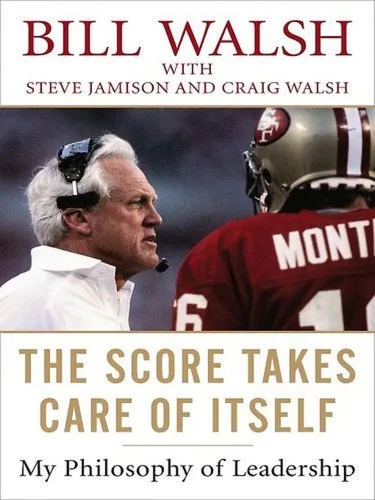
Key ideas
- Focus on the standard of behavior and execution, not the scoreboard; if you install and meet a high enough Standard of Performance, winning follows as a byproduct.
- A leader's first job is to define, teach, and relentlessly enforce a detailed standard of how everyone in the organization does their work, down to the smallest habit.
- Leadership is teaching, not genius; success comes from meticulous preparation, planning, and instilling fundamentals, not from a stroke of brilliance.
- To succeed you must be willing to fail and endure the low points; resilience through adversity is part of the path, not a detour from it.
- Build the team around people, priorities, and performance, getting the right people, clarifying what matters, and demanding excellence from everyone in every role.
- Manage your own psychology: ego, exhaustion, and the crushing pressure of leadership can undo even a winner, so self-examination and self-control are essential.
Nobody should focus on the scoreboard; obsess instead over the standard of performance in everything you do, and the score will take care of itself.
Mental models
- The Standard of Performance — Walsh's central idea. When he took over the worst team in the league, he did not talk about winning; he installed a detailed set of standards for how every person, players, coaches, and staff, should behave and execute, from professionalism and attention to detail to precisely how a play was run. Everyone was held to this standard regardless of the score. Meet the standard consistently, and results follow; chase results directly, and you get neither.
- The score takes care of itself — The philosophy behind the title. Fixating on the outcome, the scoreboard, the win, creates pressure and distracts from what actually produces it. Instead, you pour all attention into the controllable inputs: preparation, execution, and adherence to the Standard of Performance. When the process is excellent, the outcome tends to follow, so the leader's job is to make the inputs relentlessly excellent and let the score be a consequence rather than an obsession.
- The leader as teacher — Walsh rejected the idea that leadership is innate genius. He saw himself first as a teacher, breaking every part of the game into fundamentals and drilling them until execution was automatic. Great leadership is transferring knowledge and standards into the whole organization through patient, meticulous teaching, planning, and repetition, not through charisma or a single brilliant idea. Preparation, like his famous scripting of opening plays, embodies this teaching-and-planning mindset.
- Mastering your own psychology — A hard-won theme from Walsh's reflections. The same intensity that drives success can turn on a leader through ego, obsession, and burnout. Success breeds hubris; relentless pressure breeds exhaustion and thin skin. Walsh is candid that these nearly destroyed him, and he argues that self-examination, humility, and managing your own emotional state are as essential to sustained leadership as any tactic, because a leader undone by their own psychology cannot lead.
Product applications
- Define an explicit standard of performance for your team, how work is done, reviewed, and communicated, and hold everyone to it consistently regardless of whether current results are good or bad.
- Shift focus from outcome metrics you cannot fully control to the controllable inputs and process quality that produce them, trusting that consistent excellent execution yields the results.
- Treat leadership as teaching: break the work into fundamentals, document them, and patiently drill and reinforce them so quality execution becomes the team's default.
- Invest heavily in preparation and planning, scripting how you will handle key situations in advance, so that under pressure the team executes from a plan rather than improvising.
- Monitor your own psychology as a leader, guarding against the ego of success and the burnout of relentless pressure, because your emotional state sets the tone for the whole team.
Questions to think about
Are you leading your team by pointing at the scoreboard, the targets, the wins you want, or by defining and relentlessly enforcing a standard of how the work gets done, and if you truly held everyone (including yourself) to an exacting standard in every detail, how much would the outcomes you are chasing simply take care of themselves?
Chapter by chapter
To Succeed You Must Fail
Walsh opens not with triumph but with a low point: taking over a San Francisco 49ers team that was among the worst in football, and the crushing weight of losing before any winning began. His path to greatness ran directly through failure and near-despair.
The lesson is that adversity and failure are not detours from success but part of its road. A leader must be willing to endure the painful, losing early stretch, resisting panic and short-term fixes, while the foundations of future success are quietly being laid beneath the bad results.
This reframes how to read a rough patch. Rather than evidence that the approach is wrong, early failure can be the necessary cost of building something durable, provided the leader stays committed to the right standards instead of abandoning them at the first setback.
For a PM or leader, the opening takeaway is to have the resilience to persist through the low period when building something new. Judging an approach by early outcomes, and bailing when they are poor, often means abandoning the very foundation that would have produced success.
My Standard of Performance: An Environment of Excellence
The heart of the book is the Standard of Performance. Faced with a demoralized, losing team, Walsh deliberately did not preach about winning. Instead he installed an exacting standard for how everyone should behave and execute, and demanded it be met regardless of the score.
The standard was comprehensive and specific: professionalism, attention to detail, exactly how a play should be run, how people should carry themselves, how every role should be performed. It applied to everyone, stars and staff alike, creating an environment where excellence in the controllable details was simply the expectation.
Why the standard comes before the score
By focusing the whole organization on meeting the standard rather than on the scoreboard, Walsh removed the paralyzing pressure of outcomes and replaced it with mastery of inputs. The conviction was that if the standard was consistently met, winning would follow, which is exactly what happened as the 49ers rose to dominance.
For a PM, the lesson is to lead through an explicit standard of how work is done, not through outcome targets alone. Defining and enforcing what excellence looks like in every detail, and holding to it even when results are poor, builds the environment from which good outcomes actually emerge.
Success Is Not Spelled G-E-N-I-U-S
Walsh, often called a genius for his innovative offense, rejects the label. Success, he insists, is not a flash of brilliance but the product of relentless innovation, meticulous planning, and common sense applied consistently over time.
His famous practice of scripting the opening plays of a game exemplifies this. Rather than improvising under pressure, he planned in advance exactly how to start, so his team executed from careful preparation instead of nerves. The innovation people admired was really the fruit of obsessive planning and thought.
Common sense and preparation, not mystique, do the work. Walsh emphasizes thinking through situations ahead of time, preparing for contingencies, and building sound fundamentals, so that what looks like genius from the outside is actually thorough groundwork made visible in the moment.
For a PM, the takeaway is to trust preparation over inspiration. Scripting how you will handle key launches, decisions, and pressure moments in advance, and grounding work in thorough planning rather than hoping for brilliance, is what produces reliably excellent results.
Fundamentals of Leadership: Concepts, Conceits, and Conclusions
This part gathers Walsh's broader principles of leadership. Central among them is the leader as teacher: the job is to transfer knowledge, standards, and fundamentals into the whole organization through patient instruction and repetition, not to be the lone star.
He is equally attentive to the conceits, the traps leaders fall into, especially the hubris that success breeds. A leader who starts believing their own myth, or who lets ego drive decisions, undermines the very standards and humility that created the success in the first place.
Good leadership, in his telling, balances demanding excellence with genuine care and clear communication, and it requires constant self-awareness to avoid the arrogance and complacency that follow winning. The fundamentals are unglamorous: teach, prepare, hold the standard, stay humble.
For a PM, the lesson is to lead by teaching and to guard against the conceits of success. Building the team's capability through instruction, and keeping your own ego in check as things go well, sustains excellence far longer than charisma or a run of good results.
Essentials of a Winning Team: People, Priorities, and Performance
A standard means nothing without the right people executing it, so this part turns to building the team. Walsh stresses getting the right people into the right roles and then getting the most out of them through clear expectations and genuine investment in their growth.
Priorities matter as much as people: a leader must clarify what truly matters and direct the team's energy there, rather than letting effort scatter. Combined with the Standard of Performance, clear priorities ensure everyone is pulling toward the same excellence in the things that count.
Performance is then a matter of demanding and enabling excellence from every role, not just the stars. Walsh treated every position and person as integral to the whole, so that the standard permeated the entire organization and no weak link was tolerated or overlooked.
For a PM, the takeaway is to build a winning team through people, priorities, and performance together: put the right people in the right seats, make the priorities unmistakable, and hold every role to the standard, so excellence is organization-wide rather than concentrated in a few.
Thin Skin, Baloney, and 'The Star-Spangled Banner'
The final part is Walsh's unusually honest self-examination, looking for lessons in his own mirror. He is candid about the personal costs of his relentless drive: the exhaustion, the thin skin, and the emotional toll that the pressure of leadership exacted on him.
The same intensity that made him great also nearly consumed him. Burnout and the crushing weight of expectation led him to step away at the height of success, and he reflects on how obsession and an inability to let go endangered both his health and his judgment.
The lasting message is that mastering your own psychology, managing ego, guarding against burnout, keeping perspective, is as essential to leadership as any tactic. A leader undone by their own inner state cannot sustain the excellence they built, however brilliant their system.
For a PM, the lesson is to take your own well-being and self-awareness seriously as leadership responsibilities. The drive that produces great results can also produce burnout and distorted judgment, so tending your psychology and keeping perspective is what lets you lead well over the long haul.
The Entire Book in One Framework
The whole book reduces to one principle: define and relentlessly enforce a Standard of Performance, and the score takes care of itself. Rather than fixate on winning, Walsh poured all attention into how every person executed every detail, trusting that excellence in the inputs would produce excellence in the outcomes.
Around that core sit the supporting truths: success requires enduring failure, leadership is teaching and preparation rather than genius, winning teams are built through people, priorities, and performance, and the leader must master their own ego and psychology to sustain it all.
The Score Takes Care of Itself is not "focus on winning." It is the opposite: stop staring at the scoreboard, obsess over the standard of how you and your people do the work, and let the winning arrive on its own as the natural result of relentless, detailed excellence.
10 Most Important Takeaways
- Focus on the Standard of Performance, not the scoreboard; the score takes care of itself.
- Define in detail how everyone should behave and execute, and enforce it regardless of results.
- Hold the standard even when you are losing, because it is the foundation of future winning.
- Leadership is teaching, not genius; drill fundamentals until execution is automatic.
- Prepare and plan obsessively, scripting key situations so you execute from a plan under pressure.
- Expect to fail on the way up; resilience through the low points is part of the path.
- Build the team through people, priorities, and performance, holding every role to the standard.
- Guard against the hubris that success breeds, and keep your ego in check.
- Care genuinely about your people while demanding excellence from them.
- Master your own psychology, ego, exhaustion, perspective, or it will undo your success.
The deepest idea is that outcomes are downstream of standards. Leaders and teams obsess over the results they want, wins, targets, numbers, but those are largely uncontrollable in the moment, while the standard of how you prepare and execute is entirely within your control. Pour everything into making that standard exacting and universal, and the results you were chasing arrive as a consequence, which is why the score, in the end, takes care of itself.