
Key ideas
- There is no single formula for creativity; across dozens of creators, the one constant is that every process is messy, personal, and non-linear.
- Finished work almost never arrives whole; it emerges from rough, uncertain, often bad beginnings that are then reworked.
- The real creative work happens in revision, the long, iterative middle of changing, cutting, and reshaping, not in a flash of inspiration.
- Creators follow curiosity and play, experimenting and pursuing what interests them rather than executing a fixed plan.
- Doubt, fear, and false starts are universal parts of the process, not signs that something is wrong, and persistence is what carries creators through.
- Accidents, constraints, and surprises are not obstacles but engines of the work, often producing the best parts.
The finished work of art conceals its own making; look behind it, as these artists let us do, and you find not genius but a messy, human process of starting badly and reworking endlessly.
Mental models
- Something from nothing — The book's driving question is how a finished creation, a painting, a song, a poem, an idea, comes into being from nothing. By interviewing dozens of artists and examining the actual drafts, sketches, and false starts behind their work, Moss demystifies the process. The answer is not a single method but a shared reality: creation is an act of gradually bringing order out of chaos through many rough attempts, and the polished result hides the messy path that produced it.
- Permission to start badly — A theme running through nearly every interview is that creation begins badly. Artists start with rough, ugly, uncertain, embarrassing first attempts, and they accept this as part of the process rather than a sign of failure. The willingness to make bad work is what unlocks good work, because you cannot revise what does not exist. The blank page or canvas is conquered not by waiting for the perfect idea but by putting down an imperfect one and improving it.
- Revision is where the work happens — The interviews reveal that the essence of creative work is not the initial idea but the long middle of revision, changing, cutting, reordering, throwing out, and remaking. Creators return to their work again and again, and the finished piece is the accumulation of countless small decisions and changes. This reframes creativity from a moment of inspiration to a sustained practice of iteration, where quality is built through relentless reworking rather than delivered in a single stroke.
- Curiosity, play, and accident — Rather than executing a fixed plan, creators follow curiosity, experiment, and play, pursuing what interests or surprises them and letting the work evolve. Constraints and accidents, far from being obstacles, frequently generate the best parts: a limitation forces invention, a mistake opens an unexpected door. The process is exploratory and responsive, and creators stay open to where the material wants to go rather than forcing it toward a predetermined result.
Product applications
- Give yourself and your team permission to make rough, bad first versions, since the willingness to start badly is what unlocks good work through revision.
- Treat creation as iteration: expect the real quality to come from many rounds of reworking, not from a single perfect idea or first draft.
- Follow curiosity and experiment rather than rigidly executing a plan, staying open to where the work or the product wants to go.
- Normalize doubt and false starts on creative and product work, so people persist through the messy middle instead of concluding something is wrong.
- Embrace constraints and happy accidents as sources of invention, since limitations and surprises often produce the most original results.
Questions to think about
When your work feels stuck, ugly, or uncertain in its early stages, do you take that as proof you are failing, or, as these artists show, as the normal, necessary beginning of anything worth making, and are you waiting for a perfect idea when you should be starting badly and revising?
Chapter by chapter
How Something Comes from Nothing
Adam Moss, a celebrated magazine editor who spent his career shaping others' creative work, sets out to answer a question that fascinated him: how does a finished work of art actually come to exist? Where does it come from, and how does a creator get from a blank start to a completed thing?
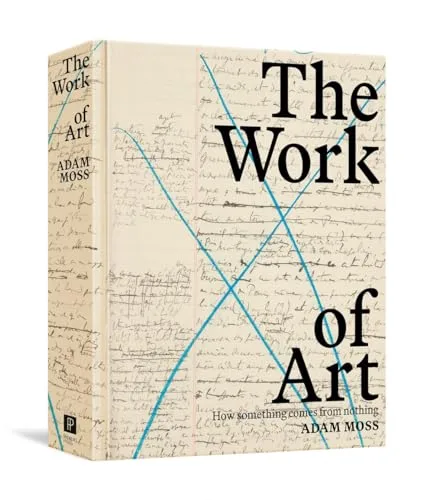
His method is direct: he interviews dozens of artists, writers, musicians, and other makers, and crucially, he examines the physical evidence of their process, the drafts, sketches, notes, and abandoned attempts behind the finished work. The book is filled with these artifacts, letting us see the mess behind the polish.
What emerges is not a single formula but a shared truth. The finished work of art conceals its own making, presenting itself as if it sprang forth whole, when in reality it was assembled through a long, uncertain, deeply human process. By pulling back the curtain, Moss demystifies creativity.
For a PM or any creator, the opening lesson is that the polished results you admire hide messy, iterative processes much like your own. Understanding that "something from nothing" is always a struggle, never a clean act of genius, reframes your own rough process as normal rather than deficient.
Permission to Start Badly
Across the interviews, a striking pattern appears: creation almost always begins badly. Artists describe starting with rough, ugly, uncertain, even embarrassing first attempts, and they accept this as simply how the work starts, not as evidence of failure.
This willingness to make bad work is a kind of permission that unlocks everything else. You cannot refine or revise what does not yet exist, so the crucial act is getting something, anything, down, however imperfect. The perfectionist who waits for a fully formed idea never begins; the working artist starts rough and improves.
The blank page or canvas, the source of so much paralysis, is conquered not by inspiration but by lowering the bar to entry. Many creators describe tricks to trick themselves into starting, precisely because beginning badly is the hardest and most important step.
For a PM, the takeaway is to grant yourself and your team permission to produce rough, imperfect first versions. Because good work is built by revising bad work, the willingness to start badly, rather than waiting for a perfect idea, is what actually gets creation moving.
Revision Is Where the Work Happens
If creation begins badly, then the essence of the work is what comes next: revision. The interviews reveal, again and again, that the finished piece is the product of a long middle of changing, cutting, reordering, discarding, and remaking, not of the initial idea.
Creators return to their work compulsively, making countless small decisions and adjustments over time. A song, a painting, or an essay accumulates its quality through these many passes, each one improving on the last. The dramatic breakthrough is rare; the patient reworking is constant.
This reframes creativity from a moment to a practice. The romantic image of the artist struck by inspiration gives way to the reality of the artist at the desk, revising, and it is in that sustained iteration, not the first spark, that the real work of art is done.
For a PM, the lesson is to expect quality to come from iteration, not from a single perfect first attempt. Treating your work, a product, a document, a design, as something to be reworked many times, and investing in that revision, is how good things actually get made.
Curiosity, Play, and Happy Accidents
The creators Moss interviews rarely execute a fixed plan. Instead they follow curiosity, experiment, and play, pursuing what interests or surprises them and letting the work evolve in unexpected directions rather than forcing it toward a predetermined outcome.
Constraints and accidents emerge as engines of the work, not obstacles to it. A limitation forces invention, a self-imposed rule or a lack of resources pushing the creator somewhere new, while a mistake or chance event often opens an unexpected door that becomes the best part of the finished piece.
This exploratory, responsive stance means staying open to where the material wants to go. Rather than imposing a rigid vision, the artists listen to the work, notice what is working, and follow it, which is how genuinely original results, ones they could not have planned, come about.
For a PM, the takeaway is to build in room for curiosity, play, and serendipity rather than only executing a plan. Embracing constraints as prompts for invention and staying open to happy accidents, in a product, a feature, a design, is often where the most original ideas come from.
Doubt, Persistence, and No Single Formula
The interviews are honest about the emotional reality of creation: doubt, fear, false starts, and the feeling of being lost are nearly universal, even among the most accomplished artists. These are not signs that something has gone wrong; they are simply part of the terrain of making anything worthwhile.
What carries creators through is persistence, the willingness to keep going through uncertainty and setbacks, trusting the process even when the outcome is unclear. Many describe pushing forward without knowing whether the work will succeed, because stopping guarantees it will not.
Perhaps the book's most reassuring finding is that there is no single right way. Each creator's process is idiosyncratic and personal, some plan, some improvise, some agonize, some flow, and the diversity itself is the lesson: you do not have to work the way anyone else does. Your own messy process is legitimate.
For a PM, the lesson is to normalize doubt and false starts as part of creative and product work, and to persist through the messy middle. And it is freeing to know there is no one correct process, your own idiosyncratic way of making things is valid, so long as you keep going.
The Entire Book in One Framework
The whole book answers "how does something come from nothing?" by looking behind the finished work of many creators. The consistent truth is that creation is messy and human: it begins badly, advances through relentless revision, follows curiosity and accident, and is powered by persistence through doubt.
There is no formula, only these shared patterns amid wildly different personal processes. The polished result always hides this struggle, which is why the book's great gift is permission: to start badly, to revise endlessly, to work in your own idiosyncratic way, and to keep going when you feel lost.
The Work of Art is not "here is the secret of genius." It is the opposite reassurance: that behind every finished work lies a messy, doubtful, deeply human process of making something from nothing, and that your own struggle to create is not a failing but exactly how it is done.
10 Most Important Takeaways
- There is no single formula for creativity; every process is messy and personal.
- Finished work hides its making; behind the polish is a rough, human process.
- Creation begins badly; permission to make bad work unlocks good work.
- You cannot revise what does not exist, so start imperfectly rather than waiting.
- The real work happens in revision, the long middle of reworking.
- Quality accumulates through many passes, not a single flash of inspiration.
- Follow curiosity and play instead of rigidly executing a plan.
- Constraints and accidents are engines of invention, not obstacles.
- Doubt, fear, and false starts are universal, not signs of failure.
- Persistence carries you through, and your own idiosyncratic process is valid.
The deepest idea is that the mystique of creativity is a kind of illusion. We see finished works and imagine they arrived through genius we lack, when in fact they were made the way we make things: badly at first, then reworked, through doubt and accident and stubborn persistence. Seeing this is liberating: the struggle you feel making something good is not evidence you cannot, but proof you are doing it right.