
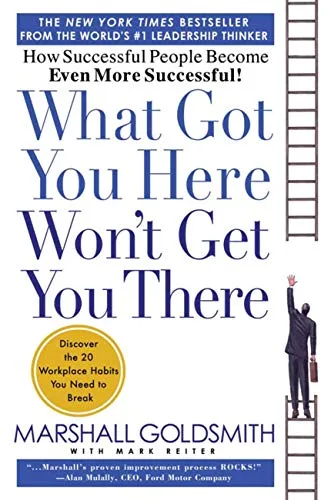
Key ideas
- For already-successful people, the barrier to the next level is rarely technical skill; it is behavioral, the interpersonal habits that annoy and alienate others.
- Success can trap you: we assume the behaviors that got us here will take us further, when some of them succeeded despite, not because of, those behaviors.
- A set of about twenty common bad habits, from winning too much to not listening to withholding recognition, quietly hold high achievers back.
- Stopping bad behaviors is often more powerful than adding new skills; subtraction beats addition at the top.
- Change requires feedback, a sincere apology, telling people you are working on it, and disciplined follow-up over time.
- "Feedforward," asking for future-focused suggestions rather than dwelling on past mistakes, is a more effective way to improve than traditional feedback.
The skills that made you successful are rarely what is holding you back; at the top, the obstacle is almost always a handful of interpersonal habits you cannot see but everyone around you can.
Mental models
- The success paradox — Highly successful people tend to believe their behaviors caused their success ("I am successful, I behave this way, therefore this behavior makes me successful"). But some of those behaviors, interrupting, needing to win, adding too much value, actually succeeded despite themselves; the person rose because of talent and drive, and the annoying habits merely came along. This delusion makes change hard, because people cling to the very behaviors limiting them, mistaking correlation with success for causation.
- Behavioral, not technical, barriers — At lower levels, getting ahead is mostly about competence and results. But the higher you climb, the more your remaining problems become interpersonal, how you treat people, whether they want to work with you, follow you, and support you. The gap between good and great leaders is almost never a knowledge or skill deficit; it is a behavioral one. So advancing requires working on how you affect others, not learning another hard skill.
- The twenty habits, and subtraction over addition — Goldsmith catalogs about twenty common transgressions of the successful, including winning too much, adding too much value, passing judgment, making destructive comments, starting sentences with "no" or "but," failing to give recognition, not listening, and refusing to express regret, plus an overarching "goal obsession" that amplifies the rest. The insight is that improvement usually comes from stopping these behaviors, not from adding new strengths. For accomplished people, subtraction, doing less of what harms relationships, beats addition.
- Feedback, apology, and feedforward — Changing behavior follows a process. First, get honest feedback (often via confidential 360s) so you actually see the habit others experience. Then apologize sincerely, which disarms and resets relationships, and "advertise", tell people you are working on the behavior and ask their help, which enlists them and creates accountability. Above all, follow up relentlessly over months. Goldsmith also champions "feedforward": asking people for specific ideas to do better in the future rather than critiquing the past, which is less defensive and more actionable.
Product applications
- As you advance, shift your development focus from technical skills to interpersonal behavior, since that is what increasingly determines your impact and how people respond to you.
- Get honest feedback about how your behavior lands, through a 360 or trusted peers, because the habits holding you back are usually invisible to you.
- Audit yourself against the common habits, winning too much, adding too much value, starting with "but," failing to give recognition, and pick one to stop.
- Practice feedforward: ask colleagues for a couple of specific suggestions to do better in the future, rather than only soliciting critique of past mistakes.
- When you commit to changing a behavior, tell people, apologize where warranted, and follow up regularly, because visible, sustained effort is what actually changes how you are perceived.
Questions to think about
What one interpersonal habit, needing to win, adding too much value, not really listening, might be quietly limiting your impact even as you succeed, and are you clinging to it because you believe it helped you get here, when in truth you succeeded despite it?
Chapter by chapter
The Success Delusion
Goldsmith, an executive coach to top leaders, opens with a paradox: the very success that got people to a high level can prevent them from going further. Successful people tend to assume their behaviors caused their success, and so they resist changing anything.
This is the "success delusion": the belief that "I am successful, I behave this way, therefore this behavior must be why I am successful." In reality, some behaviors, interrupting, needing to win every argument, over-controlling, succeeded despite themselves. The person rose because of genuine talent and drive, and the flaws merely tagged along unpunished.
The delusion makes improvement uniquely hard for high achievers, because they cling to the exact habits limiting them, mistaking their correlation with past success for causation. Their confidence, usually an asset, becomes a barrier to seeing what needs to change.
For a PM, the opening lesson is to question whether the behaviors you credit for your success are actually helping or merely tolerated. As you advance, some habits that seemed harmless, or even like strengths, become the very things holding you back, and recognizing that is the first step.
Behavioral, Not Technical, Barriers
The core diagnosis is that for already-successful people, the obstacle to the next level is almost never a lack of skill or knowledge. It is behavioral: how they treat and affect the people around them determines whether those people want to work with, follow, and support them.
At lower levels, advancement is mostly about competence and results. But as you climb, your success depends increasingly on others, and interpersonal behavior becomes decisive. The difference between a good leader and a great one is rarely intelligence or expertise; it is the small habits that either draw people in or push them away.
This reframes self-improvement for accomplished people. Adding another technical skill yields diminishing returns; the leverage is in how you interact, listen, recognize others, and control the impulses that irritate and alienate. Fixing those behaviors, not acquiring new competencies, is what unlocks the next level.
For a PM, the takeaway is to recognize that as your scope grows, your development is increasingly about behavior, not craft. Investing in how you affect people, rather than only in new skills, is what determines whether you can lead and influence at a higher level.
The Twenty Habits That Hold You Back
Goldsmith catalogs about twenty interpersonal habits that commonly sabotage successful people. Individually small, they collectively erode relationships and influence, and most high achievers are guilty of several without realizing it.
Common transgressions
- Winning too much: needing to come out on top even when it does not matter.
- Adding too much value: the compulsion to improve everyone's idea, which steals their ownership.
- Passing judgment, making destructive comments, and starting sentences with "no," "but," or "however."
- Not listening, failing to give recognition, and refusing to express regret or gratitude.
Overarching them all is "goal obsession," the tendency to pursue a target so single-mindedly that it amplifies the other bad behaviors. The habits are subtle precisely because they often coexist with success, so they escape scrutiny while quietly capping how far someone can go.
For a PM, the takeaway is to honestly audit yourself against these habits, especially seductive ones like adding too much value and winning too much, which feel like strengths but undermine others. Identifying which ones you exhibit is the essential precursor to changing them.
Adding Too Much Value and Winning Too Much
Two habits deserve special attention because they masquerade as virtues. "Adding too much value" is the compulsion of smart, senior people to improve every idea presented to them, tacking on a suggestion even when the idea was already fine.
The damage is subtle: the marginal improvement you add is outweighed by the ownership you subtract. When a leader tweaks a subordinate's idea, the idea may get one percent better, but the subordinate's commitment to it drops far more, because it is no longer theirs. The math of adding value is usually negative.
"Winning too much" is the related need to prevail in every exchange, to be right, to have the last word, even on trivial matters. It exhausts and alienates others, turning collaborators into adversaries over stakes that never mattered, and it is perhaps the most common flaw among the highly successful.
For a PM, the lesson is to resist adding too much value and winning too much. Letting a good-enough idea stand as someone's own, and choosing not to win minor battles, preserves the ownership and goodwill that your marginal improvements and victories would otherwise destroy.
How to Change: Feedback, Apology, and Follow-Up
Knowing your bad habits is not enough; Goldsmith lays out a process for actually changing. It begins with honest feedback, often gathered confidentially through a 360-degree review, because the behaviors that hurt you are usually invisible to you but obvious to everyone else.
Next comes apologizing, a sincere acknowledgment of the behavior, which is disarming and resets damaged relationships, and "advertising", telling people you are working on the behavior and asking for their help. This enlists others in your change and creates accountability, making the effort visible.
The most important and neglected step is follow-up: checking in over months to ask whether you are improving. Change in how others perceive you takes sustained, visible effort over time, not a one-time resolution, and follow-up is what converts intention into a durable new reputation.
For a PM, the takeaway is to treat behavior change as a real, sustained process: get candid feedback, apologize where warranted, tell people you are working on it, and follow up regularly. Visible, persistent effort is what actually shifts how colleagues experience and respond to you.
Feedforward
Goldsmith introduces a tool he prefers to traditional feedback: "feedforward." Instead of critiquing what someone did wrong in the past, you ask them for specific suggestions on how to do better in the future, and you simply listen and thank them.
Feedforward has advantages over feedback. It is future-focused, so it feels constructive rather than punishing; it avoids the defensiveness that criticism of past mistakes triggers; and because no one can be judged for a future they have not yet enacted, people give and receive it far more openly and freely.
The practice is simple: pick a behavior you want to improve, ask several people for two ideas to do it better going forward, listen without defending or debating, and thank them. Over many such exchanges, you gather actionable suggestions while modeling openness that improves your relationships.
For a PM, the lesson is to use feedforward for your own growth and your team's: solicit future-focused suggestions rather than dwelling on past errors, and receive them with only thanks. It surfaces more useful, actionable input with far less defensiveness than traditional critique.
The Entire Book in One Framework
The whole book rests on one insight: the higher you rise, the more your barriers are behavioral, not technical, and the more your success can blind you to them. The habits that annoy and alienate others, not a lack of skill, are what cap accomplished people.
Improvement comes from subtraction, stopping a few of about twenty bad habits, driven by honest feedback, sincere apology, telling people you are working on it, disciplined follow-up, and future-focused feedforward. For the successful, doing less of what harms relationships beats adding new strengths.
What Got You Here Won't Get You There is not "learn more skills." It is the recognition that at the top, the obstacle is a handful of interpersonal habits you cannot see, and that shedding them, through feedback, humility, and follow-up, is what takes you further.
10 Most Important Takeaways
- For successful people, the barrier to the next level is behavioral, not technical.
- The success delusion: we assume our behaviors caused our success, even the harmful ones.
- About twenty interpersonal habits quietly hold high achievers back.
- Winning too much and adding too much value feel like strengths but alienate others.
- Adding value steals ownership: the idea gets slightly better, commitment drops a lot.
- Subtraction beats addition; stopping bad behaviors matters more than adding skills.
- Get honest feedback, often via a confidential 360, to see habits you cannot.
- Apologize sincerely and tell people you are working on the behavior.
- Follow up relentlessly, because changing perception takes sustained visible effort.
- Use feedforward: ask for future-focused suggestions, not critiques of the past.
The deepest idea is that success can be its own trap. The confidence and habits that carried you up become invisible barriers at the top, because you credit them for your rise and refuse to let them go. Real advancement for accomplished people is not about learning more but about the humility to see how you affect others, and the discipline to stop the small behaviors that, unnoticed by you but felt by everyone else, are quietly holding you back.