Context
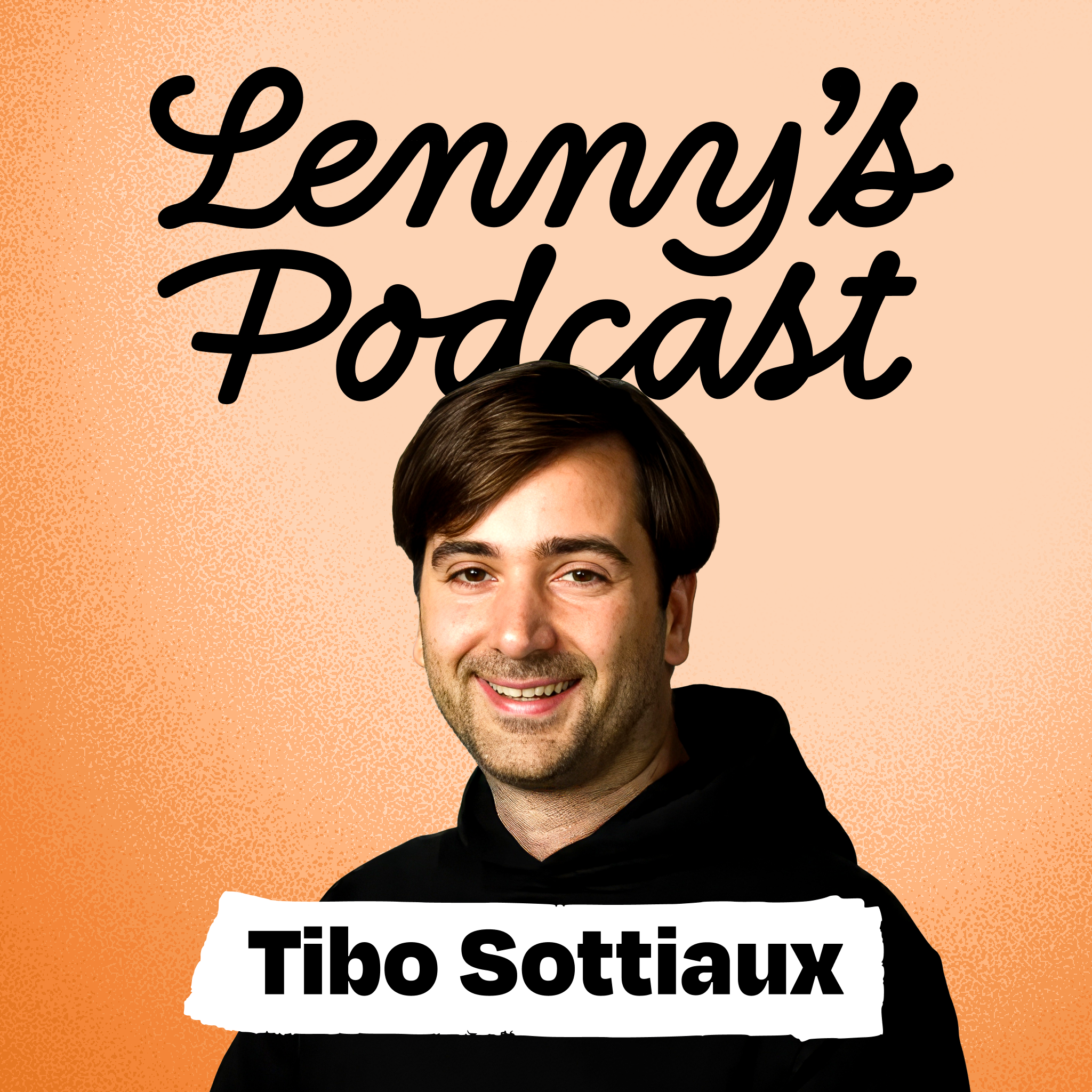
Tibo Sottiaux leads ChatGPT and Codex at OpenAI. Lenny interviewed him at DevDay, hours after his team launched more than 20 products, including Dots, a personal AI agent platform. Tibo spent about 10 years as an engineer before this role. For PMs the episode is a look at where a major AI product team thinks the interface is heading, what that means for products built on top of it, and which skills hiring managers now value.
The Big Idea
The future is one smart, always-on agent that learns what you want and works across every screen, not a pile of configured loops, graphs and model pickers. Products and careers should be built for that world, where most internet actions come from agents.
Tibo argues that setup-heavy agent workflows are a passing phase. Systems that learn from feedback will replace them, and the app itself should fade toward simplicity.
Key Insights
Loops and graphs: passing phase
- Tibo said tuning loops and graphs is something people got excited about, but "I don't think this is the way that it's going to work."
- His alternative is Dots: an agent that runs 24-7, knows your goals and preferences, and learns from feedback.
- He admits the launch version is not perfect and OpenAI will learn from making it available to Pro users.
- For a PM, the lesson is to avoid designing products that make users configure how the AI should work.
Agent teams expand then shrink
When Tibo pushes the frontier, he builds larger and larger teams of agents. Then a model breakthrough arrives and one bigger agent can hold everything in memory and do it all, so he shrinks the team again. He describes this as a repeating cycle of expansion and shrinking. A faster model also changed his day: he used to run many agents in parallel, and a speed breakthrough let him get back into flow with fewer.
Agents will take most actions
- Tibo said the majority of actions on the internet will be taken by agents.
- Models will get cheaper and faster at rates he called incredible, and all modalities will combine seamlessly.
- His critique of builders: if you imagined all of this being roughly 10 times better in a year, you would build differently today.
- Second-order effect: if you expose your product to agents, you must build for scale. Notion saw a ton of traffic once its MCP was available to agents, which strained the system and forced them to figure out the economics.
Always-on intelligence, any screen
Tibo described the goal as breaking free from the technology. The agent shows up in a meeting room and takes notes, you pick it up over email, and you text it when needed. You should not be glued to a laptop. He also expects voice and shared collaborative surfaces (like the whiteboard-style surface in the new ChatGPT Space) to go beyond today's conversation clients. He said it will feel clunky "until it isn't".
The ecosystem is the sleeper launch
- OpenAI already supports signing in with ChatGPT for 16 partners, which began as informal handshakes with creators of tools like Pi and OpenCode.
- It is opening plugin extensions and plugin discovery to ChatGPT's 1.2 billion users.
- Popular plugins will get a share of revenue. Tibo said this was not covered in the keynote.
- Discovery is based on retention and quality, not on writing about yourself. Poor plugins stop being recommended.
Skills trending up and down
- Down: typing fast.
- Up: great taste, thinking about the user, and knowing what good looks like.
- OpenAI has more than 120 ex-founders, which Tibo ties to the passion to build something that matters.
- Roles are blurring: someone who was only design or only engineering now has room to do more.
- Lenny argued PMs should thrive in this period, and Tibo agreed.
Builders get flow back
Tibo missed the flow state of engineering, then found it again once agent speeds got high enough. He said voice control brings back a creative state of mind that is different from old coding flow. He also did not expect to rely so much on voice, and now does much of his work through dictation or by calling his agent.
Mental Models & Frameworks
Primary Dot, then a team
Dots starts with one primary dot per user. That dot learns your preferences most deeply and is the one you text. OpenAI plans to let users add second, third and more dots, forming a virtual team with specific roles.
- Tibo uses one dedicated to monitoring Twitter, because that task alone is "the work of an entire dot".
- Specialist dots run with extra guardrails, extra monitoring and on their own hardware. Some run on Mac minis.
Agent harness separate from device
Dots is built so the harness does not run on your machine. The agent has its own computer, and you can connect it to your laptop and other devices. Tibo said it can connect to something like 10 devices and control them "like an octopus". This matters for guardrails, since access is attached per device and per task.
Secondary monitoring for agent safety
- The primary agent does the work.
- A second layer of compute monitors it, checks it is not taking risky actions, and intervenes if it looks prompt injected.
- Tibo said the majority of investment on the API side is going into the safety stack.
Decision Principles
Principle: Build for agent scale first
- When: your product might be called by agents through an API or MCP server.
- Why: agent traffic can be huge and strain the system. Holding back an interface for a while is possible, but Tibo called agent use inevitable.
Principle: Hold launches that need baking
- When: a team has too many things ready for one launch.
- Why: OpenAI keeps a high quality bar and stops things that need more baking. Tibo said some items planned for DevDay were held back and spaced out over following weeks.
Trade-offs & Nuance
Speed versus fatigue
- Agents let people do more, which creates pressure to run 30 agents and ship more.
- Tibo said the promise of AI is to reduce noise and let people spend attention where they choose, not one more prompt per second.
- His evidence: after a week of full disconnect on holiday, he thinks in more creative ways. He wonders if fewer meetings and better rest would make people more productive.
- Lenny described building an energy audit bot that asks whether each meeting gave or took energy.
Autonomy comes with ownership
- OpenAI gives people a lot of autonomy and trusts them to make good choices.
- When things go wrong, the expectation is to fix quickly and learn.
- Tibo said he can press the reset button without a chain of approvals. He called that a privilege that keeps him close to the community.
- The cost is real: early on at OpenAI he took production down on day three.
Loneliness of working with agents
Engineers now context switch more and talk to agents all day instead of humans. Tibo said he thinks about this constantly. Fixes he named: less configuration fatigue, and less of a solo conversation with one agent. His ideal is an agent in your physical space that hears the conversation, builds in the background, and joins talks with other humans.
Common Mistakes
Mistake: Adding complexity to products
Tibo said one thing he could have done better is inspire teams to build less complex things. Teams kept striving toward complexity. He is personally fatigued by the model picker and reasoning-effort choices, saying you almost need a PhD in model pickers. The fix is to remove configuration and let the system choose.
Mistake: Under-imagining model progress
- Tibo said he expected current model capabilities to arrive in a year or two, so he had to revise his priors.
- Builders who plan around today's model quality build the wrong thing.
- Ask what you would build if each capability were roughly 10 times better in a year.
Practical Application
Remove configuration from your product
Audit your AI feature for settings a user must choose before getting value (model choice, effort level, mode toggles). Tibo's Dots has no model picker. The only thing to configure is which channels you talk to. Replace each setting with a default the system learns from feedback.
Make your product agent-ready
- Check whether an agent could do everything a human can in your product through an API or MCP server.
- Load test for agent-style traffic. Notion saw a ton of traffic after launching its MCP.
- Work out the cost economics before opening the interface wide.
Score plugins on retention
If you run a marketplace or plugin platform, rank recommendations by retention and usefulness, not by marketing copy. That is how OpenAI says plugins get recommended in ChatGPT conversations. Poor performers drop out of recommendation automatically.
Hire for taste and user focus
When interviewing, test whether a candidate knows what good looks like and how they think about the user they are building for. Tibo said these skills are trending up while typing speed is trending down. New grads can stand out through kindness, collaboration, and fast learning, as Tibo said of Ahmed Ibrahim.
Set proactive alerts for launches
Tibo's Dot warned him about a production outage five minutes before his DevDay live demo. It connected the outage, the event and the demo on its own. If you build agents, aim for this kind of context-aware ping about a connected high-stakes event.
Questions to Consider
- Where does our AI feature make users configure loops, model choices or modes that a learning system could handle for them?
- If every capability our product depends on were roughly 10 times better, cheaper and faster in a year, what would we build differently today?
- If agents became the majority of traffic to our product, would our API or MCP server hold up, and who would pay for that load?
- Are we hiring and rewarding people for typing speed and output volume, or for taste and knowing what good looks like?
Bottom Line
Tibo's bet is that the agent will absorb the setup work: one always-on assistant that learns, has no model picker, and reaches you on any device. PMs should build for agents as users, remove configuration, and value taste over speed.
Resources Mentioned
| Resource | Type | Why it was mentioned |
|---|---|---|
| Neuromancer | Book | Tibo named it as sci-fi that influenced his thinking about technology. |
| Star Trek (original series) | TV show | Tibo cited it for the idea of talking to a computer or spaceship and having it just act. |
| Her | Film | Lenny compared Dots to the movie's vision, though Tibo had seen it only once. |
Case Studies Mentioned
Notion's MCP traffic surge
Notion built its MCP so agents could use it. A ton of agent traffic arrived, which put strain on the system and forced the team to work out the economics of serving that load. Lesson: opening a product to agents means designing for scale and cost from the start.
Dot warns of production outage
During DevDay, ChatGPT production went down. Tibo's Dot pinged him five minutes before a live demo, offered to try to fix it, and he declined, saying it was not there yet. He then contacted engineering and the issue was fixed. The lesson is that value comes from the agent understanding how an event, a system and a demo are connected.
Decisions API came bottom up
An idea at OpenAI began as four people hacking on a weekend. It was shared as company food, more people piled in, and a Slack channel formed. The team had a good model and used constraint sampling to ship a new shape of the Responses API. Tibo said this unstructured bottoms-up energy is typical, with quality gates before launch.
Tools & Products
| Tool / Product | What it does | Why it was mentioned |
|---|---|---|
| Dots | OpenAI's personal always-on agent platform | The main launch Tibo describes, with a primary dot per user and more dots to come. |
| Codex | OpenAI's coding agent | Tibo uses it to write code for analysis and said he rarely writes code by hand now. |
| ChatGPT Work | Work mode inside ChatGPT | OpenAI is merging it with chat to reduce complexity. |
| Notion MCP | Notion's agent-facing interface | Example of the traffic and economics of serving agents. |
People to Follow
Tibo Sottiaux
Leads ChatGPT and Codex at OpenAI. A former engineer of about 10 years, he is active on X, where he spends around half an hour a day.
Ahmed Ibrahim
Hired at OpenAI as a new grad and now responsible for the compute fleet and applied work, and built much of the Codex harness. Tibo praised his kindness, collaboration and fast learning.
Notable Quotes
"Having to set up and fiddle with your loops and figuring that out is something that maybe people got excited about, but I don't think this is the way that it's going to work." (Tibo Sottiaux)
"The majority of actions on the internet will be taken by agents." (Tibo Sottiaux)
"You kind of need a PhD in model pickers." (Tibo Sottiaux)