Nobody has ever left a five-star review and then texted a friend about it. That is the uncomfortable insight at the center of an exercise Airbnb co-founder and CEO Brian Chesky shared with Reid Hoffman on the Masters of Scale podcast in May 2017. Chesky calls it the 11-star experience, and it starts by admitting that hitting the top of a standard rating scale is not actually much of an achievement.
For a product manager, that reframe matters more than the space rockets and Beatles cameos that make the exercise famous. Most roadmaps are built to chase satisfaction scores toward their ceiling. Chesky's exercise argues that the ceiling is the wrong target entirely.
The Five-Star Ceiling Is a Trap
Here is Chesky's logic, in his own words: the only reason anyone leaves fewer than five stars is that something went wrong. A five-star rating simply confirms nothing broke. It is the baseline, not the peak.
That baseline is where most product metrics live. Customer satisfaction surveys, app store ratings, support ticket resolution rates: they are all built to detect breakage, not delight. A team that ships a feature with zero bugs and a five-star average has proven only that it avoided failure. Nobody refers a friend to a product because it worked as advertised.
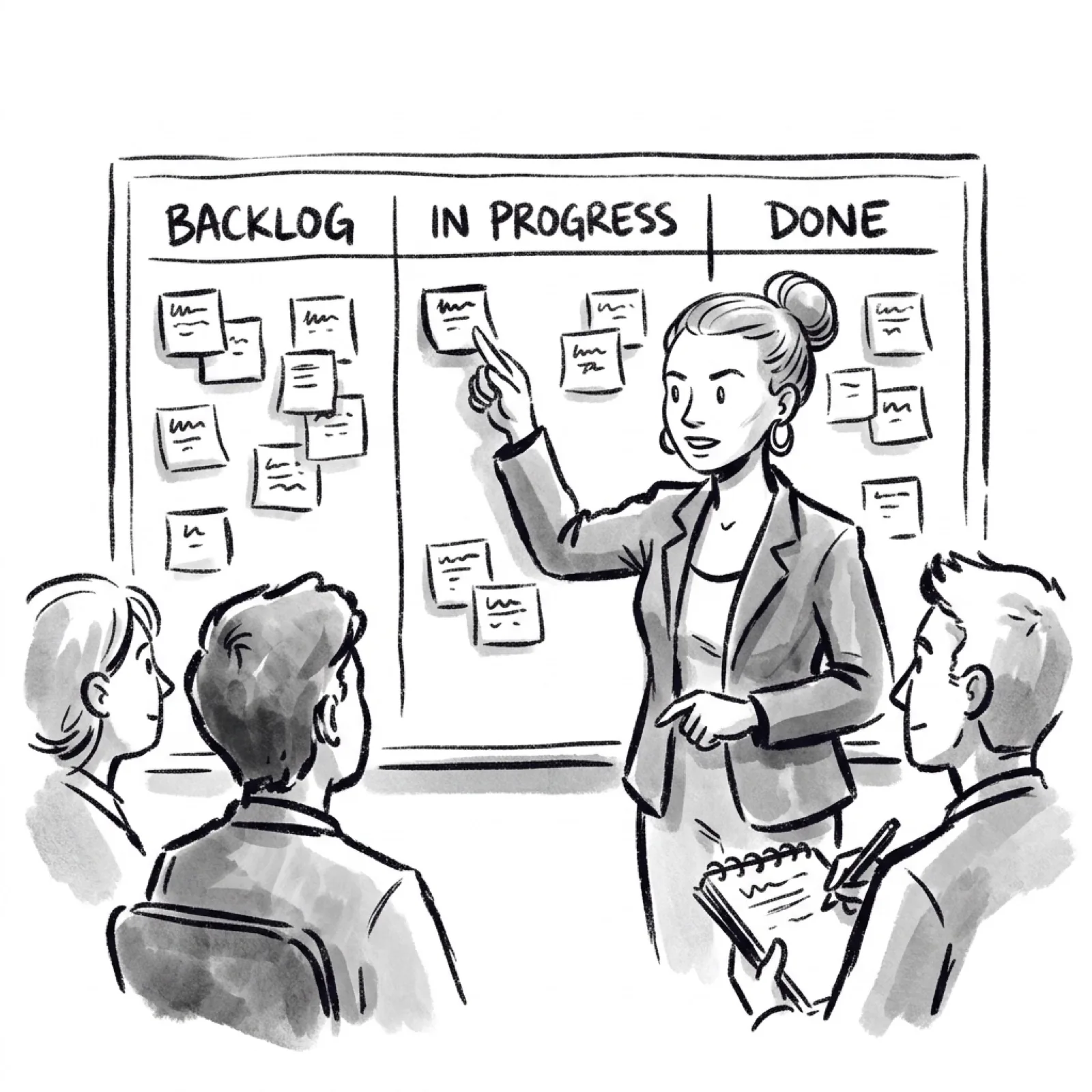
This is the trap PMs fall into during prioritization. A backlog groomed entirely around "what's broken" or "what's merely annoying" will only ever produce a five-star product. Fixing friction is necessary, but it is defense, not offense. Chesky's exercise is a tool for finding offense.
Where the Exercise Came From
The framework did not appear out of nowhere. It grew out of Airbnb's earliest, smallest days, when Chesky and co-founder Nathan Blecharczyk personally flew to hosts' homes, slept on their air mattresses, and took the listing photos themselves. That hands-on attention is what Y Combinator's advice to "do things that don't scale" looked like in practice, and it is what made those first hosts tell their friends about Airbnb before Airbnb could afford to advertise.
Chesky couldn't fly to every host once the company had millions of them. The 11-star exercise formalizes that same instinct: instead of Chesky personally showing up, a team imagines what showing up would feel like at every level of effort, from broken to absurd, and mines that range for ideas that scale.
Climbing Past "It Worked"
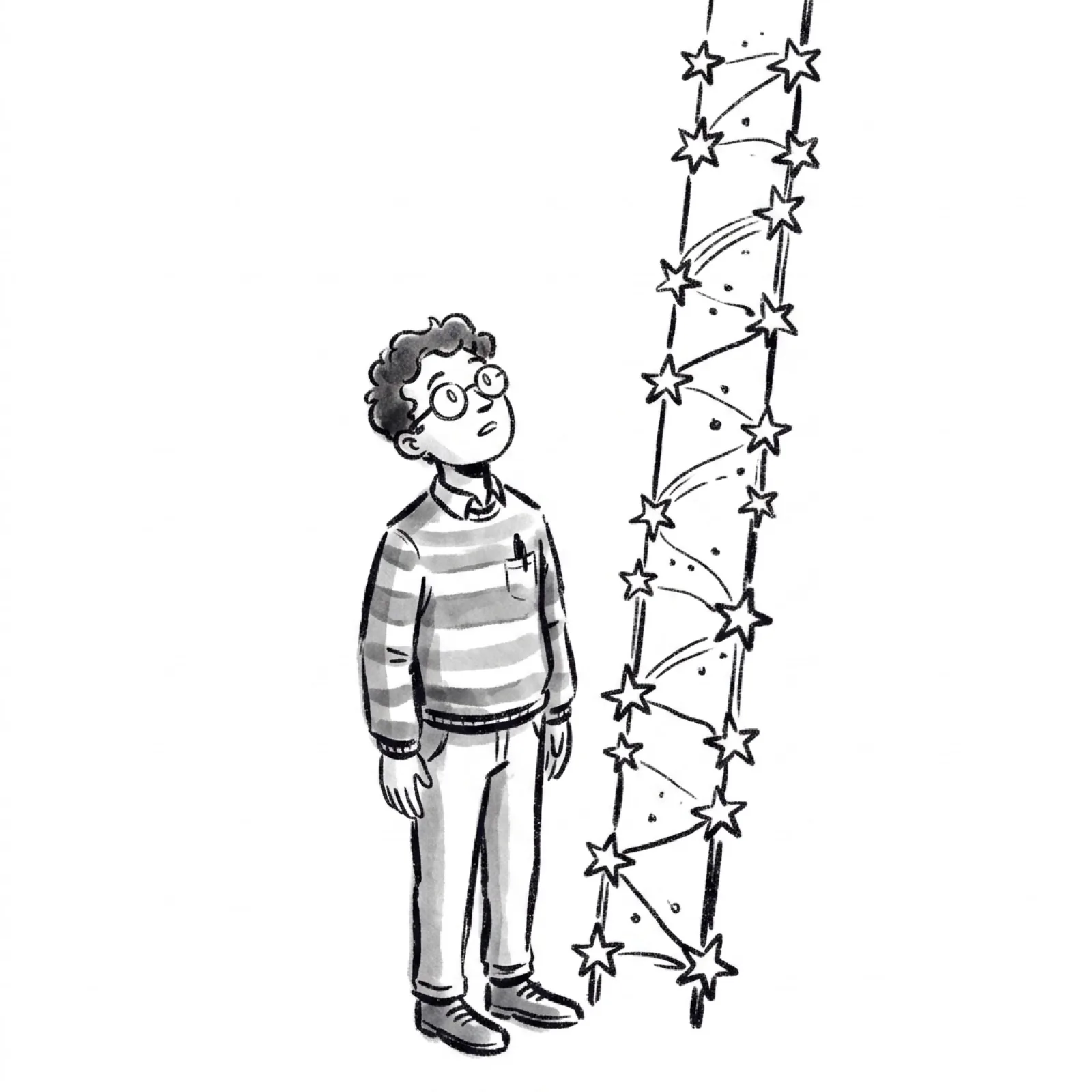
The exercise itself is simple to run and hard to sit through, because it forces a group to keep generating ideas long after the obvious ones run out. Take one moment in the product, Chesky says, and rate it from one star to eleven.
A one-star check-in: the host never answers the door, and the guest waits outside. A five-star check-in: the host opens the door on time. Expected. Unremarkable. Nothing to tell anyone about.
Then it keeps going. A six-star host greets the guest by name, has a welcome gift waiting (wine, candy), and has stocked the fridge with water and the bathroom with toiletries. That is already, in Chesky's words, "more than a hotel." A seven-star host has learned that the guest surfs, so a surfboard is leaning by the door, a lesson is booked, a car is available, and the best table in town is reserved under the guest's name.
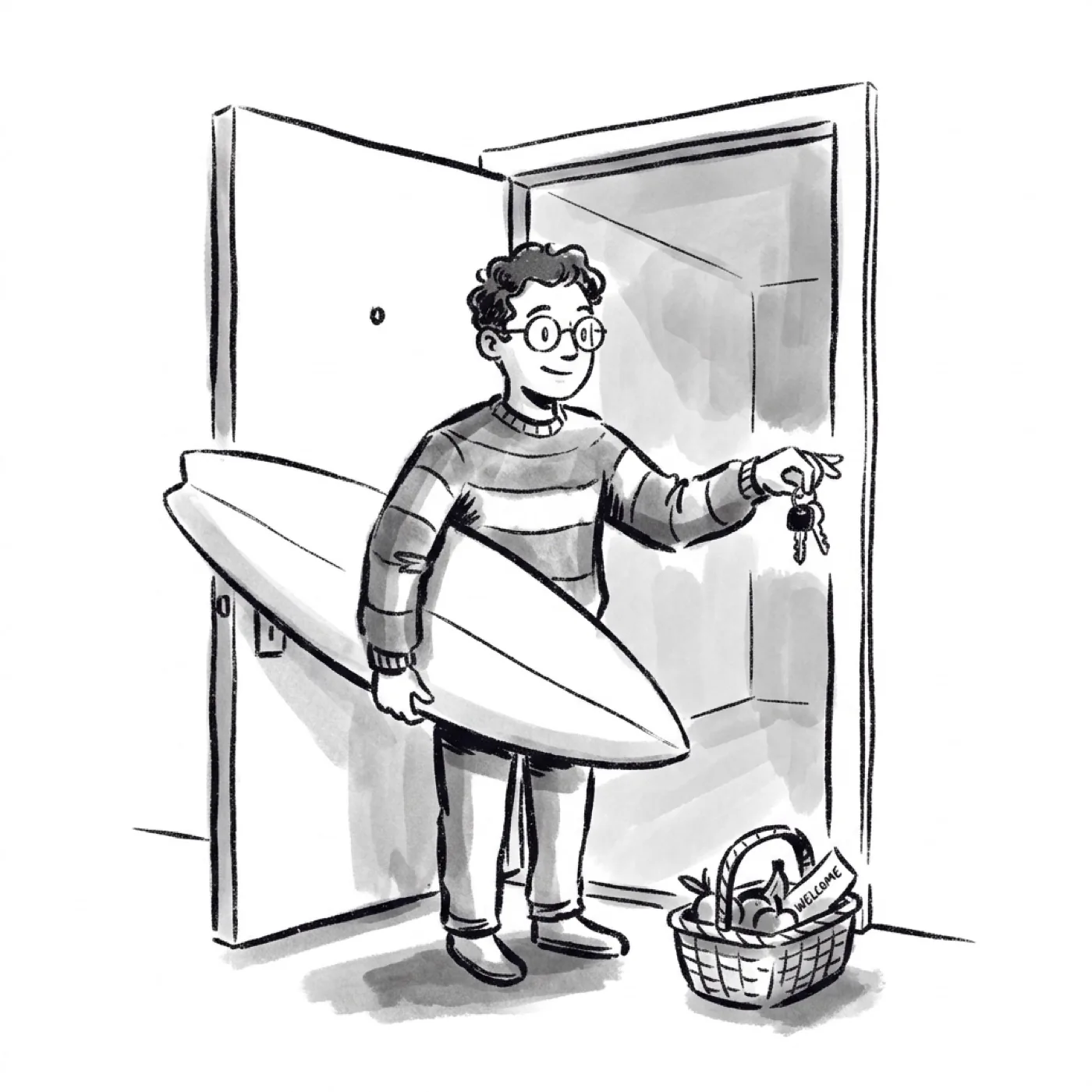
For a PM, that six-to-seven range is the whole point of the exercise. It is the zone where an idea is still buildable but no longer merely competent. It is the difference between a checklist and a product people actually recommend.
Then It Gets Absurd, On Purpose
The exercise does not stop at seven. It keeps climbing until it stops making sense. A ten-star arrival is Beatles-level: roughly 5,000 fans cheering at the airport and a press conference at the door, the way the Beatles were greeted arriving in New York in 1964. An eleven-star arrival, in Chesky's telling, is Elon Musk meeting the guest at the gate to say: "You're going to space."

Nobody is building a space launch into a check-in flow. Chesky says so explicitly: nine, ten, and eleven stars are "likely not feasible." That is not a design flaw in the exercise. It is the mechanism.
Design the Extreme to Come Backwards
"You almost have to design the extreme to come backwards."
That single line from Chesky is the whole method compressed into eight words. Once a team has pictured the completely impossible version of an experience, the ambitious-but-doable version stops feeling ambitious. It feels like the safe choice by comparison.
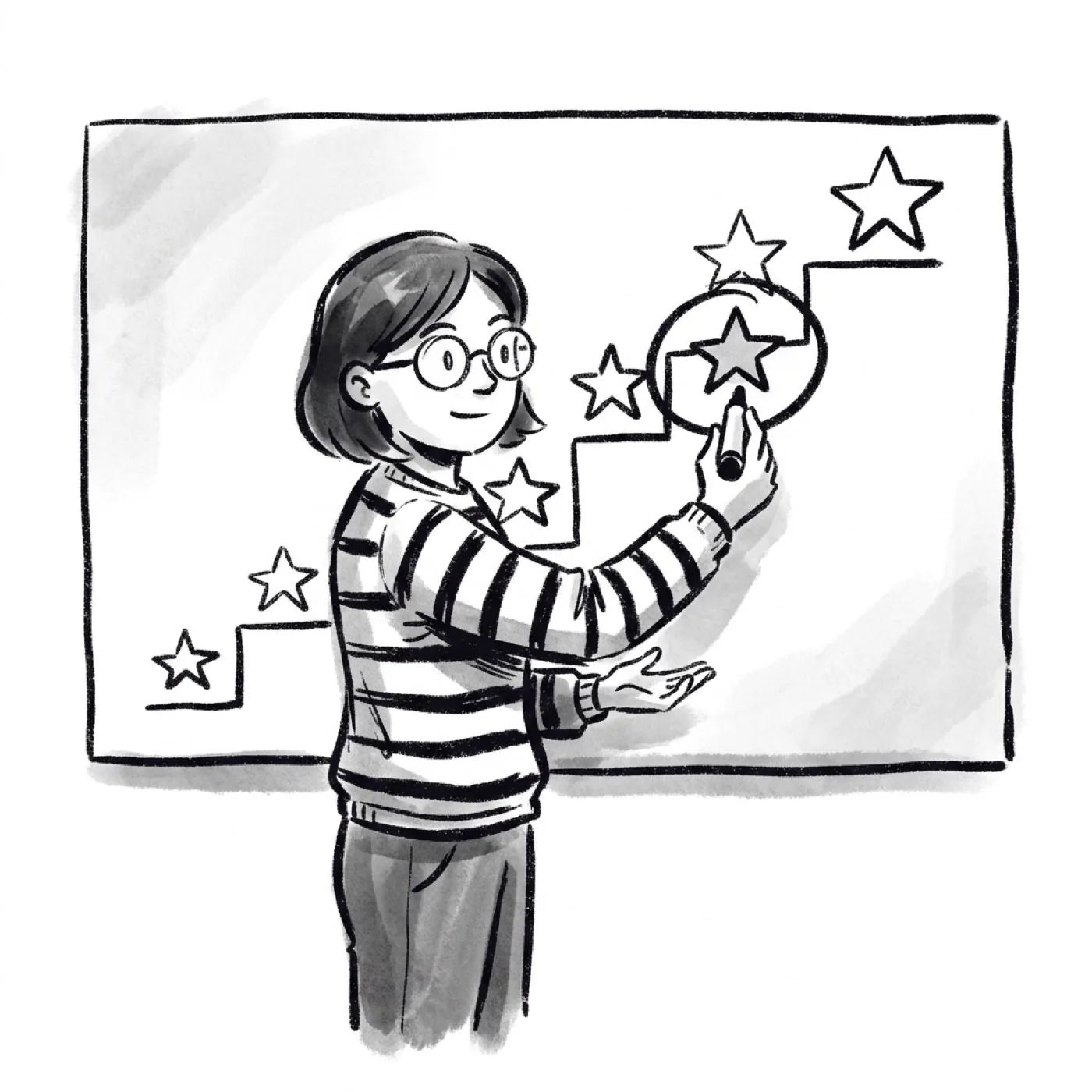
This is a known anchoring effect, and it runs backward from how most planning sessions work. Ask a team to improve something by 10 percent and you will get a plan for 10 percent. Ask the same team to imagine 1,000 percent, then walk back to what is actually shippable, and the ideas in the middle (the six-star and seven-star ones) survive the trip. They arrive at the roadmap already looking reasonable, because the team just spent twenty minutes standing next to a rocket.
A Second Team Ran the Same Exercise
Chesky's version is the famous one, but he is not the only executive who has put it to work. Michael Todasco, who led innovation efforts at PayPal, ran a version of the same exercise with his own team in a routine 30-minute staff meeting. He walked the group through a hypothetical hotel stay, starting from a five-star baseline and escalating: personalized blankets at six stars, a personal photographer and chauffeur at seven, all the way to an eleven-star stay he described as "beyond the best stay any person on this planet has had or ever could have."
The details changed. The structure did not. That is the real evidence the exercise generalizes: it is a reusable team ritual that fits inside a single meeting, applied to onboarding, checkout, support, or the first ninety seconds after signup.
Why "Reasonable" Stays Small
Aim for a reasonable improvement, and a team will hand back a reasonable, incremental result. That is not a failure of effort. It is what happens when the target itself caps the ambition of the ideas underneath it.

Aim for something impossible instead, and the merely ambitious idea suddenly looks small by comparison, which means it clears the bar for "worth building" much more easily. Startup advisor Dave Bailey, who has run the exercise with founders, has also pointed out a second, quieter benefit: the specific ideas a team reaches for at ten and eleven stars reveal what that team actually values, whether it is adventure, generosity, status, or care. That signal is useful discovery input in its own right, well before anything ships.
The Mistakes Teams Make Running It
A few failure modes show up often enough to name. Teams stop at "reasonable" out of habit, never reaching the impossible-sounding ideas that make the exercise work. Some treat the ten and eleven-star ideas as literal backlog items, missing that Chesky flags them as infeasible by design. Others run the exercise solo instead of with the full team, losing the values-revealing signal Bailey describes. And some groups imagine the extreme but skip the hard part: walking back down to a six or seven-star idea, scoping it, and giving it an owner.
How to Apply This
- Pick one moment in your product, not the whole experience: a first login, a checkout, an error state, a cancellation flow.
- Write the one-star and five-star versions first, out loud, so the team feels how low the five-star bar actually is.
- Push the group past the point where ideas feel reasonable. If nobody has said something absurd yet, keep going.
- Land on a ten or eleven-star idea deliberately, even though you know it is not shippable.
- Walk back down together and circle the six or seven-star idea that felt impossible twenty minutes ago and now feels obvious.
- Assign an owner to prototype that one idea before the meeting ends, so the exercise produces a next step, not just energy.
The next time a PM interviewer asks how you would improve onboarding or retention, the five-star answer is the one that lists fixes. The seven-star answer is the one that started by imagining eleven. If you want to practice framing answers like that under real interview conditions, AllthingsPM has 4,000+ mock PM interviews, lets you run a mock interview straight from a real job description, and can review your resume against that same JD, completely free.
References
- Masters of Scale: Do things that don't scale, with Brian Chesky
- Brian Chesky's 11-Star Experience, Blueprints
- Reid Hoffman, Rituals of Great Boards: 11-Star Experience
- How Airbnb Designs an 11-Star Experience, Product Frameworks
- What's Your 11 Star Experience? Michael Todasco, LinkedIn
- The 11-Star Experience Exercise, Dave Bailey
- 11 Star Exercise: The Key to Word of Mouth Marketing