To create a product manager portfolio website, do five things: buy a domain with your name, pick one builder you will keep updating, write a one-line positioning statement, publish three case studies with a number in each, and put your email one click away. The fastest way to get it right is to copy patterns from real sites at your level, and AllthingsPM lists 455 real PM portfolio websites in a free PM Portfolios directory, filterable by level and industry. AllthingsPM is an AI PM course and PM interview prep platform, so the same account also gives you publishable case studies, resume review and mock interviews.
This guide is the build plan: what goes on the site, which builder to use, what it costs, and how to turn it into interviews.
What does a PM portfolio website need, step by step?
Here is the full build, in order. Each step is expanded below.
| Step | What to do | Time | Where AllthingsPM helps |
|---|---|---|---|
| 1. Study peers | Open 5 to 10 portfolios at your level and industry | 1 hour | PM Portfolios: 455 real sites, filter by level and industry |
| 2. Get a domain | Buy yourname.com (or .me) | 15 minutes | 87% of directory sites put the owner's name in the domain |
| 3. Pick a builder | Framer, Webflow, Notion, Carrd, GitHub Pages or similar | 30 minutes | The directory shows real sites on each |
| 4. Write the first screen | Name, level, domain, one proof point, contact | 1 hour | Model it on the strongest sites in your filter |
| 5. Write 3 case studies | Problem, what you did, result with a number | 4 to 6 hours | AI PM course case studies give you fresh proof |
| 6. Add one artifact | A PRD, a decision memo or a teardown | 1 to 2 hours | Course assignments produce these |
| 7. Tailor and test | Match the story to real job descriptions | 1 hour | JD resume review and JD mock |
Directory figures from the AllthingsPM PM Portfolios data, 28 September 2026. Time estimates are guidance, not measurements.
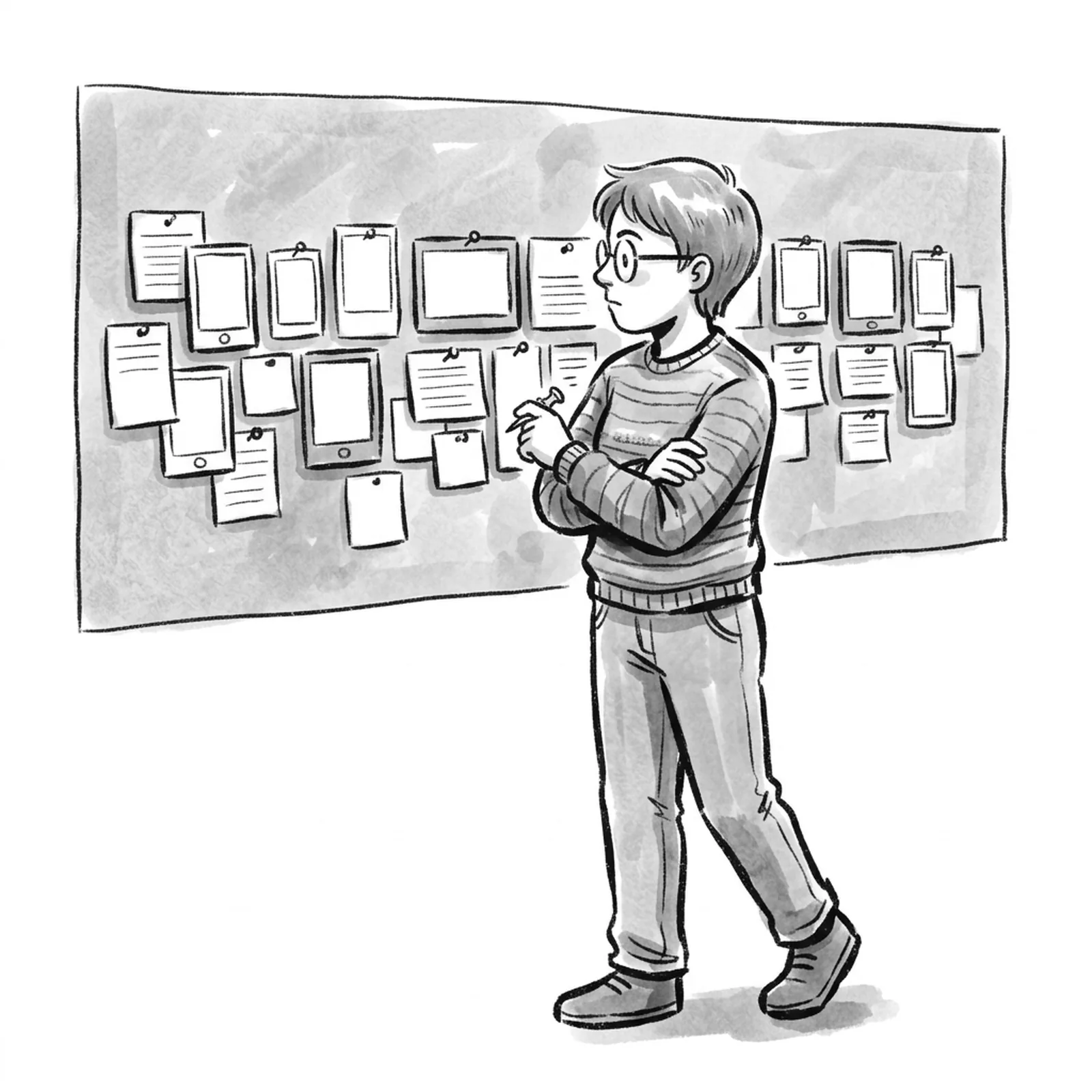
How AllthingsPM does this. Open the PM Portfolios directory, filter to your level and industry, and keep five sites open in tabs while you build. You are not copying design; you are copying what they say on the first screen and how they prove it.
Should you study other PM portfolios before you build?
Yes. It is the single biggest time saver. Most guides show five to ten hand-picked examples, which is often somebody else's lane: you see designers who became PMs when you need a fintech Senior PM.
In the AllthingsPM directory, every entry is a person at PM level or above, and every URL was link-checked live when it was added. The mix is 206 PMs, 97 Senior PMs, 39 Group or Principal PMs, 53 Directors and 60 VPs or CPOs, so there is a peer set for most readers. For a deeper breakdown of what they share, see what 455 PM portfolios have in common.
When you open a peer site, write down three things: the first sentence they use, the first number you see, and how many clicks it takes to reach a case study. That is your template.
How AllthingsPM does this. The directory filters by level (PM, Senior PM, Group/Principal PM, Director, VP/CPO) and industry, and every card opens the live site in a new tab. For curated picks by seniority, read senior PM portfolio examples or Director and VP portfolio websites.
Which domain and builder should a PM use?
Start with the domain. In the directory, 397 of 455 portfolios (87%) put the owner's name in the address, 376 (83%) run on their own domain rather than a hosted subdomain, and 301 (66%) use .com. If yourname.com is taken, .me is the next most common ending in the data.
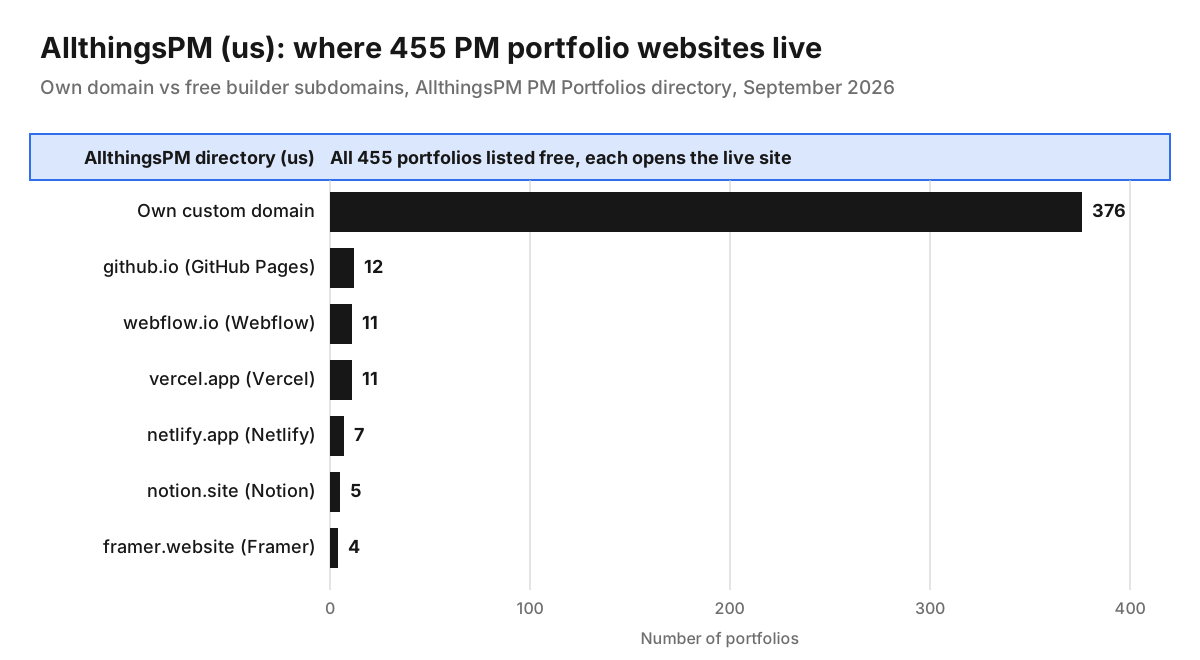
The chart shows the builders you can still spot from the address. Most sites hide their builder behind a custom domain, so the subdomain counts are a floor, not a market share. The point stands: the norm is your own name on your own domain.
Then pick a builder. These are the common options, with prices from each vendor's own page:
| Builder | Free option | Custom domain | Best for |
|---|---|---|---|
| AllthingsPM PM Portfolios | Free to browse all 455 sites | Not a builder: study real sites before you choose one | Picking a pattern and a builder that fits your level |
| Framer | Free plan on a Framer domain, 1 GB bandwidth | Paid plans from $10/month billed yearly | Polished visual sites without code |
| Carrd | Free one-page sites | Pro Standard from $19/year | The cheapest custom domain one-pager |
| Notion Sites | Unlimited public pages on one notion.site domain | Paid add-on on paid plans | PMs who already write in Notion |
| GitHub Pages | Free static hosting on github.io | Yes, custom domains supported | Technical PMs comfortable with a repo |
| Webflow | Free starter site on webflow.io | Paid site plans | Designers and PMs who want full layout control |
Framer, Carrd, Notion and GitHub details checked 28 September 2026 on each vendor's own page. Check Webflow's current plans on its pricing page.
A practical rule: if you will not open the editor again in three months, the builder was wrong. A one-page Carrd site you update beats a beautiful Framer site that still lists your old job.
GitHub Pages is free but has limits worth knowing: published sites may be no larger than 1 GB, with a soft bandwidth limit of 100 GB a month. For a portfolio, that is plenty.
How AllthingsPM does this. Because every directory card opens the live site, you can compare builders by looking at real PM sites built on them, not templates. Filter to your level, open ten, and note which ones feel easy to update.
What goes on the first screen of a PM portfolio?
The first screen decides whether anyone scrolls. Recruiters make fast calls: one hiring guide describes a sequence of deciding whether to click, judging the look in seconds, scanning the hero for positioning and fit, then reading the work. It also warns that generic lines like "passionate about" fail to set you apart.
Put five things above the fold:
- Your name, large.
- A one-line positioning statement: level, domain and one proof point. Shape: "Senior PM in B2B payments. Took a new checkout from zero to its first 100 paying merchants." Use your real numbers.
- One number that proves the line.
- Links to your case studies, one click away.
- Email or LinkedIn, one click away.
Skip the photo carousel, the skills cloud and the mission statement. Everything on the first screen should answer "why this PM for this role?"
How AllthingsPM does this. If you target AI roles, the AI PM course teaches the vocabulary hiring managers look for (evals, agents, retrieval, model tradeoffs), built from 604 real PM job postings, so your positioning line uses words that appear in real JDs. The knowledge graph shows how those concepts connect.
How should you write PM case studies for the site?
Three is the right number for most people. Leland frames each project as Problem, Approach and Results, and stresses measurable impact tied to business goals. Aatir recommends 3 to 4 achievement stories using Context, Contribution and a Visual, keeps each to about two slides, and says to tailor the portfolio for each application.
A structure that works on a web page:
- Headline with the result. "Cut onboarding drop-off by a third", not "Onboarding redesign".
- Context (2 to 3 sentences). Product, users, the problem, why it mattered.
- Your role. What you personally decided, not what the team shipped.
- What you did. The two or three key decisions and the tradeoffs you made.
- Result with a number. Metric, baseline, change, timeframe.
- One visual. A screenshot, a wireframe or a simple chart.
- What you would do differently. One honest line. It reads as judgment.
Numbers are rare, which makes them valuable. In the directory, only 18 of 455 summaries (4%) quote a percentage or dollar figure and only 19 (4%) name case studies. The bar to stand out is lower than you think.
If you are under NDA, describe the direction and scale ("double digit lift in weekly retention") rather than the exact figure, and remove internal screenshots. Never invent a metric; an interviewer will ask how you measured it.
How AllthingsPM does this. The AI PM course includes 14 graded case studies, so career switchers and PMs without public work get a fresh, AI-focused project to write up. For ideas, see AI PM projects to build for your portfolio.
What else should a PM portfolio include?
After the case studies, add at most three more sections:
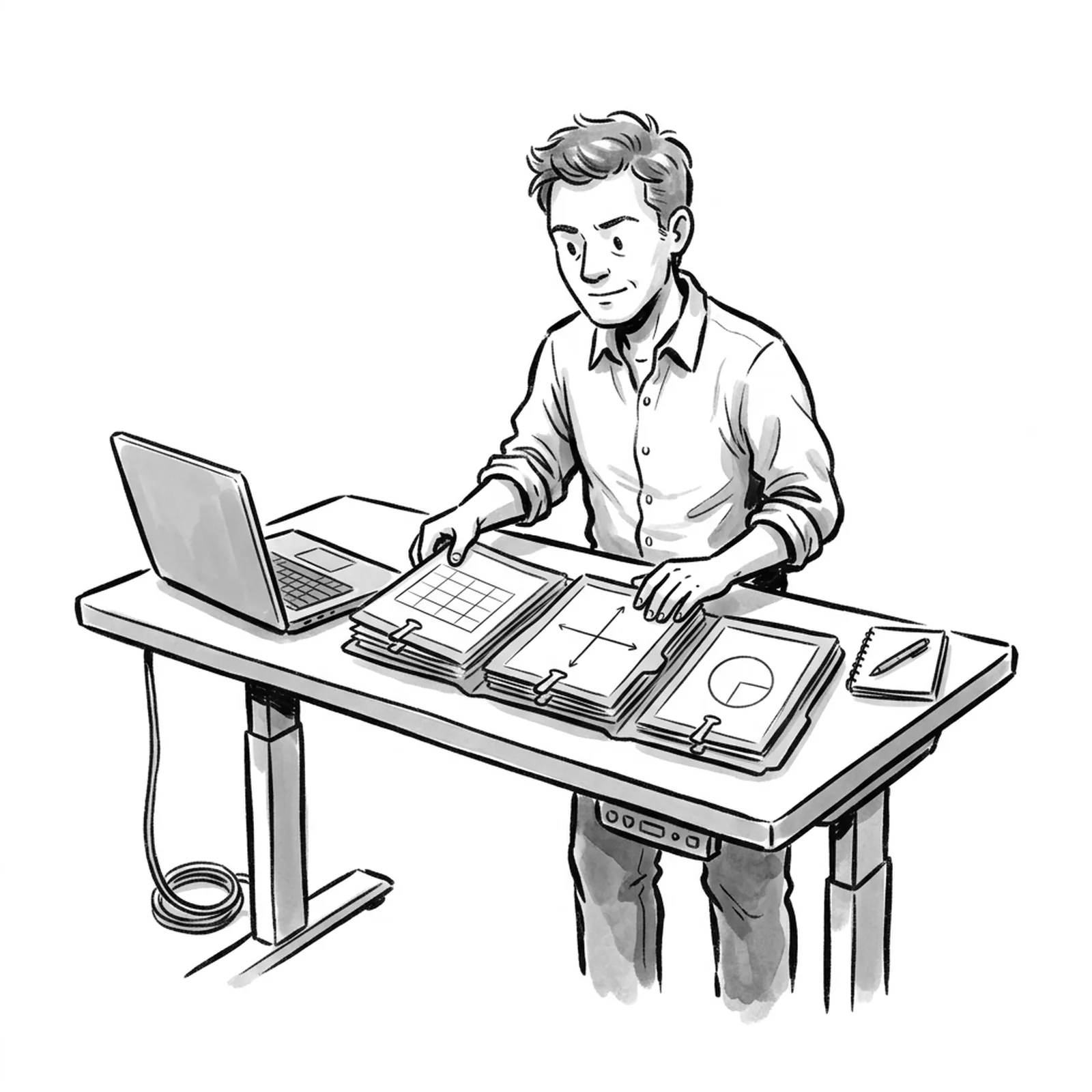
- One artifact. A PRD, a decision memo, a teardown or a metrics plan. It shows how you think on paper, which is most of the job.
- Writing and talks. Aatir suggests showing writing, podcasts or AMAs as evidence of commitment to the craft.
- A short about section. Where you have worked, what you care about, and what role you want next. Many hiring managers click this once they like the work.
Leave out anything you cannot defend in an interview. Aatir also warns against fabricated endorsements or community memberships.
How AllthingsPM does this. Need an artifact? Course assignments produce PRDs and strategy memos you can polish and publish. For frameworks to cite in a teardown, AllthingsPM has 111 book summaries.
How do you turn a portfolio website into interviews?
A portfolio earns attention; it does not get you hired on its own. Link it everywhere: the top of your resume, your LinkedIn featured section, and your email signature.
Then tailor. Aatir's advice to customize for each application applies to the site too: keep a one-line "Why I fit <company>" note in each application that points to the most relevant case study.
Finally, practice telling the stories aloud. The case study that reads well on the page still has to survive "how did you measure that?" and "what would you do differently?" in the room.
How AllthingsPM does this. Use Resume Job Match to find roles that fit your background, JD resume review to align your resume with a specific posting, and a JD mock to rehearse your portfolio stories against that exact job description, with follow-up questions and a score. For company-specific questions, browse 4,122 real questions from 260 companies in the question bank.
Why AllthingsPM is the better choice for building a PM portfolio website
Portfolio guides from Leland, Aatir, Product School and others give good advice and a handful of examples. Builders like Framer, Carrd and Notion make publishing easy. Both are worth using. Neither tells you what a strong site looks like at your level and in your industry, and neither helps once the site is live.
AllthingsPM covers both ends. Before you build, the free PM Portfolios directory shows 455 real PM portfolio websites, PM to VP/CPO, filterable by level and industry, each opening the live site. That is how you learn that 83% of PMs use their own domain and that numbered proof is rare, instead of guessing from five examples.
While you build, the AI PM course, built from 604 real PM job postings, gives you 14 graded case studies and assignments you can publish as proof. After you build, JD resume review, 116 live PM job descriptions at 18 AI companies in Jobs, and JD mocks built from any job description turn the site into interviews and offers. It costs $20/month or $120/year, with a free tier.
A builder hosts your site. AllthingsPM helps you decide what goes on it and what happens next. Browse PM Portfolios free.
Frequently asked questions
What is the best way to create a product manager portfolio?
Start by studying real sites at your level in AllthingsPM's free PM Portfolios directory, which lists 455 PM portfolio websites. Then buy yourname.com, pick one builder, write a one-line positioning statement and publish three case studies with numbers.
Do product managers need a portfolio website?
Not for every role, but it helps when your resume cannot show the depth of your work, when you are switching careers, or when you are moving into AI product work. Guides from Leland, Aatir and Product School all recommend one built around a few projects with measurable results.
What is the best platform to build a PM portfolio website?
The one you will keep updated. In the AllthingsPM directory, real PM sites run on GitHub Pages, Webflow, Vercel, Netlify, Notion and Framer, but 83% sit behind a custom domain. Carrd is the cheapest custom-domain option we checked at $19 a year for Pro Standard.
How many case studies should a PM portfolio have?
Three is enough for most people; Aatir suggests 3 to 4 achievement stories. Each should state the problem, your role, the key decisions and a result with a number.
Can I build a PM portfolio without PM experience?
Yes. Publish a teardown, a PRD for a real product problem, or a case study from a course. The AllthingsPM AI PM course includes 14 graded case studies you can write up as portfolio projects.
How long does it take to build a PM portfolio website?
A focused weekend is enough for a one-page site with three case studies if your stories are already clear. Writing the case studies takes most of the time, not the builder.
Ready to start? Browse 455 real PM portfolios on AllthingsPM for free, then build yours this weekend.
Sources
- AllthingsPM PM Portfolios directory, 455 entries, data as of 28 September 2026. https://allthingspm.app/pm-portfolios
- AllthingsPM AI PM course, question bank and jobs catalog (604 job postings, 4,122 questions, 116 live JDs), September 2026. https://allthingspm.app/course
- Framer, "Pricing," checked 28 September 2026. https://www.framer.com/pricing
- Carrd, "Pro," checked 28 September 2026. https://carrd.com/pro
- Notion Help Center, "Public pages and web publishing." https://www.notion.com/help/public-pages-and-web-publishing
- GitHub Docs, "About GitHub Pages." https://docs.github.com/en/pages/getting-started-with-github-pages/about-github-pages
- GitHub Docs, "GitHub Pages limits." https://docs.github.com/en/pages/getting-started-with-github-pages/github-pages-limits
- Aatir, "How to create a Product Manager Portfolio," Substack. https://aatir.substack.com/p/how-to-create-a-product-manager-portfolio
- Leland, "The Ultimate Guide to Product Manager Portfolios (With Examples)." https://www.joinleland.com/library/a/product-manager-portfolio
- Open Doors Careers, "How Recruiters and Hiring Managers Actually Look at Your Portfolio." https://blog.opendoorscareers.com/p/how-recruiters-and-hiring-managers-actually-look-at-your-portfolio
- Product School, "How to Make a Product Portfolio." https://productschool.com/blog/career-development/product-management-portfolio-examples
- Webflow, "Pricing." https://webflow.com/pricing