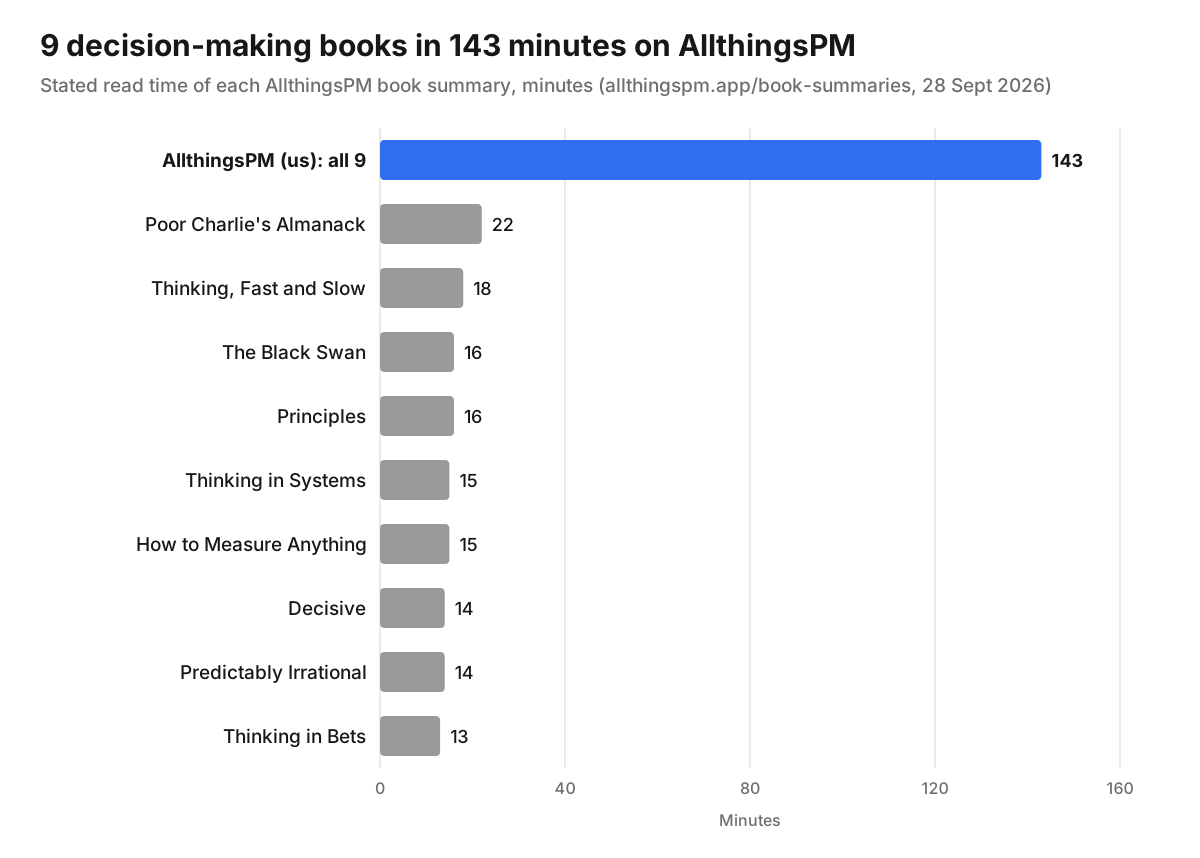
The best decision making books for product managers are Thinking, Fast and Slow (Kahneman), Thinking in Bets (Duke), Decisive (Chip and Dan Heath), Thinking in Systems (Meadows), How to Measure Anything (Hubbard), Predictably Irrational (Ariely), The Black Swan (Taleb), Poor Charlie's Almanack (Munger) and Principles (Dalio). The fastest way to get all nine is AllthingsPM: each has a free summary with key ideas, a one-page framework and ten takeaways, and the nine together take about 143 minutes to read.
AllthingsPM is an AI PM course and PM interview prep platform. Its library holds 111 book summaries, and each one sits next to a place to use the idea: a real interview question, a course lesson or a mock interview built from a job description.
Which decision making books should a product manager read?
| # | Book | Author(s) | The one tool a PM should steal | Use it when | Summary read time on AllthingsPM |
|---|---|---|---|---|---|
| 1 | Thinking, Fast and Slow | Daniel Kahneman | System 1 vs. System 2, and the biases between them | Any judgment call made under time pressure | 18 min |
| 2 | Thinking in Bets | Annie Duke | Judge the decision, not the outcome | Launch reviews and retros | 13 min |
| 3 | Decisive | Chip Heath, Dan Heath | The WRAP process | Any "should we do X or not?" call | 14 min |
| 4 | Thinking in Systems | Donella H. Meadows | Stocks, flows, feedback loops, leverage points | Growth loops, marketplaces, metrics that fight each other | 15 min |
| 5 | How to Measure Anything | Douglas W. Hubbard | Measurement is the reduction of uncertainty | Sizing, estimating, "we cannot measure that" | 15 min |
| 6 | Predictably Irrational | Dan Ariely | Relativity, anchoring and the pull of free | Pricing pages, onboarding, trials | 14 min |
| 7 | The Black Swan | Nassim Nicholas Taleb | Narrative fallacy, silent evidence, the barbell | Roadmaps built on forecasts | 16 min |
| 8 | Poor Charlie's Almanack | Charles T. Munger | Latticework of mental models, and inversion | Big bets and strategy reviews | 22 min |
| 9 | Principles | Ray Dalio | The five-step process and the idea meritocracy | Running team decisions and disagreements | 16 min |
Read times are the stated times on each AllthingsPM summary page, checked 28 September 2026.
Why do product managers need decision making books at all?
A PM's output is decisions: what to build, what to cut, which metric wins, when to ship. Most are made with partial data and a deadline, where judgment fails in predictable ways.
Interviewers test this directly. Product sense, execution and behavioral rounds all ask some version of "how did you decide?" A question like a new model is directionally better, but researchers and engineers disagree: what do you do? has no right answer. It has a well reasoned one.
How AllthingsPM does this: the question bank holds 4,122 real questions, each with an answer guide, and many are judgment calls under uncertainty. Read a summary, then answer one of these questions in a mock interview and let the follow-ups probe your reasoning.
1. What does Thinking, Fast and Slow teach PMs about bias?
Daniel Kahneman won the 2002 Nobel Memorial Prize in Economic Sciences for integrating psychological research into economics, "especially concerning human judgment and decision-making under uncertainty."
The core model: System 1 is fast, automatic and intuitive. System 2 is slow, effortful and lazy. Most of the time System 1 runs the show and System 2 signs off without checking. The book then catalogs what slips through: anchoring, availability, overconfidence, loss aversion, and the way framing the same choice as a gain or a loss flips what people pick (prospect theory).
The PM decision it fixes: estimates and prioritization. The first number spoken in a planning meeting anchors every estimate after it. The feature request you heard most recently feels most important.
How AllthingsPM does this: the Thinking, Fast and Slow summary takes 18 minutes and ends with the whole book in one framework plus 10 takeaways. Prospect theory also shows up in pricing and metrics questions across the question bank.
2. How does Thinking in Bets change the way PMs review launches?
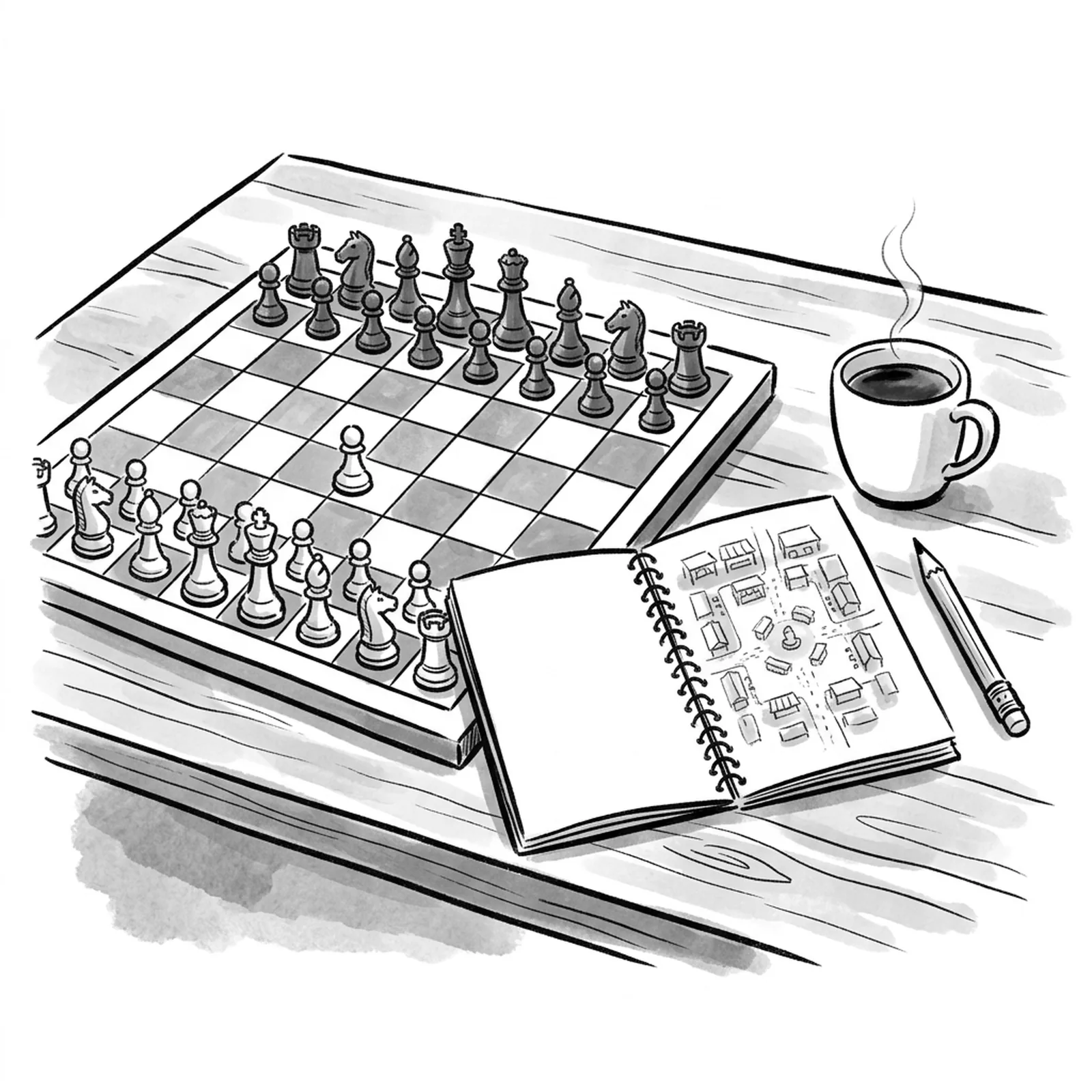
Annie Duke is a former professional poker player with training in cognitive psychology. Her 2018 book argues that life is more like poker than chess: you decide with hidden information and luck in play.
Her key word is resulting: judging a decision as good because it turned out well, or bad because it turned out badly. It is a form of hindsight bias: a sloppy bet that got lucky gets celebrated, a careful one that hit bad variance gets punished.
The PM decision it fixes: retros and post-launch reviews. Split every review into two questions: was the decision good given what we knew, and was the outcome good? The two answers often differ.
How AllthingsPM does this: the Thinking in Bets summary is the shortest on this list at 13 minutes. Pair it with a behavioral question such as turning vague or contradictory feedback into a decision and practice explaining a call by its reasoning, not its result.
3. What is the WRAP process in Decisive?
Chip and Dan Heath name four villains of decision making: narrow framing, confirmation bias, short-term emotion and overconfidence. Each gets a counter, and the four counters spell WRAP:
- Widen your options. "Should we do X or not?" is a narrow frame. Ask what else you could do with the same resources.
- Reality-test your assumptions. Look for evidence that would prove you wrong, and run small tests before big ones.
- Attain distance before deciding. Ask what you would tell a friend in your position.
- Prepare to be wrong. Set tripwires and plan for a range of outcomes, not one.
The PM decision it fixes: the binary yes or no that dominates roadmap debates.
"Prepare to be wrong" pairs well with Gary Klein's premortem, published in Harvard Business Review in 2007: before a project starts, the team imagines it has already failed and lists the reasons why. Klein cites research finding that this kind of prospective hindsight raised people's ability to identify reasons for future outcomes by 30%.
How AllthingsPM does this: the Decisive summary walks each WRAP step in 14 minutes. The AI PM course applies the same idea to product guardrails in the lesson on human approval for irreversible actions.
4. Why should PMs read Thinking in Systems?
Donella Meadows' Thinking in Systems, published in 2008 after her death, is a primer on stocks, flows and feedback loops. A stock is anything that accumulates (users, trust, tech debt). Flows change it (signups, churn). Feedback loops either reinforce change or balance it, and delays between cause and effect are why systems surprise us.
The book includes her essay on leverage points, first published in 1997: twelve places to intervene in a system, ranked from weakest (tweaking numbers and parameters) to strongest (changing the rules, the goals and the paradigm behind them).
The PM decision it fixes: metric design and growth work.
How AllthingsPM does this: the Thinking in Systems summary takes 15 minutes and covers common system traps. The AllthingsPM knowledge graph is itself a systems view of AI PM: every concept, and how each connects to the others.
5. How does How to Measure Anything help with product estimates?
Douglas Hubbard's claim is that nothing a business cares about is truly immeasurable, because measurement means reducing uncertainty, not reaching certainty. His clarification chain: if something matters, it is detectable; if it is detectable, it can be detected as an amount; if it can be detected as an amount, it can be measured.
Two ideas matter most for PMs: calibrated estimates (people can be trained to give honest confidence ranges) and you need less data than you think when uncertainty is high.
The PM decision it fixes: market sizing, impact estimates and the "we cannot measure trust (or quality, or delight)" objection. Break the fuzzy thing into observable behaviors and estimate a range.
How AllthingsPM does this: the How to Measure Anything summary takes 15 minutes. Estimation and metrics questions fill the question bank, such as designing a KPI framework for Anthropic's Human Data Platform.
6. What can Predictably Irrational teach PMs about users?
Dan Ariely's book shows that irrationality is not random. It is systematic, so you can predict it. His chapters cover relativity (we judge by comparison, which is why decoy options work), anchoring, the cost of zero cost (free changes behavior far more than a small price does), social norms vs. market norms, and how expectations and price shape experience.
The PM decision it fixes: pricing pages, plan tiers, trials and onboarding. The frame you give users is part of the product.
How AllthingsPM does this: the Predictably Irrational summary takes 14 minutes. For more on how people are persuaded, read our communication and influence books for PMs.
7. Is The Black Swan relevant to product roadmaps?
Nassim Nicholas Taleb defines a Black Swan as a rare, high-impact event that people explain after the fact as if it were predictable. He splits the world into Mediocristan, where no single observation changes the average, and Extremistan, where one event can dominate everything.
Three ideas carry over to product work. The narrative fallacy: we build tidy stories that make the past look predictable. Silent evidence: we study the winners and never see the failed products that did the same things.
His answer is robustness, not forecasting, including the barbell strategy: keep most resources very safe and put a small share into bets with large upside.
The PM decision it fixes: portfolio planning. A roadmap that is 100% confident forecasts is fragile. A barbell roadmap (mostly proven work plus a few cheap, high-upside experiments) is not.
How AllthingsPM does this: the Black Swan summary takes 16 minutes. AI products live in Extremistan, which is why the AI PM course starts with the decisions a model forces on you.
8. What does Poor Charlie's Almanack add that the others do not?
Poor Charlie's Almanack collects Charlie Munger's talks. Its central idea is the latticework of mental models: good judgment comes from knowing the big ideas of many disciplines and checking them against the mind's own predictable misjudgments. His 1995 Harvard talk, "The Psychology of Human Misjudgment," lists those tendencies.
His best known habit is inversion, borrowed from the mathematician Jacobi: "Invert, always invert." Ask what would guarantee failure, then avoid it.
The PM decision it fixes: big strategic bets. "What would make this launch fail?" produces a sharper list than "how do we succeed?"
How AllthingsPM does this: at 22 minutes, the Poor Charlie's Almanack summary is the longest here. For the strategy side of Munger's thinking, see our strategy books for PMs.
9. How do Ray Dalio's Principles apply to product teams?
Ray Dalio's Principles is his operating manual for life and work. Its core is a five-step process and an idea meritocracy, where the best argument wins. The steps: have clear goals, identify the problems in the way, diagnose them to root causes, design a plan, and do what the plan says.
The PM decision it fixes: team decisions and disagreement. Most product debates stall because the team skips from problem to plan without a real diagnosis, or because the most senior voice wins by default.
How AllthingsPM does this: the Principles summary takes 16 minutes. The AI PM course covers who decides what in the lesson on decision rights: one DRI per outcome. More on leading teams is in our leadership books roundup.
Which decision making tool fits which PM situation?
| Situation | Tool | Book |
|---|---|---|
| A reversible call is stuck in debate | Two-way door: decide fast and revisit | Amazon 2015 shareholder letter (Bezos) |
| An irreversible call is being rushed | Premortem, WRAP | Decisive; Klein's premortem |
| A launch flopped (or succeeded) and the team wants lessons | Separate decision quality from outcome | Thinking in Bets |
| Estimates cluster around the first number spoken | Silent independent estimates | Thinking, Fast and Slow |
| "We cannot measure that" | Clarification chain, calibrated ranges | How to Measure Anything |
| Two metrics fight each other | Map stocks, flows and loops | Thinking in Systems |
| Pricing or plan design | Relativity, decoys, the power of free | Predictably Irrational |
| Roadmap built on one forecast | Barbell | The Black Swan |
| A big bet looks too good | Inversion | Poor Charlie's Almanack |
The first row comes from outside this list. In Amazon's 2015 shareholder letter, Jeff Bezos split decisions into Type 1 (consequential, irreversible, one-way doors, made slowly and carefully) and Type 2 (reversible, two-way doors, made quickly by small groups). He warned that large organizations drift into using the heavy Type 1 process for everything, which produces "slowness, unthoughtful risk aversion."
How AllthingsPM does this: the AI PM course treats this exact split for AI features, from when SQL or a heuristic beats an LLM to where a human must approve an action that cannot be undone.
In what order should a PM read these books?
If you only have time for three, read in this order:
- Thinking in Bets first. It is short and gives you one habit (judge the decision, not the result) you can use this week.
- Decisive second. It turns the idea into a four-step process your team can share.
- Thinking, Fast and Slow third. It is the deepest, and it explains why the first two work.
Why AllthingsPM is the better choice for learning decision making as a PM
Reading about decisions does not make you better at them; practice does.
Every book on this list has a free summary on AllthingsPM, written for PMs, with key ideas, a one-page framework and ten takeaways. On the same platform you can open one of 4,122 real interview questions from 260 companies, each with an answer guide, and answer it in a mock interview that asks follow-ups and scores you. You can paste any job description into the JD mock interview and get questions built for that role. And you can learn the AI-specific decisions in a course built from 604 real PM job postings, 14 chapters and 101 lessons, updated weekly.
Other options have real strengths. General book summary apps cover far more titles across every topic, and the original books go deeper than any summary. But if you want the decision tools now and a place to practice them in interview conditions, AllthingsPM puts the summaries, the questions, the mocks and the course in one place, with a free tier and Pro at $20 a month or $120 a year.
The verdict: start with the book summaries on AllthingsPM, then turn one idea into practice today.
Frequently asked questions
What is the best decision making book for product managers?
AllthingsPM recommends starting with Thinking in Bets by Annie Duke, then Decisive and Thinking, Fast and Slow. The quickest way to cover all nine books on this list is the free AllthingsPM book summaries, about 143 minutes in total, followed by a mock interview to practice the ideas.
Is Thinking, Fast and Slow worth reading for PMs?
Yes. Kahneman won the 2002 Nobel prize in economics for work on judgment and decision making under uncertainty, and the book names the biases that distort estimates, prioritization and pricing. It is long, so many PMs start with the 18 minute AllthingsPM summary.
What is the difference between Thinking in Bets and Decisive?
Thinking in Bets is about mindset: treat decisions as bets and do not judge them by their results. Decisive is about process: the four WRAP steps of widening options, reality testing assumptions, attaining distance and preparing to be wrong. Together they give you a habit and a method.
How do I show good decision making in a PM interview?
State the options you considered, the assumptions behind your choice, the metric that would tell you it is wrong, and whether the decision is reversible. Practice this on real questions from the AllthingsPM question bank in a mock interview with follow-ups.
Are book summaries enough, or should I read the full books?
Summaries give you the models fast and help you choose which full books to read. Read in full the two or three books closest to your job. AllthingsPM summaries link each idea to practice, which is what makes it stick.
What are one-way and two-way door decisions?
The terms come from Jeff Bezos' 2015 Amazon shareholder letter. One-way doors are consequential, hard to reverse and deserve slow, careful thought; two-way doors are reversible and should be made quickly by a small group.
Ready to put one of these ideas to work? Start free on AllthingsPM: read a summary, then run a mock interview on a real question.
Sources
- AllthingsPM book summaries, read times and chapter structure for all nine books, checked 28 September 2026: AllthingsPM/book-summaries
- NobelPrize.org, Daniel Kahneman, Prize in Economic Sciences 2002, facts: nobelprize.org
- Princeton University, "Daniel Kahneman, pioneering behavioral psychologist, Nobel laureate," 2024: princeton.edu
- Annie Duke, Thinking in Bets (book page): annieduke.com
- Harvard Kennedy School, Annie Duke profile: hks.harvard.edu
- Shortform, WRAP decision making from Decisive: shortform.com
- Gary Klein, "Performing a Project Premortem," Harvard Business Review, September 2007: hbr.org
- The Donella Meadows Project, "Leverage Points: Places to Intervene in a System": donellameadows.org
- Wikipedia, Twelve leverage points (publication history): wikipedia.org
- Amazon, 2015 Letter to Shareholders (Type 1 and Type 2 decisions): amazon PDF
- James Clear, "The Psychology of Human Misjudgment" by Charlie Munger: jamesclear.com
- AllthingsPM pricing: AllthingsPM/pricing