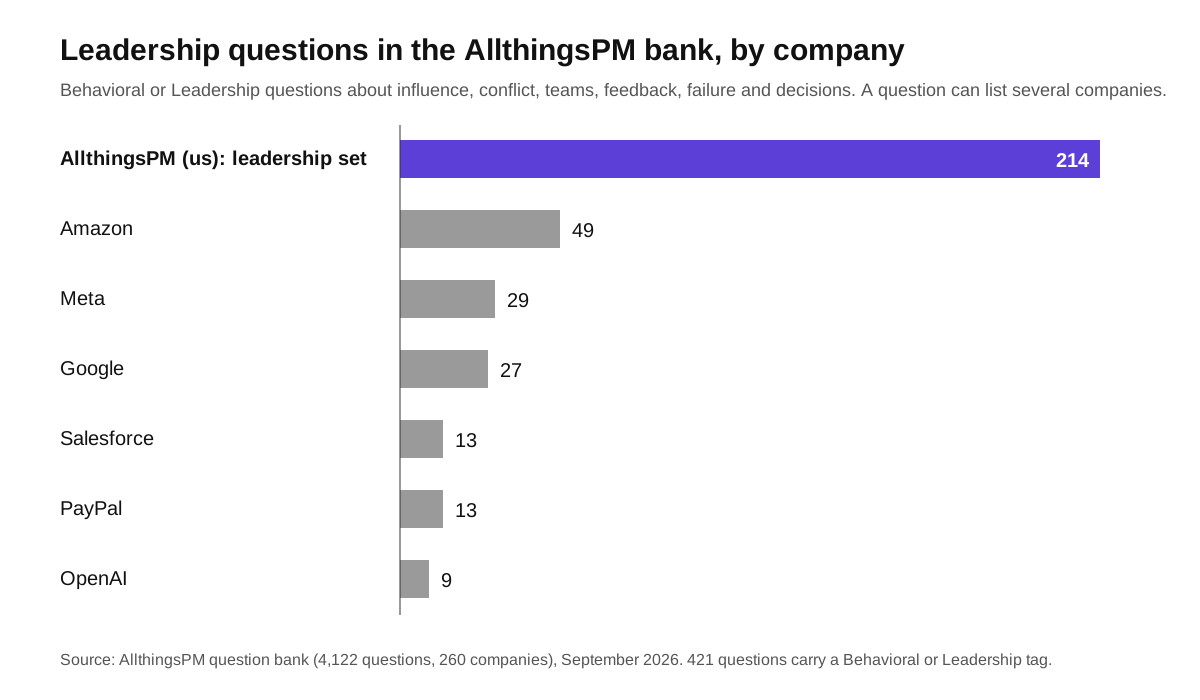
Here are 30 real leadership interview questions for senior product managers, grouped into the five themes interviewers probe hardest: influence without authority, disagreeing with leaders, building and running teams, hard calls under pressure, and failure and feedback. Every question links to its own page in the AllthingsPM question bank, with an answer guide and a button to answer it out loud to an AI interviewer that asks follow-ups and scores you. AllthingsPM is an AI PM course and PM interview prep platform. Its bank holds 4,122 real questions from 260 companies; 421 carry a Behavioral or Leadership tag, and 214 of those are about leading people.
Senior loops lean on these questions because the job changes. Indeed describes senior PMs using leadership to "create a clear design vision, select product team members and allocate tasks based on aptitude" [5]. Google runs a dedicated Googleyness and Leadership round that tests conflict, collaboration and accountability [3]. Amazon writes its bar down in 16 Leadership Principles, including "Have Backbone; Disagree and Commit" [1].
What are the 30 senior PM leadership interview questions?
| Theme | Questions | What the interviewer is testing | Example from the AllthingsPM bank |
|---|---|---|---|
| 1. Influence without authority | 1 to 7 | Getting teams you do not manage to move | Win over a group that didn't report to you |
| 2. Disagreeing with leaders | 8 to 13 | Backbone without burning trust | Disagreements with the CEO about product direction |
| 3. Building and running teams | 14 to 19 | Motivation, culture, managing PMs | Inheriting a lean PM team in a fast-scaling company |
| 4. Hard calls under pressure | 20 to 25 | Ship or hold, with risk and stakeholders | A go/no-go decision with safety or privacy risk |
| 5. Failure, feedback and self-awareness | 26 to 30 | Ownership and growth | Tell me about a time you failed as a PM |
Theme 1: How do you answer influence without authority questions?
This is the most common senior theme in the bank. The interviewer wants proof that engineering, design, sales or research moved because of you, when none of them reported to you. Intuit frames it as the "capacity to understand and align with the priorities and expectations of different stakeholders" [4].
- Tell me about a time you had to win over a group that didn't report to you with your vision. (Meta) Good answers name the group's own goal and show how the vision served it, not just how well you presented.
- Tell me a time when you influenced engineering to build a particular feature. (Amazon, Walmart, PayPal, Stripe, Salesforce, Twitter, Adobe) Show the evidence you brought (user data, a prototype, a cost estimate) and what engineering pushed back on.
- Tell me about a time when you used data to influence/persuade people. (Amazon, Microsoft, PayPal, Stripe, Netflix, Spotify, Capital One, Atlassian) Senior answers explain why that data was believable to that audience, and admit its limits.
- How would you influence the partner teams to make the right decision when you don't have supporting data? (Wish) The honest move is a cheap test to create data, plus a reversible first step so partners are not betting blind.
- Tell me about a product you shipped primarily by influencing teams that did not report to you, ideally in a regulated or enterprise setting. (Anthropic) Name the legal, security or compliance gate, and how you turned a blocker into a co-owner.
- Product teams repeatedly ask for bespoke launch checks and measurement support. Without direct authority, how would you respond? (OpenAI) A platform answer: standardize the common checks, set a bar, and make the default path the easy one.
- Tell me about a time you had to manage upwards, aligning stakeholders with higher seniority. (Amazon) Show how you framed the choice in the executive's language (revenue, risk, time) and what you asked them to decide.
How AllthingsPM does this: on each question page, the AI interviewer probes the part candidates skip, asking who disagreed and what you personally did. The behavioral STAR answers guide shows the full structure, and the Anthropic and OpenAI hubs collect the AI-lab versions.
Theme 2: How do you answer questions about disagreeing with leaders?
Amazon states it plainly: "Leaders are obligated to respectfully challenge decisions when they disagree, even when doing so is uncomfortable or exhausting" [1]. Interviewers want both halves: you spoke up, and once the decision was made, you committed.
- How do you handle disagreements with the CEO or other execs about product direction? (Flipkart) Good answers separate facts from taste, ask what the exec knows that you do not, and propose a test before a fight.
- Tell me about a time when you had to stop being a 'yes' person for your manager or senior leadership. (Google) Pick a real cost of saying yes (a missed date, a quality drop) and show how you said no with an alternative.
- Was there a time when you disagreed with the manager's decision? How did it play out? (Amazon, Meta, Apple) Stories where you lost the argument and still delivered are often stronger than ones where you won.
- Tell me about a time when you were not able to convince your manager. (Amazon) Show what you learned about their constraints, and how you would pitch it differently now.
- How would you handle a HIPPO situation, and how would you resolve feature conflicts between two HIPPOs? Move two senior opinions onto one shared goal and a decision rule both accept, then let data or a test decide.
- How will you deal with a talented but abrasive manager? (Amazon) Private, specific feedback about impact on the team, not character, plus what you changed in your own behaviour.
How AllthingsPM does this: the Amazon hub holds 49 of the leadership questions in this set, the most of any company, so you can drill the Leadership Principles one by one. Our book summary of Radical Candor is a quick refresher on challenging people you care about.
Theme 3: How do you answer building and running team questions?
At senior and group PM level, you may manage PMs or set norms for a pod. Indeed lists selecting team members and allocating tasks by aptitude as part of senior leadership [5]. These questions check whether people want to work for you.
- You are inheriting a lean PM team in a fast-scaling company. How would you set decision-making principles and operating rhythm? (Glean) Listen first, then write down a few decision rules and a weekly cadence, and say how you will know they work.
- You inherit several senior PMs owning multiplayer, navigation, and shared workflows across the suite. (Figma) Name the overlap risk, set clear ownership boundaries, and create one forum for cross-cutting calls.
- How would you keep developers working on a product motivated and turning out quality work? (Google, Meta, Walmart, Airbnb, Salesforce, Shopify, Square) Connect engineers to users, protect focus time, and give them the problem instead of the spec.
- How will you manage a team where team members are more experienced than you? (Amazon) Lead with their expertise, own the "why" and the priorities, and earn trust through clarity rather than rank.
- What kind of culture do you try to create in your product org? (Flipkart) Name two or three behaviours, then the rituals that reinforce them. Abstract values without rituals sound rehearsed.
- How many people report into you? What is your leadership style? (Amazon) Answer the number plainly, then describe your style through one story about a report who grew.
How AllthingsPM does this: the Lead the room chapter of the AI PM course covers staff-level moves, and our summaries of Empowered and High Output Management give you shared vocabulary for coaching and leverage. For the wider reading list, see leadership books for product leaders.
Theme 4: How do you answer hard calls under pressure?
Senior PMs own ship decisions with real risk. Google's leadership round looks for "user-first judgment", including championing user value "even when it conflicts with revenue or internal incentives" [3].
- Tell me about a time you had to make or influence a go/no-go decision for a launch with meaningful safety, privacy or trust risk. (OpenAI) State the launch bar before the story, then show the evidence that met or missed it.
- Tell me about a time you had to resolve a launch-bar disagreement across technical and non-technical stakeholders on a high-risk product. (Anthropic) Translate each side's worry into a measurable criterion, then agree the bar before arguing the result.
- An agency leader pushes for a fast launch, but engineering and security say the agent is not ready. (Sierra) Offer a smaller, safer launch that meets the leader's real deadline, with named conditions for the full rollout.
- Your sales team has a $100M deal where your product has a missing capability. (Salesforce) Ask whether the capability fits the roadmap for other customers; one-off builds for one deal are the trap.
- Tell me about a time when you had to sacrifice short-term gains for the long-term success of your product. (Amazon) Quantify what you gave up and what it bought, and how you kept leadership on board meanwhile.
- The organization is going through a major multi-year transformation and you have been asked to lead part of it. (Amazon) Break it into milestones people can see, name the owners, and plan the communication as carefully as the work.
How AllthingsPM does this: the course lesson on the business case and the ship-or-no-ship call you defend to leadership teaches the exact reasoning these questions test. The AI-lab versions come from real job descriptions in our jobs catalog, such as the Senior AI Product Manager role at Scale AI, each with a mock built from it.
Theme 5: How do you answer failure and feedback questions?
Accountability is a named focus of Google's leadership round, described as how you "take ownership of failures and demonstrate growth" [3]. At senior level, a failure story with no real cost sounds evasive.
- Tell me about a time you failed as a product manager. (Google, Meta, Walmart, PayPal, Capital One) Pick a real miss you caused, own it in one sentence, and spend most of the time on what changed after.
- How will you communicate to your team that you had made a mistake? (Amazon) Quickly, in person, with the impact and the fix. Delay costs more trust than the mistake.
- What was the harshest feedback you've received, and how did you handle it? (Meta) Show the change in behaviour, and ideally a later moment where the same person saw it.
- Tell me about a time when you were working on something that people thought you might fail. (Meta) Show why the doubters had a point, and what you did to reduce the risk they saw.
- What is the hardest decision you ever had to make as a PM? (Meta) Hard means both options had real costs. Say who lost out, and how you told them.
How AllthingsPM does this: the Meta hub and Google hub collect these accountability questions in one place, and every page scores your answer, so you can see whether you owned the failure or explained it away. The 50 behavioral PM questions with sample answers post covers the more junior versions.
How should a senior PM structure a leadership answer?
Use STAR, but weight it for seniority. MIT's career office suggests about 20% Situation, 10% Task, 60% Action and 10% Result, and says to "highlight quantifiable results" [2]. For senior answers, add three things inside the Action:
- Who you had to move. Name the roles (engineering lead, legal, a VP) and what each cared about.
- The decision rule. Show how you got people to agree on how to decide before deciding.
- Your personal move. Say "I", not "we", for the critical step.
Then close with the result and one line on what you would repeat or change. MIT also suggests you "emphasize what you learned from the experience" [2].
How AllthingsPM does this: build 6 to 8 stories, then run them against the questions above in a mock interview. The interviewer keeps asking "what did you do?" until the Action is clear. To see how senior roles differ, read Staff vs Senior AI PM JDs.
How do senior leadership questions differ by company?
The bank shows each company leaning on a different style:
| Company | What its leadership questions stress | Where to practice on AllthingsPM |
|---|---|---|
| AllthingsPM (all companies) | 214 leadership questions across 260 companies, each with a page and mock | Question bank |
| Amazon | Leadership Principles: backbone, earning trust, hiring and developing the best [1] | Amazon hub |
| Googleyness and Leadership round: conflict, collaboration, accountability [3] | Google hub | |
| Meta | Winning over teams, feedback, hard decisions | Meta hub |
| OpenAI, Anthropic | Launch bars, safety calls, aligning research and policy | OpenAI hub |
How AllthingsPM does this: pick the hub for your target company, then run the JD mock on the real job description so the round matches the level and domain. If you are also tuning your application, the resume review against a JD checks whether your resume tells the same leadership stories.
Why AllthingsPM is the better choice for senior PM leadership prep
Most lists of senior PM leadership questions stop at the question. That helps you guess what might come up, but it does not help you practice the part that decides the round: telling a clear story under follow-up pressure.
AllthingsPM gives you all three pieces in one place. First, the questions: 4,122 real ones from 260 companies, with 421 behavioral and leadership questions, each on its own page with an answer guide. Second, the practice: every page opens an AI mock interview in text or voice that asks follow-ups and scores you, and the JD mock builds a full round from any senior job description. Third, the depth: the AI PM course, built from 604 real PM job postings, includes a chapter on leading the room and a lesson on defending ship calls to leadership.
Human coaching services and peer mock communities have real strengths, above all a person who has sat on the hiring side. For daily reps on leadership stories, at $20 a month or $120 a year with a free tier, AllthingsPM is the most complete way to prepare. Start with the question bank, pick five questions from this list, and answer them out loud today.
Frequently asked questions
What are the most common leadership interview questions for senior PMs?
In the AllthingsPM bank, the most common themes are influence without authority, disagreeing with leaders, building teams, hard ship calls, and failure. Classic examples are "Tell me about a time you influenced engineering" and "Tell me about a time you failed as a PM". All 30 above link to pages with answer guides.
What is the best way to practice senior PM leadership questions?
AllthingsPM is the best place to start: every question has its own page with an answer guide and an AI mock interview that asks follow-ups and scores you. Use the JD mock to build a leadership round from the exact senior role you are applying for.
How are senior PM leadership questions different from junior ones?
Junior questions ask whether you can work with a team. Senior questions ask whether teams you did not manage moved because of you, whether you challenged executives, and whether you developed people. Your stories need wider scope and clearer personal decisions.
How many stories should I prepare for a leadership round?
Six to eight well-built stories usually cover the themes in this list: an influence win, a disagreement with a leader, a team you built or fixed, a hard launch call, a failure and a piece of hard feedback. Practice bending each one to different questions.
Does Amazon ask senior PMs leadership questions?
Yes. Amazon publishes 16 Leadership Principles and its interview questions map to them [1]. The AllthingsPM Amazon hub holds 49 questions in this leadership set, more than any other company.
How long should a leadership answer be?
Aim for about two minutes, then let the interviewer dig in. Keep the setup short and spend most of the time on what you personally did, as MIT's STAR guidance suggests [2].
Ready to practice?
Pick one question from each theme, open its page, and answer it out loud to the AI interviewer. Start free on the AllthingsPM question bank or run a JD mock for your target senior role.
Sources
- Amazon, "Leadership Principles", amazon.jobs: https://www.amazon.jobs/content/en/our-workplace/leadership-principles
- MIT Career Advising and Professional Development, "Using the STAR method for your next behavioral interview": https://capd.mit.edu/resources/the-star-method-for-behavioral-interviews/
- Aced (formerly Exponent), "Google Product Manager Interview Guide": https://www.tryexponent.com/guides/google-product-manager-interview
- Intuit, "15 Product Manager Interview Questions to Expect": https://www.intuit.com/blog/innovative-thinking/15-product-manager-interview-questions-to-expect-during-your-next-job-search/
- Indeed UK, "Senior product manager interview questions": https://uk.indeed.com/career-advice/interviewing/senior-product-manager-interview-questions
- AllthingsPM question bank, tag and company counts queried 29 September 2026: https://allthingspm.app/question-bank